
Evaluating Structural Friction And Breach Thresholds In Non-Reinforced Executive Directives
Unreinforced executive directives erode against established incentives, creating structural friction that triggers psychological contract breach when enforced retroactively.

Wall
An executive announces an operational restriction during a Tuesday morning review, records no tracking metric in the organizational system, assigns no auditing role, and closes the meeting. The statement sits on a whiteboard for two days before a custodian wipes the board clean. Within a week, the division operates under its existing incentives.
When a leader issues an order without an accompanying system of measurement, the existing operational baseline absorbs the statement without changing direction.
The initial barrier appears at the point of task collision. An operator faces two competing demands: a documented output target tied to monthly compensation, and an unmonitored verbal directive issued by executive authority. In the absence of daily verification or explicit structural tracking, local workflow defaults to safety and the measured metric.
The non-reinforced directive becomes an ornamental statement, altering no calendar, redistributing no budget, and reshaping no responsibility.
The structural resistance generated by an unreinforced order manifests as quiet cognitive load within the management layer. Department heads evaluate whether compliance carries personal risk or whether omission carries structural penalty. When observation confirms that non-compliance produces no metric reduction, operational drift accelerates.
The executive perceives silent consensus, while the operational floor recognizes an abandoned preference.
Operational teams assume that unmonitored orders represent temporary suggestions that expire automatically without formal revocation.

Decay

Operational Decay Curves Across Unmonitored Mandates
When an executive mandate arrives without structural enforcement, authority diminishes along a predictable schedule. Initial compliance remains high during the forty-eight hours following the statement, supported by the psychological presence of the executive. As routine operational demands reassert dominance, adherence drops sharply.
The absence of audit mechanisms signals to mid-level management that allocating resources toward the directive carries zero operational return.
- The executive states an operational requirement during a central meeting without defining an audit frequency or metric owner.
- Mid-level managers adjust immediate reporting for one cycle while retaining underlying workflow structures to protect core production output.
- Operational staff detect the absence of follow-up reviews and quietly deprioritize the directive in favor of tracked key metrics.
- The organization reaches complete operational omission while maintaining superficial verbal alignment during high-level reviews.
An executive order spoken once without an accompanying system becomes an informal preference within forty-eight hours.

Structural Comparison Of Directive Execution Frameworks
Organizations deploy varying models of executive communication, each carrying distinct structural costs and breach profiles across operational units.
| Directive Type | Audit Frequency | Friction Level | Breach Horizon | Capacity Cost |
|---|---|---|---|---|
| Implicit Expectation | None | High latent friction | Immediate divergence | Unbounded cognitive drag |
| Non-Reinforced Directive | Single initial statement | Moderate active friction | Fourteen to thirty days | Sustained departmental confusion |
| Explicit Stated Term | Scheduled objective review | Low structural friction | Identified at first audit | Bounded upfront setup time |
The accumulation of unreinforced directives degrades organizational authority over time. Each unenforced mandate establishes a precedent of selective adherence. When senior leadership regularly delivers operational orders without embedding monitoring protocols, staff develop an adaptive filter, differentiating between statements intended for active implementation and those meant for administrative performance.
Allowing non-reinforced directives to accumulate reduces the structural force of future executive orders while increasing latent operational resistance across departments.
Fault

When Does Quiet Non-Compliance Become Structural Breach?
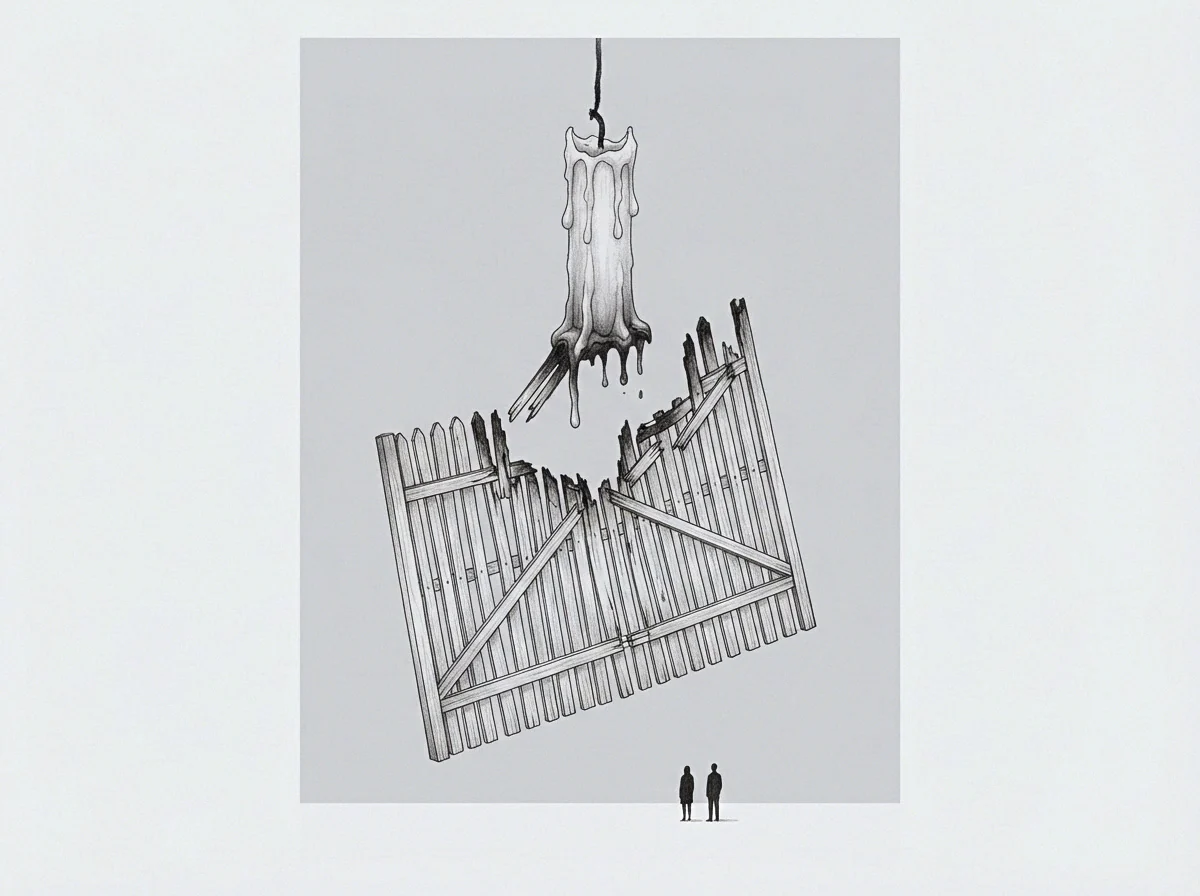
The transition from minor operational variance to structural contract breach occurs at the point of explicit metric divergence. Research in psychological contracts within organizations demonstrates that breach occurs when one party perceives an intentional failure to fulfill obligations. In non-reinforced executive directives, this perception develops asymmetrical timing.
The executive views quiet non-compliance as a direct breach of organizational alignment. The operator views executive silence as a tacit modification of the original mandate.
Take an executive who states a fixed cap on client intake during a quarterly strategy session, specifying that no account under fifty thousand dollars should enter the pipeline. Assume the executive creates no software filter, assigns no compliance review to the sales director, and leaves incentive compensation tied directly to raw contract volume. Assume the sales director continues onboarding thirty-thousand-dollar accounts to meet monthly revenue targets.
Over six months, forty percent of new accounts fall below the stated cap. The executive discovers the variance during an annual audit and interprets the outcome as insubordination. The sales director interprets six months of executive silence as validation that revenue growth superseded the informal budget cap.
Both positions rest on valid interpretations of structural signals.
Friction increases exponentially when an unmonitored directive conflicts directly with a localized performance metric.

The Threshold Of Perceived Mandate Abandonment
Breach thresholds remain invisible until resource allocation highlights the rift. The moment of explicit evaluation forces both parties to confront the unstated divergence. Because the executive provided no continuous feedback loop, the operator worked under the assumption of implied consent.
Structural friction peaks when the executive attempts to enforce retroactive penalties for non-compliance with an unmonitored mandate, which the operator experiences as an arbitrary exercise of power.
Unchecked expectations accumulate cost in attention and capacity. Research in organizational behavior confirms that perceived breach triggers a reduction in discretionary effort. When employees face criticism for failing to maintain a non-reinforced directive, discretionary effort drops.
Failing to establish enforcement mechanisms turns a simple execution gap into a structural breach of trust between operational tiers.
At what exact point of operational silence does an unmonitored executive directive cease to bind the operational team and transform into an administrative liability?

Clock

Temporal Windows Of Silent Erosion
Time acts as an active solvent on non-reinforced directives. The structural integrity of an unmonitored order degrades across three distinct temporal windows, each presenting specific indicators of operational detachment.
- The Initial Drift Period covers the first fourteen days following issuance, during which team members test whether leadership measures compliance through informal inquiries or formal reporting metrics.
- The Friction Stabilization Stage occurs between fifteen and sixty days, where non-compliant workflows solidify into standard operating procedures while verbal adherence remains standard practice in meetings.
- The Latent Breach Horizon emerges after sixty days, converting the unreinforced directive into an administrative ghost that resurfaces during departmental disputes or performance evaluations.
A mandate unmeasured at its first milestone signals to the operational layer that compliance remains voluntary.
Organizational memory erases unmonitored commitments to make space for immediate operational demands. Executives often confuse operational quietness with execution. Without concrete audit markers, the gap between executive intent and operational reality expands each week.
Managing temporal friction requires understanding how time alters mandate perception. The operator evaluates the directive against daily operational requirements. Execution demands clear measurement.
If an executive order requires continuous resource commitment without continuous executive attention, the operational floor reallocates those resources toward measurable outputs within one operational quarter.
An unmonitored directive decays at the exact speed of the organization’s shortest performance reporting cycle.

Limit
Replacing Diffuse Directives With Single Stated Terms
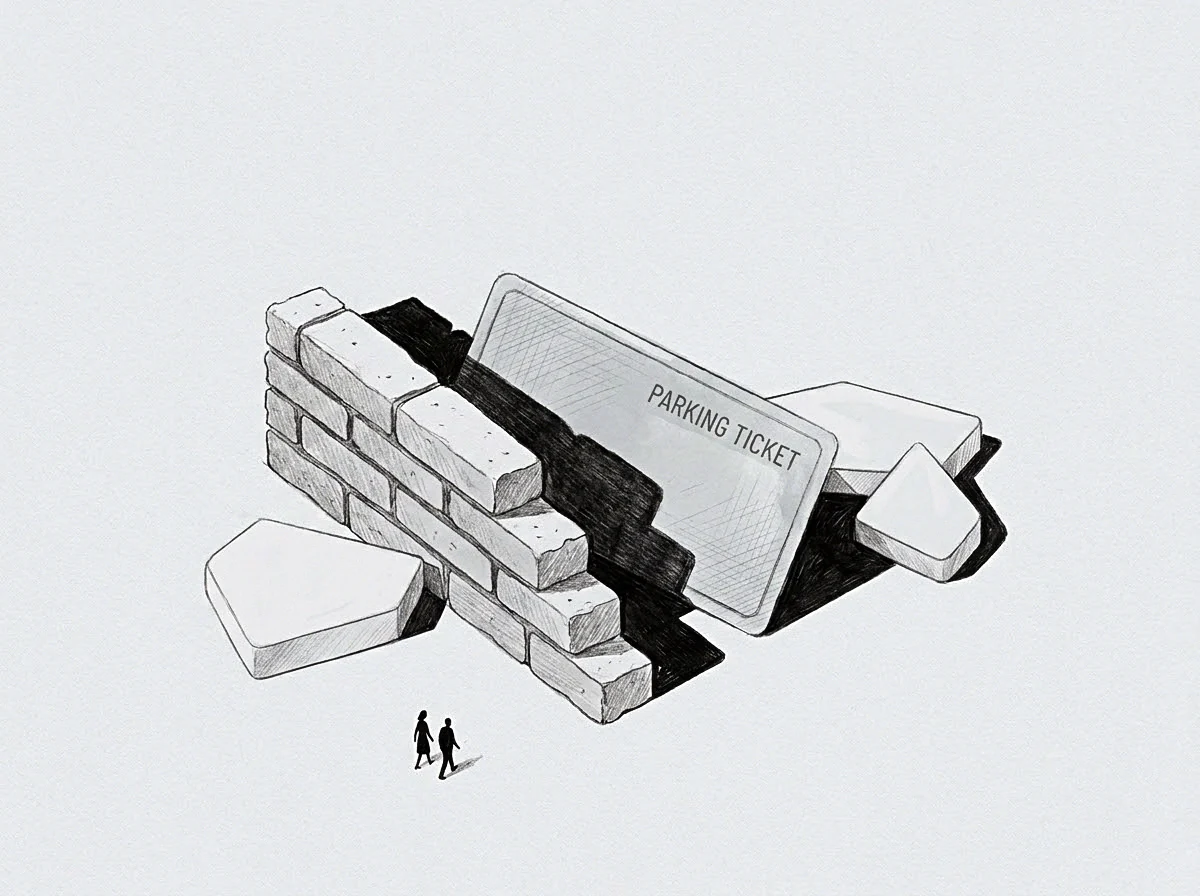
Resolving structural friction caused by unreinforced orders requires shifting from diffuse directives to single explicit terms. A term stated once with self-executing boundaries operates differently than a continuous order requiring ongoing managerial supervision. Instead of demanding compliance across vague operational domains, a structural term defines the precise threshold where action triggers an automatic review or structural exit.
Constructing effective operational limits eliminates the need for perpetual executive reinforcement. When a leader replaces an unmonitored directive with an explicit structural term, the burden of compliance tracking shifts from executive memory to operational architecture. If an account falls below the minimum revenue threshold, the software interface blocks intake automatically without requiring managerial intervention.
The operational system enforces the boundary, preventing cognitive friction and removing the risk of psychological contract breach.
Stating a term once with an explicit exit condition eliminates the structural friction created by perpetual unmonitored expectation.
Organizational clarity increases when leadership eliminates every directive that lacks an enforcement metric. By stripping away non-reinforced mandates, the executive layer establishes an operational baseline where stated terms correlate directly with enforced realities.
Inserting a hard automated threshold into the contract approval workflow ensures that client intake limits execute instantly without requiring ongoing executive monitoring.