
How Stated Directives Decay Across Successive Workplace Cycles Without Oversight
Written instructions lose operational fidelity across unmonitored team transfers as informal workarounds replace explicit terms without formal audit.
Erosion
An operator opens a five-year-old operational manual on a Monday morning and finds that the four-person logistics squad executes daily intake using three undocumented shortcuts while skipping two weight verification steps. The team believes they follow written protocol. Over thirty-six months, three successive squad leaders inherited the seat, each training the next through verbal instruction during live shifts.
The physical binder sat on a high metal shelf behind the packing station, untouched since the original facility launch. The gap between stated instructions and daily execution grows without intentional malice or overt rebellion.
Initial Divergence in Operating Cycles
The first workplace cycle after a founder or owner departs a direct management role introduces immediate structural ambiguity. Written directives contain unstated contextual assumptions that the original author held in memory. When a new operator assumes the desk, those unstated assumptions disappear.
The operator encounters edge cases, high transaction volumes, or missing equipment, prompting localized adjustments to keep production moving. These operational adjustments seem minor during a single afternoon, but over six months, the temporary adaptation hardens into standard operating behavior.
When the second generation of workers arrives, they receive instruction from the first generation rather than from the original written document. The first generation passes down localized modifications as mandatory practice while omitting the theoretical rationale behind the initial instructions. Social exchange research in organizational settings demonstrates that verbal transmission across management handovers degrades procedural accuracy at an exponential rate.
Each successive operational generation treats the previous generation’s shortcuts as the established baseline, adding localized efficiencies on top of existing informal modifications.
Unmonitored operational directives undergo systematic alteration during verbal transmission between successive workplace generations.
The Mechanism of Silent Omission
Directives decay primarily through omission rather than direct contradiction. Operators rarely state an explicit refusal to follow a written rule. Instead, they drop steps that appear redundant, time-consuming, or non-essential under daily workload pressure.
Quality control steps that yield invisible outcomes when successful are the first to vanish. If a manual mandates a dual signature on inventory adjustments but the software allows single-user submission, the second signature disappears within two turnover cycles unless an internal review catches the omission.
Management silence during these early omissions acts as structural permission. When a worker skips a mandated log entry to meet a dispatch deadline and no manager intervenes, the entire department registers that silence as an informal policy change. The practical understanding between management and staff shifts.
The stated term on paper remains unchanged, but daily execution accepts the shortcut as normative behavior. Over successive cycles, the distance between paper terms and actual practices creates latent financial and operational liability that surfaces during a crisis or external examination.
Uncorrected operational drift creates an institutional climate where compliance with written text becomes optional, leaving the organization vulnerable to systematic failure when high-risk edge cases occur.

Table
Physical artifacts like operations binders, compliance manuals, and software workflows function as institutional memory only when actively integrated into recurring evaluation routines. A physical object sitting on a conference desk carries zero operational authority without active verification. When an owner or director transfers responsibility to an intermediate manager, the written artifact often remains behind as a symbolic token rather than a daily instrument, transforming dynamic directives into static text.
Shift in Directional Transmission
During early organizational phases, the founder enforces directives through direct observation, real-time correction, and physical presence in the workspace. Authority relies on personal oversight rather than formal administrative structures. As the enterprise scales across multiple shifts or locations, personal oversight breaks down.
The founder writes process documentation to replace physical presence, assuming the text carries the same enforcement weight as personal observation. The text lacks agency on its own, losing authority the moment operational friction arises without explicit monitoring structures.
The loss of fidelity across successive cycles follows a predictable progression. Examining how execution changes from the founding operator to third-generation staff clarifies where structural enforcement breaks down.
| Operating Cycle | Primary Execution Source | Adherence to Stated Terms | Unstated Workarounds | Recovery Cost |
|---|---|---|---|---|
| Cycle 1: Founding Operator | Direct Author Supervision | Ninety-five percent compliance | Zero informal modifications | Baseline operating cost |
| Cycle 2: First Succession | Verbal Instruction and Memory | Seventy percent compliance | Two to three local shortcuts | Minor retraining hours |
| Cycle 3: Second Succession | Peer Demonstration | Forty-five percent compliance | Widespread informal norms | Significant operational downtime |
| Cycle 4: Third Succession | Localized Emergency Adaptation | Fifteen percent compliance | Systemic procedural substitution | Complete process reconstruction |
The Oral Tradition Replacement
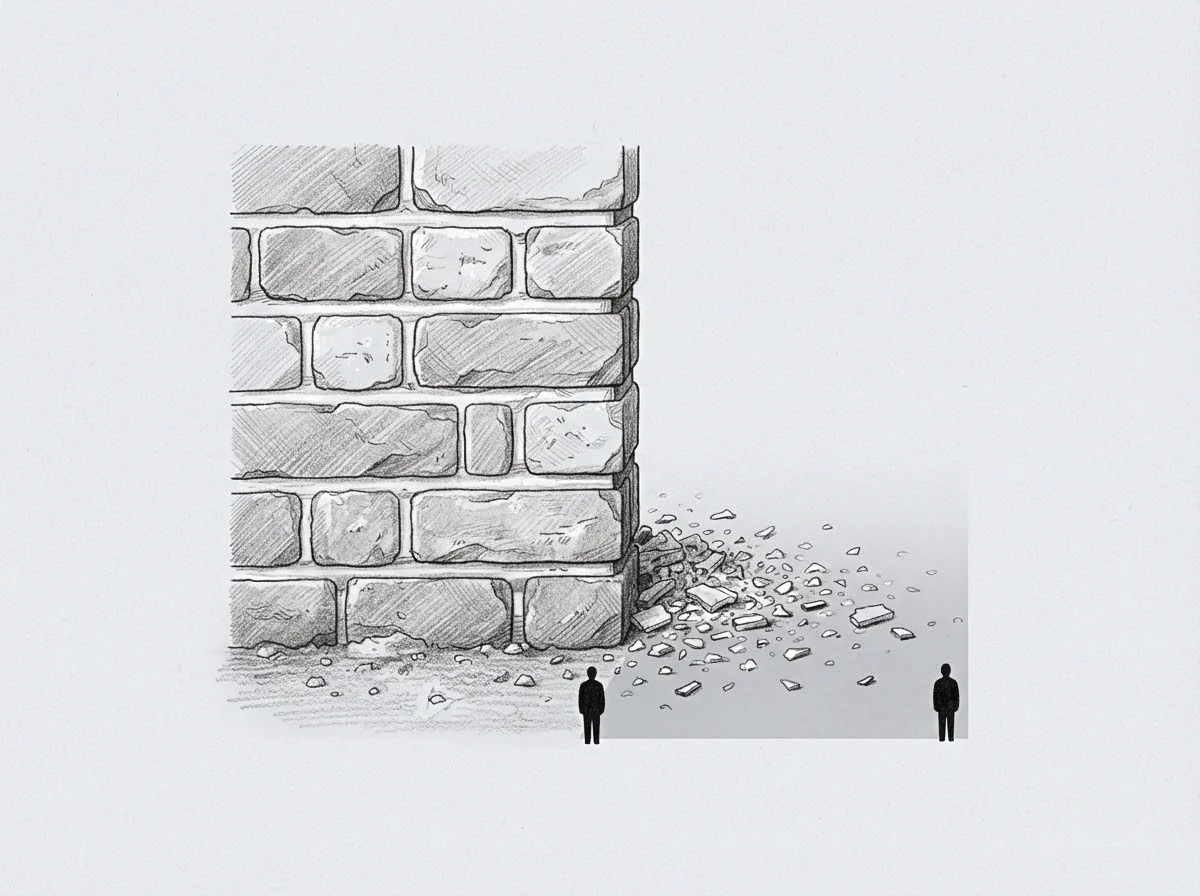
By the third operational cycle, peer demonstration fully replaces written process documentation. New employees shadow existing staff, learning actions through imitation without reading underlying terms. This shift toward an oral culture introduces subjective interpretations into standard tasks.
A step meant to prevent rare safety hazards gets framed as an unnecessary annoyance created by former executives who lacked practical field experience.
When leadership eventually discovers divergence during an incident review, management often accuses staff of deliberate insubordination. The operational team views the situation differently, having executed the role exactly as taught by immediate predecessors. The team considers the informal workaround to be the real process, treating the original document as obsolete paperwork preserved solely for external audits.
The current crew executes what the previous crew demonstrated, treating the written binder on the desk as an irrelevant administrative archive.

Friction
Operational workload creates continuous pressure to streamline daily tasks, driving workers to eliminate steps that offer no immediate personal utility. When daily throughput targets increase without additional staffing, employees protect their capacity by paring down complex procedures to absolute bare minimums. Steps that serve long-term quality control, legal compliance, or cross-departmental data tracking suffer first because their removal produces immediate time savings without immediate operational penalties.

Why Do Teams Omit Unmonitored Verification Steps?
Verification steps produce administrative friction without generating visible progress toward daily production metrics. A worker tasked with shipping fifty parcels an hour views a double-check scanning requirement as an impediment to target performance. If management measures parcel volume while ignoring scanning compliance, the worker rationally abandons the scan.
Organizational research on goal alignment shows that unmonitored verification tasks invariably yield to monitored speed targets.
Systemic procedural decay occurs whenever management measures throughput metrics while leaving process compliance unmonitored.
The decay of stated directives manifests through several distinct operational failure modes across workplace cycles:
- Procedural Atrophy occurs when verification steps disappear silently over consecutive shifts due to daily throughput pressures.
- Interpretive Mutation develops when successive supervisors rephrase written rules to fit local preferences, altering the original intent.
- Informal Substitution emerges when custom spreadsheets or unofficial messaging groups replace official enterprise record systems.
- Selective Compliance happens when staff follow safety or quality rules only when senior management visits the operational floor.

The Accumulation of Covert Modifications
Covert modifications accumulate beneath the surface of routine operations until systemic vulnerability manifests as client default, inventory deficit, or regulatory failure. A financial service firm requiring dual sign-offs for wire transfers above fifty thousand dollars provides an illustration. Over four management transfers without audit, staff adopt a practice where one manager logs in using a shared credential file to approve transfers alone, saving twenty minutes per transaction.
The practice persists for two years because no transfers fail, establishing an unstated consensus that prioritizes speed over fraud protection.
When an unauthorized transfer eventually occurs, management discovers that the formal policy written in the handbook was abandoned twenty-four months earlier. The internal security control existed on paper, but daily practice operated under an entirely different set of unstated rules. The capacity and expense required to recover from the resulting breach exceed the cumulative value of all time saved through the shortcut.
What specific unstated assumptions are current team members making to hit their daily volume targets in the absence of manager oversight?

Audit
Testing operational reality against written documentation requires structured, recurring intervention rather than occasional casual walkthroughs. A periodic review must examine real-time execution at the operational site, comparing physical actions step-by-step against written procedures. When discrepancies surface, leadership must determine whether written documents require updating to reflect improved methods or whether staff must return to mandated standards.

Measuring Psychological Contract Breach
Systemic decay breaks operational expectations between organizational layers. Research on psychological contracts by Rousseau and Robinson demonstrates that perceived obligations shift rapidly when formal statements conflict with observed management behavior. When leadership publishes strict operational standards but tolerates informal shortcuts to maintain production output, employees experience a structural breach.
Staff infer that management’s stated commitments are negotiable, leading to reduced trust and further departure from formal policies.
Correcting this cycle requires clear operational alignment where stated expectations match measured reality. Re-establishing control involves specific administrative steps:
- Conduct physical observations without advance notice to record true operational baselines.
- Map observed execution directly against written process documentation to calculate divergence ratios.
- Interview operators to identify specific operational friction points that drive manual shortcuts.
- Update written standards to incorporate valid operational improvements while restoring essential security steps.
- Establish recurring review intervals tied to manager performance evaluations to prevent future drift.
Restoring operational integrity requires aligning written standards with measured execution while removing unnecessary process friction.
Constructing High-Fidelity Terms
Preventing directive decay requires drafting explicit operating conditions that specify exact standards, evaluation frequencies, and enforcement actions. Memory replaces written records when terms remain vague. Stated directives must define precisely who performs the action, what physical or digital evidence proves compliance, and how supervisors verify the output.
Ambiguous phrases like regularly, periodically, or as needed encourage immediate interpretation drift.
A concrete operational directive states exact parameters: the lead operator must verify calibration metrics every morning at eight o’clock, log the numbers in the central database, and receive weekly supervisor sign-off. If calibration logs miss two consecutive entries, the automated system locks the line until inspection occurs.
Section four of the revised operating contract mandates bi-weekly random audits with mandatory line suspension if compliance drops below ninety-eight percent.

Anchor
Fixing stated directives across successive cycles demands structural enforcement mechanisms that operate independently of individual manager oversight. Relying on continuous human supervision to maintain standard procedures invites inevitable failure when manager turnover occurs. Systems that embed compliance checks directly into daily tools prevent informal modifications from taking root.

Systemic Verification Structures
Software controls, physical interlocks, and automated validation gates force adherence to stated terms without requiring personal management intervention. If a shipping application prevents label printing until weight fields pass automated validation, the operator cannot skip the weighing step. The physical constraint enforces the directive, insulating the standard from verbal degradation during shift handovers.
When physical or digital constraints are impossible, organizations must establish formal peer-audit protocols where cross-functional teams inspect adjacent departments. Peer inspection breaks the closed verbal loops that develop within isolated teams. A quality manager from production inspecting logistics intake identifies informal shortcuts that logistics squad leaders take for granted, restoring objective evaluation against written text.
Sustaining Standard Execution Across Generations
Long-term operational stability relies on treating process documentation as living infrastructure rather than static historical text. Management must schedule mandatory revision cycles every six months, bringing operators and directors together to review work practices. This process allows teams to formally adopt legitimate operational improvements into written standards while eliminating unapproved shortcuts.
The enterprise maintains process fidelity by continuously converting informal field adaptations into explicit, reviewed operating agreements.
Effective leaders maintain structural alignment by treating every operational departure as immediate operational data, adjusting written agreements or enforcing compliance before informal workarounds consolidate into permanent institutional habits.