
Middle Management Information Filtering Under Unreinforced Policy Terms
Unreinforced policy terms force middle managers to filter upward information, trading operational ground truth for administrative peace with leadership.

Screen
The morning log arrives stripped of its incident notes. An operator deleted two maintenance flags before transmitting the file upward, knowing the executive suite reads red entries as management failures rather than equipment age. The policy manual specifies immediate notification for every mechanical deviation.
Nobody checks the source telemetry against the dispatch summary, so the written obligation carries zero institutional weight. The supervisor marks the shift clear and sends the clean spreadsheet.
The morning log arrives stripped. That omission protects the midlevel operator from an interrogation that offers no operational remedy. When an executive level issues compliance rules without verifying field execution, middle management constructs a private filter.
The midlevel seat sits between the physical breakdown of equipment and the quarterly expectations of directors who penalize bad news. Transmitting raw field friction creates administrative friction for the messenger. Suppressing the dispatch note creates calm.
The revision costs nothing.
A policy without immediate verification transforms the supervisor into an editorial filter for executive comfort.
Written directives routinely function as symbolic artifacts rather than functional contracts. Sociological research on organizational decoupling demonstrates that formal structures frequently separate from daily work routines to maintain external legitimacy while preserving internal convenience. When leadership creates an operating standard but assigns no inspection resource, middle managers identify the unreinforced clause instantly.
The manager recognizes that executive leadership desires the reputation of safety without paying the throughput slowdown that thorough inspection demands.

Administrative Insulation and Upward Smoothing
Field friction threatens operational throughput when handled according to formal protocols. A supervisor who records every minor safety pause halts production, misses volume quotas, and triggers bureaucratic scrutiny. The formal rule commands stoppage; the informal compensation plan rewards volume.
Under unreinforced governance, the midlevel tier resolves the contradiction through selective editing. The manager translates physical chaos into statistical stability.
Silence carries no penalty. Executives read the summary. They see clean metrics and conclude their policy works as written.
The midlevel employee shields superiors from the realities of the shop floor, creating an operational insulation layer. This dynamic mirrors the core mechanism of the psychological contract: unspoken mutual understandings override written terms when daily incentives contradict formal documents. The midlevel operator protects the director from uncomfortable operational truths in exchange for autonomy from executive interference.
The director would state that local managers must exercise operational discretion to prevent minor anomalies from congesting executive calendars.

Slack
Discretionary leeway expands wherever oversight recedes. When executive tiers mandate documentation rules without verifying the submission stream, they grant middle managers de facto legislative power over what information survives the climb upward. The absence of audit turns strict instructions into optional guidelines.
The operational floor stays dark.
Middle personnel do not eliminate information at random. They remove data points that generate uncompensated labor. If escalating an inventory discrepancy requires four hours of supplementary reporting without producing corrective inventory, the supervisor absorbs the variance locally.
The midlevel seat absorbs impact. Over time, this selective omission forms a predictable taxonomy of organizational muting:
- Suppressed operational friction refers to minor machine halts and scheduling conflicts resolved through off-the-record workarounds that official safety rules prohibit.
- Sanitized headcount metrics tracks the practice of reporting full shift rosters by borrowing staff from adjacent divisions without recording the resulting line vacancies.
- Deferred maintenance logging represents the systemic non-recording of mechanical wear that would trigger mandatory equipment downtime before quarterly ship dates.
- Filtered customer dissents describes the midlevel habit of classifying service failures as user error to keep customer satisfaction scores aligned with executive compensation targets.
The supervisor edits out friction that senior leadership provides no protection against.
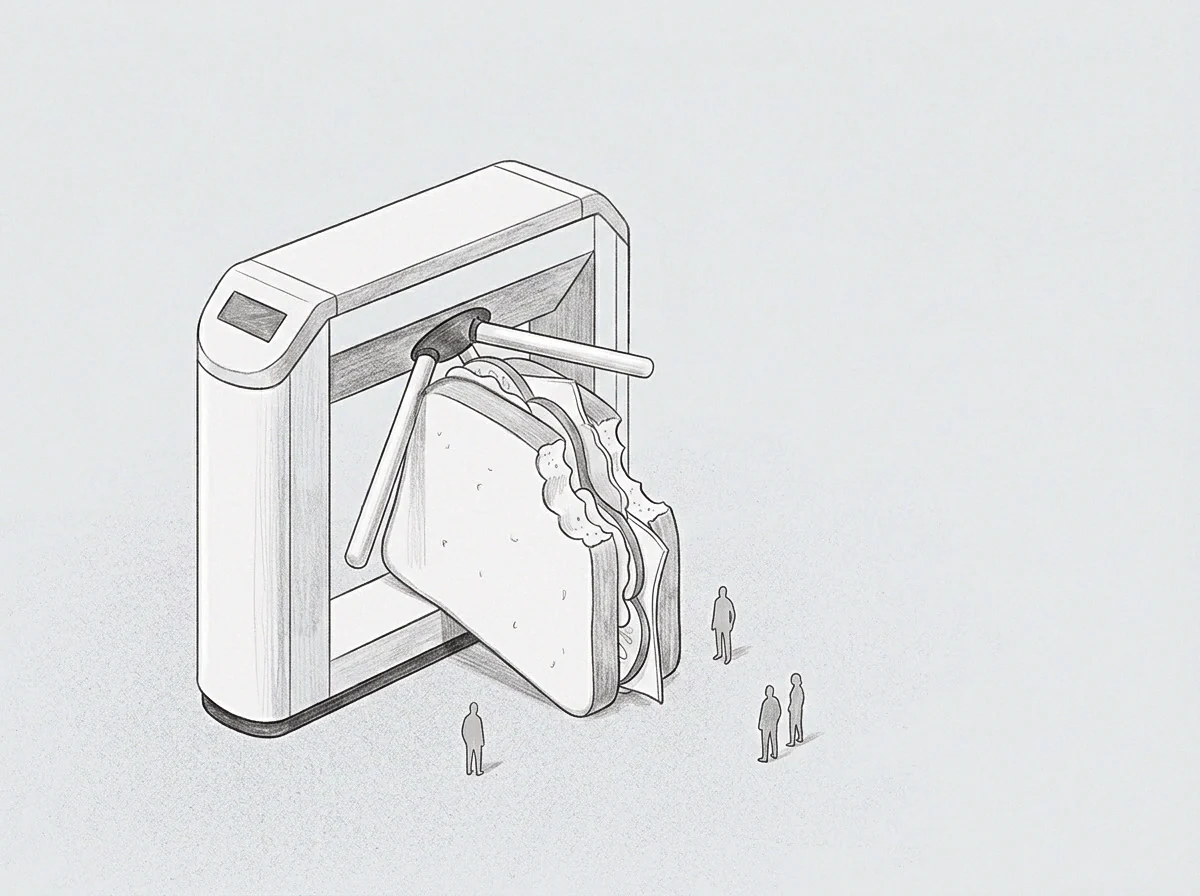
Where Does The Reporting Falter?
The filtering action accelerates at the precise boundary where an escalation exposes the reporter to personal risk. Research into upward voice in hierarchical systems identifies psychological safety as a structural outcome rather than an emotional attitude. When an operator discovers that speaking upward generates personal liability while quiet compliance creates smooth reviews, speech disappears.
Risk shifts downward. Bad news stalls locally.
Take an operational unit running thirty days behind schedule under an unmonitored reporting directive. If the manager reports the true delay, executive leadership demands remedial overtime without supplying budget. If the manager reports on-track delivery, the problem remains hidden until shipment week, postponing the confrontation by months.
The rational economic move for the midlevel manager is silence. The unbacked rule evaporates.
Unchecked procedures yield silence rather than compliance.

Gauge
Measurement separates enforceable terms from executive aspiration. A stated policy without a physical counterweight is an exercise in administrative theatre. When an executive mandates that all software anomalies enter the bug queue, but engineers face delivery penalties for every open ticket, the ticket queue empties while the codebase degrades.
Writing creates no compliance.
| Operational Dimension | Explicit Policy Mandate | Unreinforced Default | Reinforced Operational Reality |
|---|---|---|---|
| Incident Escalation | Immediate written logging within two hours of event identification | Verbal settlement at shift boundary; zero administrative trail | Automated telemetry logging paired with independent weekly spot checks |
| Safety Exceptions | Total production halt upon discovery of uncertified component | Manual bypass applied to maintain target run volume | Interlocked physical controls that disengage equipment power automatically |
| Resource Allocation | Formal purchase requisition submitted for minor tool replacement | Informal tool scavenging and unauthorized local swaps | Pre-approved budget limits with randomized audit of supply store records |
| Performance Reporting | Comprehensive defect attribution assigned to specific workstations | Defects grouped into generic scrap categories to protect team rankings | Barcoded component tracking connecting defects directly to station inputs |
The difference between administrative declaration and structural reality sits in the enforcement architecture. An organization that relies on the moral fortitude of middle managers to uphold uninspected standards builds an information void. Inspection changes the filter.
When the cost of truthful escalation exceeds the cost of quiet suppression, rational actors choose suppression without hesitation.

The Construction of Enforceable Operating Terms
Organizations that restore upward communication replace symbolic demands with inspectable mechanisms. An operating term functions only when verification is detached from the middle manager’s social incentives. Ground truth surfaces when governance incorporates non-negotiable physical terms:
- Direct telemetry feeds establish automated transmission of operational output directly to analytics systems without human curation.
- Independent inspection cycles schedule random physical audits of physical inventory and log files by personnel outside the reporting chain. The audit confirms alignment between ledger entries and physical shelf counts.
- Explicit reporting immunities guarantee that midlevel personnel who flag critical systemic failures face zero production penalties for resulting downtime.
When an operating term carries no audit clause, the reporting tier protects local relationships by omitting operational failure.
Failure to install verification mechanisms transforms executive oversight into an exercise in collective hallucination. Leaders read filtered reports, celebrate fictitious efficiency, and discover catastrophic operational failures only when external clients or regulatory bodies breach the corporate envelope from outside.
Drift
Systemic divergence between declared principles and daily operational reports deepens over time. When unreinforced rules persist, the gap between formal documentation and shop-floor practice becomes the institutional norm. New managers arriving in the organization do not consult the handbook.
They observe how experienced peers handle bad news. They see which metrics trigger executive outrage and which transgressions are greeted with silent relief. The covert contract holds.
A covert contract develops between middle operators and executive directors. The director provides the manager with operational autonomy, light surveillance, and manageable performance reviews. The manager provides the director with predictable charts, compliant summaries, and the appearance of total policy adherence.
Nobody files the formal dissent. Both parties trade long-term operational integrity for short-term bureaucratic comfort. The arrangement costs the enterprise its capacity to detect internal collapse.
In high-hazard environments, this information suppression creates latent conditions for systemic failure. Organizational accident theory reveals that disasters rarely stem from sudden individual errors. Catastrophes grow through extended incubation periods characterized by unrecorded anomalies, normalized non-compliance, and silenced warning signals.
A midlevel tier that strips warning indicators from escalation reports to satisfy unreinforced policies systematically dismantles the organization’s self-correcting mechanisms.
Clarity arrives through measurement. An executive who establishes a policy without attaching an audit mechanism simply issues an invitation for middle management to build an edit screen. The midlevel tier edits out the signal, retains the noise, and passes upward a portrait of compliance that satisfies executive expectations while actual operational risk accumulates beneath the floorboards.
The persistent uncertainty remains whether leadership genuinely misjudges the filtering capacity of middle managers or tacitly cultivates that screening function to preserve strategic plausible deniability when unreinforced rules eventually fail in public view.