
Quantifying Early Mandate Erosion in Middle Management Layers
Early mandate erosion occurs when informal executive vetoes quietly strip operational finality from middle managers while leaving target accountability intact.

Decay
An executive signs a written delegation granting a department leader full operational ownership over a twelve-person software unit. Six weeks later, the middle manager hires a principal engineer, submits the signed offer letter to human resources, and receives an administrative hold notification. An unwritten protocol requires executive oversight for engineering headcount expenses above a threshold never documented in the initial agreement.
Decisions require speed. The formal title remains unchanged while the practical capacity to execute decisions vanishes without a revised written mandate.
Early mandate erosion occurs when formal authority granted on paper meets unstated veto power in daily operations. Management literature identifies this shift as a breach of the psychological contract, where operational finality retreats upward while accountability stays attached to the middle tier. Executive oversight rarely announces its return through formal restructuring.
The withdrawal happens through small administrative checks, mandatory preliminary reviews, and silent delays in approval queues.
A written delegation without explicit approval boundaries converts managerial authority into administrative transcription.
When an executive routinely overrides operational choices, middle management layers adapt by ceasing to decide. The middle manager shifts from an autonomous decision-maker into a communication bridge between senior leadership and frontline staff. This transformation alters organizational cadence.
Information moves upward for clearance while operational velocity drops across every subordinate project. Decisions stall while waiting for silent sign-offs.
Unstated sign-off requirements undermine leadership credibility across direct reports. Subordinates recognize when their immediate superior lacks final decision rights over budget, scheduling, or talent acquisition. When team members observe that managerial approvals undergo secondary validation by executive sponsors, operational requests bypass the middle manager entirely.
Direct reports send proposals straight to senior leadership, neutralizing the structural purpose of the management tier. Silence carries a cost. The middle management layer becomes a financial overhead burden without structural authority.

Formal Authority and Operational Scope
The gap between assigned responsibility and actual authority generates silent organizational friction. A middle manager receives financial targets for a quarterly deliverable, yet lacks authority to reallocate capital across budget lines without executive review. Authority remains ambiguous.
When budget authority requires multi-layered sign-offs for routine expenses, operational management becomes administrative processing.
Quantifying this structural shift requires tracking where decision finality resides. Formal governance documents assign operational ownership to middle management, but operational reality concentrates decision power in informal executive committees. This separation between formal assignment and practical authority degrades operational efficiency.
Middle managers spend work hours drafting justification memoranda for standard operational choices rather than directing operational execution.

Implicit Reversals in Daily Operations
Implicit reversals happen without public policy changes. Senior executives alter vendor contracts, shift product priorities, or adjust team assignments without informing the middle manager who owns the affected operational area. Reversals destroy accountability.
The middle manager discovers the policy change through operational breakdown rather than direct governance updates.
This dynamic alters managerial behavior over time. Middle managers stop initiating strategic changes, opting to wait for explicit executive direction on minor operational choices. The organization builds an informal dependency on central decision-making while maintaining the expense of a multi-tiered management structure.
The financial cost of this friction accumulates as delayed project completions, administrative redundancy, and increased executive meeting density.

Floor
Measuring mandate erosion requires establishing concrete indicators of decision authority. Management capacity decays along measurable metrics long before an organization notices operational failure. Tracking decision cycle latency, executive override frequency, and administrative bypass rates makes silent mandate erosion visible to leadership teams.
Data replaces sentiment. Organizational research demonstrates that early mandate erosion correlates directly with high rates of retroactive decision modification by executive sponsors. When an executive modifies more than fifteen percent of decisions made within a manager’s formal mandate, managerial initiative drops rapidly across subsequent operational cycles.

Does Decision Reversal Rate Predict Management Atrophy?
The frequency of executive intervention serves as a primary metric for structural mandate drift. High reversal rates indicate that formal delegation documents fail to reflect operational reality. Execution slows down.
Tracking decision outcomes across consecutive quarters reveals whether managerial scope expands or contracts in daily practice.
Organizations can measure mandate health through four distinct operational metrics:
- Decision Reversal Rate measures the percentage of middle management choices altered or cancelled by executive leadership within thirty days of issuance.
- Approval Cycle Latency tracks the average number of business days required to secure senior executive clearance for standard operational expenditures inside the approved annual budget.
- Bypass Frequency Index records how often frontline staff route operational requests directly to executive leadership, skipping intermediate management tiers entirely.
- Budget Re-allocation Friction calculates the duration and documentation volume necessary to shift funds between pre-approved line items within a department budget.
When these metrics trend upward over two consecutive quarters, middle management function retreats from autonomous leadership into administrative coordination. The manager stops deciding. The operational floor collapses when every decision requires secondary authorization, regardless of the financial scope or strategic weight involved.
When decision reversal rates exceed fifteen percent, middle management operational velocity decreases by half across subsequent cycles.
A low threshold of operational finality forces middle managers into defensive documentation habits. Rather than executing project goals, managers spend administrative capacity building documentation trails to defend standard operational decisions against potential executive overrides. Capital allocation stops.
This shift drains management capacity away from competitive strategy, customer acquisition, and frontline staff development.
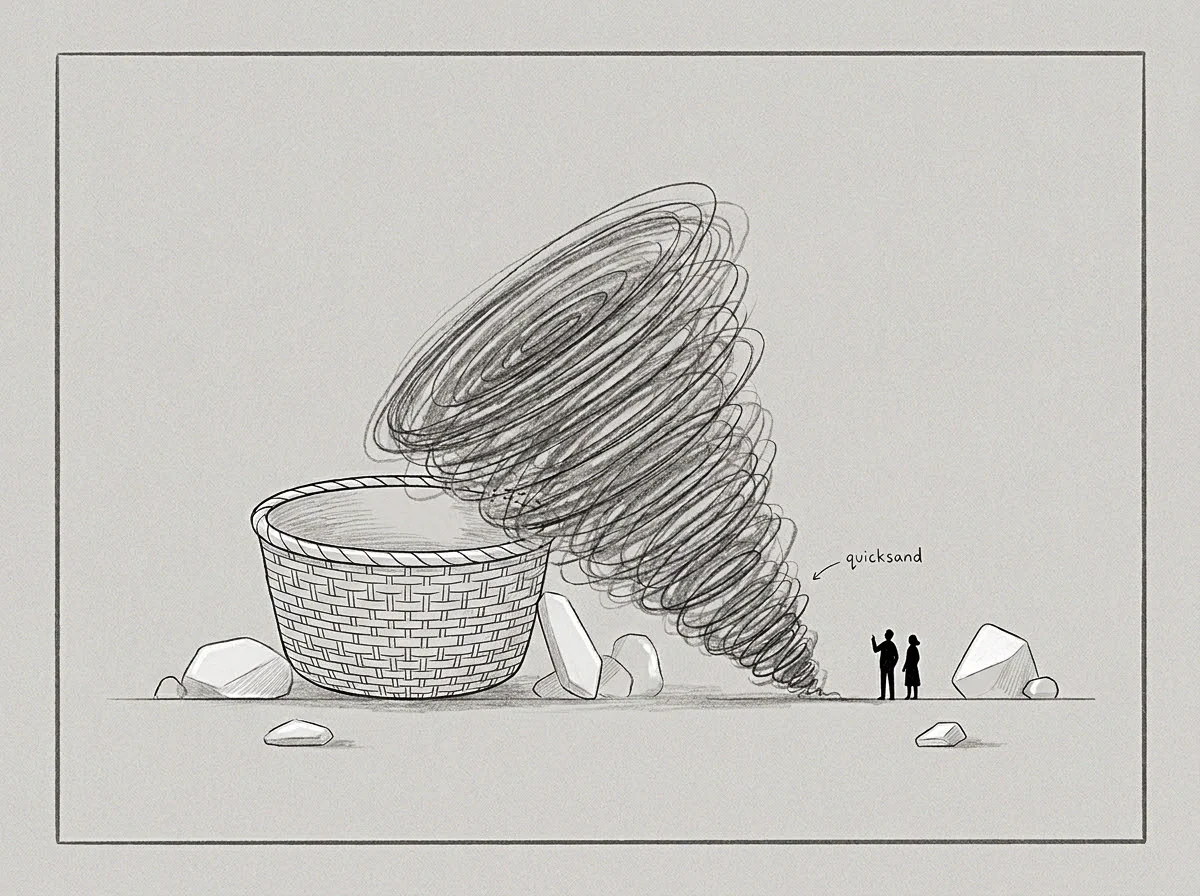
Metrics for Structural Mandate Drift
Quantifying structural drift requires continuous tracking of decision rights against governance policy. Mandate erosion manifests in elevated meeting hours, where middle managers present routine operational status updates to executive panels for informal clearance. The volume of exploratory governance meetings replaces direct execution hours, introducing persistent delays into project workflows.
Operational teams experience reduced speed when managerial authority shrinks. Line workers wait for executive authorization on minor resource requests, causing work backlogs across technical units. The structural friction compounds as middle managers stop exercising discretion, forwarding all operational choices upward to protect their standing within the organizational hierarchy.

Paper
A contract defines terms before operational cost accrues. In middle management arrangements, unstated terms create covert contracts where executives bill managers for outcomes without providing final authority over inputs. Preventing mandate erosion demands explicit, written boundaries that specify decision finality, budget authorization limits, and escalation rules before operational work begins.
Terms clarify responsibility. Management research shows that psychological contract breach occurs primarily through unstated expectations regarding operational boundaries. Stating terms explicitly transforms informal assumptions into enforceable operational scope.
When terms sit in written governance documents, both parties share a single baseline for authority and evaluation.

Written Scope Against Silent Retraction
Silent retraction occurs when senior leadership reclaims decision authority without modifying formal employment terms or management titles. Executive sponsors pull back mandate boundaries during periods of organizational stress or financial volatility, leaving middle managers accountable for metrics they no longer control. Terms replace boundaries.
Explicit written terms protect operational autonomy by requiring formal governance adjustments before authority boundaries can shift.
- Define explicit spending limits that permit middle managers to allocate operational funds without secondary executive authorization.
- Establish written guidelines governing when senior executives may intervene in department personnel selection and operational structure decisions.
- Document formal escalation paths that require executive sponsors to state written reasons when reversing a middle manager’s operational choice.
- Set fixed operational review schedules to prevent ad-hoc executive interventions during active project execution cycles.
Writing these terms prevents covert contract drift. Position defines function. When governance documentation delineates decision limits clearly, middle managers exercise authority within their designated domain without seeking informal approval for routine operations.
Written mandate boundaries eliminate the operational delays caused by informal executive approval queues.
Unstated expectations generate continuous conflict between executive teams and middle management. Senior leaders assume middle managers will consult them on high-visibility tasks, while managers assume they hold full operational ownership based on formal titles. Veto power remains unstated.
Establishing clear written terms forces both parties to acknowledge the exact limits of managerial discretion prior to project launch.

Resource Authority and Accountable Execution
Accountable execution requires direct control over necessary operational inputs. Middle managers assigned revenue targets without final authority over staff recruitment, software procurement, or vendor contracting face structural failure. Silence signals compliance.
Granting clear resource authority aligns operational responsibility with administrative power, eliminating excuses for performance shortfalls.
When resource authority retreats to senior executive levels, middle managers lose leverage over operational outcomes. Department heads cannot hold vendors accountable or adjust team workloads when senior sponsors control every administrative lever. The resulting paralysis costs organizations significant time, energy, and market responsiveness during crucial competitive windows.

Table
Evaluating mandate erosion requires comparative analysis across structural configurations. Comparing explicit mandate delegation, covert erosion, and total mandate retraction highlights how decision finality, resource ownership, and operational velocity shift under different governance models.
The table below outlines operational characteristics across three distinct managerial authority structures.
| Governance Dimension | Explicit Mandate Boundary | Covert Mandate Erosion | Total Mandate Retraction |
|---|---|---|---|
| Decision Finality | Manager holds final authority within written financial limits | Executive sponsor retains informal veto over routine choices | All operational decisions require senior executive sign-off |
| Resource Control | Direct oversight of allocated department budget lines | Re-approval required for pre-allocated capital expenses | Centralized executive control of operational expenditures |
| Operational Velocity | Rapid project execution with localized decision speed | Stalled workflows caused by secondary approval queues | Severe operational latency across all departmental projects |
| Accountability Realization | Clear alignment between manager decisions and target outcomes | Manager held responsible for outcomes controlled by executives | Manager functions as administrative coordinator without targets |
| Data derived from structural analysis of managerial decision rights and governance protocols. | |||
Organizational structures that maintain explicit mandate boundaries consistently outperform configurations burdened by covert erosion. When middle managers retain operational finality within specified domains, project timelines compress and operational friction drops. Covert erosion creates administrative confusion, leaving middle management layers exposed to performance penalties while lacking authority to alter operational outcomes.
Aligning decision finality with operational accountability prevents the structural decay of middle management tiers.
Covert mandate erosion generates hidden administrative costs across every department. Secondary reviews require additional reporting layers, multi-participant status meetings, and prolonged decision cycles. Total retraction renders the middle management layer redundant, converting managers into expensive message channels for senior executive directives.

Contract
Reclaiming operational finality requires middle managers to state clear terms before accepting responsibility for organizational targets. A middle manager must negotiate explicit authority boundaries at the moment of mandate assignment rather than seeking authority adjustments after operational friction begins. Stating terms early sets the baseline for managerial function and protects the organization against silent mandate drift.
Data replaces sentiment. Middle managers who demand written decision boundaries prevent the slow erosion of their operational scope. When executives attempt to introduce informal sign-off requirements during active execution cycles, the manager points to the written agreement, forcing senior leadership to formally modify the mandate or respect the manager’s finality within their designated domain.

Stated Terms Before Escalation
Establishing clear terms protects both executive sponsors and middle managers from relational decay. Executive sponsors gain clarity on what decisions will be made independently, while middle managers gain the operational room required to execute strategic objectives. Finality demands written boundaries.
When authority boundaries are explicit, operational escalations occur only when project parameters breach pre-determined financial or strategic thresholds.
Middle managers must treat their authority as a concrete operational parameter. When senior leadership regularly bypasses or overrides a manager’s choices, the manager must present decision reversal metrics directly to executive sponsors. Demonstrating the operational cost of mandate erosion in terms of project delays, administrative overhead, and lost velocity forces executives to choose between restoring managerial finality or formally absorbing the operational workload themselves.

Reclaiming Finality in Managerial Decisions
Restoring managerial finality requires consistent enforcement of written terms. Middle managers must decline accountability for targets when senior leadership strips away the authority required to manage operational inputs. Taking a firm position on decision rights establishes professional standing and protects organizational cadence from bureaucratic creep.
Organizations thrive when operational decisions occur close to technical execution. Protecting middle management mandates from early erosion ensures that decisions remain fast, localized, and contextually informed. By measuring mandate drift, enforcing written scope, and refusing unstated veto arrangements, leadership teams maintain effective operational structures that support long-term organizational execution.