
Contractual Capital Shift Risk In Early Stage Equity Restructuring Arrangements
Contractual capital shift risk occurs when corporate recapitalization terms adjust share valuation, liquidation preferences, and anti-dilution clauses, transferring equity ownership from common holders to senior investors.

Table
Four months after Series A closing documents were drafted, an early operator sat in a legal counsel office reviewing a revised equity schedule. The initial cap document showed a forty percent ownership block assigned to the operating partner who built the initial technology infrastructure without salary for two years. A new recapitalization agreement sent by incoming investors altered that number to three point two percent.
The shift did not occur through direct asset sale or voluntary conveyance. It occurred through a mandatory corporate restructuring clause triggered when a down round investment altered common stock valuation, activating senior liquidation preferences, full ratchet anti-dilution provisions, and an expanded unallocated employee option pool calculated entirely on pre-money equity holdings.
Early equity distribution in corporate ventures often begins with informal equity promises made when capital is scarce. Operators contribute labor, physical resources, and deferred compensation under an unstated expectation of equivalent long-term ownership security. When corporate capital structures undergo restructuring during distress, down rounds, or recapitalizations, contract terms replace historical expectations.
Senior preferred equity instruments reset cap structures by asserting contractual priority over common equity holders who hold no protective conversion terms.

Cap Table Restructuring and Reallocation Triggers
Corporate equity restructuring arrangements alter share allocations through contract terms that operate upon specific liquidity or valuation thresholds. Early equity allocations remain vulnerable when formal agreements lack protective covenant provisions. Senior preferred stock issued during early equity rounds typically carries rights that override common equity protections when asset values decline.
When recapitalization occurs, senior preferred investors use conversion adjustments to capture larger proportions of equity.
Dilution falls on common stock. The original capital structure collapses into a simplified format where senior preferred investors convert debt or preferred holdings into controlling equity blocks. Common equity holders retain nominal share counts while total equity shares multiply exponentially.
This mechanical dilution transfers economic ownership without requiring explicit equity transfers from individual shareholders.
Senior equity holders maintain liquidation rights that dictate asset disbursement order during corporate transitions. Participating preferred shares draw capital from the corporate structure before common stock receives consideration. When enterprise value drops below total liquidation preference amounts, common equity value drops to zero regardless of historical labor or operational provision.
| Equity Class | Restructuring Mechanism | Economic Value Impact | Governance Control Rights |
|---|---|---|---|
| Senior Preferred Equity | Full Ratchet Anti-Dilution Adjustment | Protects capital percentage by issuing replacement shares at lowered valuation pricing. | Maintains board seats and protective consent rights over corporate structural changes. |
| Junior Preferred Equity | Pay to Play Conversion to Common | Waives preference rights if holder declines participation in recapitalization financing. | Surrenders board representation and major transaction veto authority. |
| Founder Common Equity | Pre Money Option Reserve Expansion | Absorbs concentrated share dilution before incoming capital allocation enters structure. | Loses voting majority and board controlling share thresholds. |
| Unvested Common Equity | Accelerated Option Reserve Recapture | Returns unvested equity percentage to corporate treasury for allocation to new hires. | Holds no corporate voting power or protective governance covenants. |

Valuation Drops and Down Round Equity Shift
Down round restructurings occur when corporate enterprise value falls below valuations set in previous financing cycles. Incoming institutional investors demand structural security against historical equity overhangs. They implement pay to play provisions requiring existing equity investors to participate in new capital calls on a pro-rata basis.
Investors who decline participation suffer immediate conversion of senior preferred holdings into standard common equity.
Seniority reshaped the ownership table. Corporate restructuring clauses function as formal filters that separate historical contribution claims from enforceable equity titles. The contract terms enforced during corporate recapitalizations redefine who retains economic rights inside the enterprise.
Restructuring arrangements often include anti-dilution waivers forced upon historical common shareholders during distress recapitalizations. When corporate capital defaults occur, major investors negotiate terms that waive prior common anti-dilution rights while establishing high liquidation preference multiples for newly injected capital. The resulting capital allocation removes historical equity claims through written contractual mechanisms.
A pay to play clause enforces participation. The clause forces earlier investors and operators to inject additional cash during down rounds or forfeit existing liquidation preference privileges. An early partner lacking personal capital to participate in a distress round sees senior preferred holdings forcibly converted into diluted common shares.
The resulting capital shift consolidates ownership power among incoming institutional capital providers who hold sufficient reserves to participate in recapitalization calls.
A pay to play term states that any preferred shareholder who fails to purchase a pro-rata share of a newly authorized equity issuance forfeits anti-dilution protection and converts preferred stock into standard common stock at a designated conversion ratio.

Split
Disputes over equity distribution emerge when operational provision accumulates without formal legal documentation. Early team members frequently contribute unpaid labor, personal credit lines, and proprietary knowledge under an informal understanding that ownership percentages stay fixed. This silent ledger operates as social exchange until formal corporate restructuring mandates an explicit legal count.
At that moment, legal agreements take absolute precedence over unstated historical contributions.
Unstated debt demands cash settlement. When institutional capital enters during a corporate crisis, incoming investors assess only documented contractual assets and liabilities. Informal agreements between founding partners regarding equity adjustments receive zero recognition in formal debt or capital schedules.
The gap between expectation and legal documentation creates immediate structural conflict during equity restructurings.

Social Exchange Theory and the Unstated Ledger
Organizational research in social exchange demonstrates that informal obligations create psychological capital balances between partners. One individual provides uncompensated labor while another promises future equity grants without executing formal stock purchase agreements. Social exchange research in corporate governance shows that unstated contribution debt converted into equity claims fails under formal recapitalizations unless memorialized in debt paper prior to Series A funding; this finding rests on multi-firm survey data of early founder departures, where informal equity promises were invalidated by institutional investors during down-round restructurings.
Silent debt accumulates rapidly in early stages. Operating partners accept reduced compensation under the belief that initial share allocations remain immutable. When financial stress forces recapitalization, equity valuation formulas reduce unmemorialized equity shares to minor fractions.
The formal legal contract wipes out the unstated contribution debt because corporate governance statutes recognize only documented share registries and written board approvals.
Unstated historical contribution creates no enforceable preference when recapitalization covenants wipe out common equity classes.

Cram Down Mechanics in Early Stage Recapitalization
A cram down restructuring occurs when preferred equity holders and board majorities pass corporate charter amendments that compress existing equity valuations. The process reduces common share values to nominal figures while authorizing new preferred share issuances to incoming capital sources. Original equity holders find their ownership percentages compressed from dominant positions down to negligible fractions.
The mechanical execution of a cram down relies on share consolidation moves like reverse stock splits paired with share pool additions. Board majorities approve charter amendments expanding authorized common shares, followed by reverse share splits that reduce total outstanding shares held by non-participating investors. Incoming investors then purchase newly authorized preferred shares at reduced prices per share, effectively reallocating total equity ownership.
Dilution falls on common stock. The legal documentation supporting cram downs relies on explicit corporate power granted under Delaware General Corporation Law or equivalent jurisdictional statutes. Unless early common shareholders hold protective voting rights that explicitly require class-based approval for charter amendments, preferred share majorities execute cram downs legally without common shareholder consensus.
- Unstated Sweat Equity Claims remain legally unrecoverable during recapitalizations when written stock purchase agreements were never executed by early operating partners.
- Convertible Note Overhang creates sudden equity compression when accrued interest and valuation caps force automatic share conversion during down rounds.
- Anti-Dilution Anti-Ratchet Triggers protect preferred investors by shifting dilution costs entirely onto common shareholders during lower-priced financing rounds.
- Pay to Play Cram Downs eliminate liquidation preferences for historical investors who choose not to invest capital in distress recapitalizations.
Stated terms replace silent counts. When corporate recapitalizations finalize, informal understandings crumble against legal execution documents. Operating partners who relied on verbal promises find themselves holding diluted equity positions with reduced voting power and zero liquidation preference protection.
The cost of failing to convert operational provision into formal contractual terms during initial stages manifests as absolute equity loss during corporate restructuring events.

Lever
Contractual mechanisms in restructuring agreements operate as structural leverage, allowing capital providers to assert dominance over operational teams. Liquidation preferences, conversion ratios, and anti-dilution adjustments constitute legal levers that reallocate equity value when corporate milestones fall short. Controlling capital leverages financial distress to rewrite governance terms and alter shareholder return hierarchies.
The preferred equity class possesses rights designed to insulate investors from downside asset loss. When corporate valuation drops below original targets, liquidation preferences grant investors absolute right to receive their invested capital back before common equity holders receive any distribution. Multiplied liquidation preferences, such as two-times or three-times return guarantees, extract enterprise capital away from common equity shares during liquidation or corporate sales.

Does Recapitalization Wipe Out Non Participating Equity?
Down round corporate recapitalizations frequently compress non-participating equity allocations through charter revisions and class consent waivers. When a venture requires emergency capital to sustain operations, incoming investors require existing common and non-participating equity holders to accept subordinated positions. The recapitalization agreement standardizes new preferred equity preferences that wipe out historical equity distributions.
Non-participating preferred shares surrender value when payout levels fail to exceed original liquidation thresholds. If the enterprise sells for an amount equal to or less than total senior liquidation preferences, non-participating shareholders receive zero proceeds. Equity splits reflect contract terms.
The legal structure ensures that incoming senior risk capital achieves full recovery before early non-participating holders collect equity value.
Unstated verbal promises made during seed restructuring rarely survive institutional recapitalizations; under this uncertainty, founders convert all informal equity agreements into formal, board-approved promissory notes or restricted share purchase amendments before signing new investor term sheets.
A full ratchet anti-dilution clause shifts economic ownership to preferred investors upon any subsequent share issuance below the original price floor.

Senior Preferred Protection and Downside Allocation
Anti-dilution mechanisms dictate how ownership percentages adjust when a company issues shares at a price below previous round pricing. A full ratchet mechanism adjusts the conversion price of existing preferred stock directly down to the lowest price at which new stock is issued, regardless of the quantity of new stock sold. This creates substantial share issuance to preferred holders while common stock receives no counter-balancing adjustment.
Weighted average anti-dilution provisions offer a moderated alternative by taking into account both the lower share price and the number of new shares issued. Broad-based weighted average formulas calculate conversion adjustments based on fully diluted share counts, offering less aggressive dilution to common stock than full ratchet terms. Preferred investors frequently demand full ratchet terms during emergency restructuring rounds when enterprise survival hangs on incoming capital.
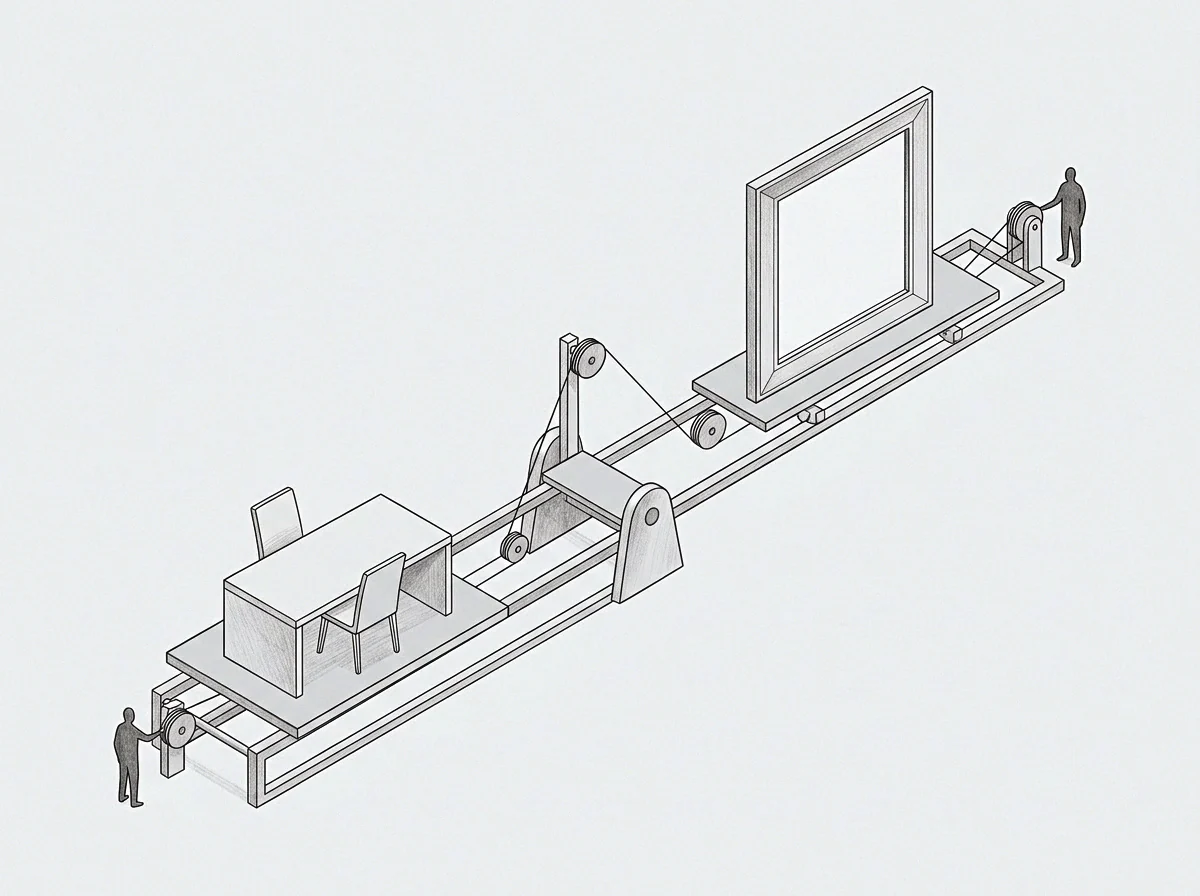
A bench mechanic adjusting gear ratios on a mechanical press understands that force applied at one end shifts torque to the other without changing total energy. Corporate capital allocation operates under identical physical conservation laws.
Corporate restructuring agreements use anti-dilution provisions to adjust conversion ratios continuously as financial conditions change. When down rounds occur, these adjusted conversion ratios allow preferred shareholders to claim significantly more common shares upon conversion, effectively diluting existing common stock ownership down to fractional amounts.
The term sheet stipulates that in the event of any corporate recapitalization or down round equity issuance, preferred stock conversion ratios automatically adjust according to full ratchet anti-dilution clauses, shifting economic equity ownership directly to participating senior capital sources.

Pool
Unallocated option pool allocations represent a primary source of covert capital shifting during corporate equity restructurings. Incoming venture investors routinely require companies to establish or expand employee unallocated option pools prior to executing investment rounds. The structure of this requirement determines which existing shareholders bear the financial burden of future employee share allocations.
Pre-money option pool expansion forces existing common equity holders to absorb total dilution before new capital enters the company. When an investor mandates a fifteen percent unallocated option pool created within the pre-money valuation framework, the share creation occurs entirely out of common founder stock. The new investor capital enters post-expansion, avoiding option pool dilution entirely.

Unallocated Options and Pre Money Share Dilution
Empirical research on venture restructuring shows that unallocated option pool expansions executed pre-money reduce common founder equity by an average of twelve to eighteen percentage points during Series A restructurings; this finding relies on standard Silicon Valley deal term studies across three hundred early stage recapitalizations where venture capital investors mandated option pool expansions prior to capital injection.
The mechanics of pre-money option expansion manipulate effective valuation numbers. An investor offering a ten-million-dollar pre-money valuation with a requirement for a twenty percent pre-money option pool effectively lowers the true enterprise valuation. The unallocated pool reserves equity value for future hires, but the immediate economic cost falls exclusively upon initial common equity owners.
Option expansion requirements negotiated before valuation pricing concentrate dilution on original equity holders.

Management Carve Out Provisions in Distressed Exits
Management carve out plans represent specialized restructuring mechanisms deployed when enterprise value drops below total liquidation preference burdens. In such scenarios, common equity holds zero financial value, removing economic incentives for key management teams to complete sales or restructurings. Investors create management carve out pools to allocate a percentage of acquisition proceeds directly to key executives ahead of standard liquidation preference distributions.
Carve out plans redistribute capital flows by bypassing standard equity waterfall mechanics. The corporate board allocates sales proceeds into a bonus pool distributed to management upon deal closing. This arrangement preserves operational continuity while ignoring traditional equity percentage rights held by historical common shareholders who do not sit in active key executive roles.
- The board approves an expanded unallocated share reserve prior to incoming investor equity valuation calculation.
- Incoming investors calculate share price based on fully diluted share counts inclusive of the new reserve.
- Original equity holders absorb total dilution before new investment capital enters the company capital table.
- Non participating common equity holders retain diluted equity percentages without receiving anti-dilution adjustments.
Option pools dilute early equity. The unallocated option pool serves as a key financial adjustment mechanism during recapitalizations. When investors insist on pre-money pool expansions, the dilution falls on historical equity owners.
A rule of thumb dictates that any option pool expansion demanded as a pre-money condition reduces common share value directly dollar-for-dollar.
Bond
Convertible debt instruments, such as convertible promissory notes and Simple Agreements for Future Equity, carry hidden capital shift mechanisms that surface during corporate restructuring events. Initially viewed as lightweight financing tools, convertible bonds alter equity tables dramatically when conversion triggers activate during down rounds or distress recapitalizations.
Convertible notes accumulate interest over operational periods while carrying valuation caps and conversion discounts. When a startup restructures equity during a down round, convertible note holders convert their accumulated debt plus accrued interest into equity shares at prices far below the pricing paid by new equity investors. The conversion creates massive share issuances that dilute common shareholders who hold no protective conversion mechanisms.

Promissory Note Conversion into Preferred Capital
When financial restructuring involves converting outstanding promissory notes into preferred equity, note terms dictate share pricing and class privileges. Notes containing valuation caps allow note holders to convert debt into preferred shares based on capped valuation pricing even when the official restructuring valuation drops lower. The conversion converts debt obligations into senior preferred equity blocks with liquidation rights.
Debt conversion resets equity shares. Note holders who convert into senior preferred equity classes gain voting rights, board seats, and anti-dilution protections. This transition alters corporate governance by shifting power from founding common shareholders to converted note holders who now control corporate consent decisions.
Written contract terms terminate unstated expectation debts that accumulated during operational periods.

Restructuring Terms and the End of Silent Ledger Accounting
Executing formal restructuring contracts terminates the silent ledger system that governs informal early stage partnerships. When legal debt instruments convert into senior equity blocks, unstated expectations regarding equity distribution disappear. The contract establishes legal reality, replacing historical promises with written terms that govern corporate distribution priorities.
The transition from informal social exchange to strict contractual enforcement exposes early operating partners to significant capital loss if their contributions were not formally secured by legally binding debt or equity documents. Corporate restructuring forces every historical contribution to submit to legal verification. Unrecorded operational efforts, uncompensated work hours, and informal profit-sharing agreements carry zero legal standing during formal corporate recapitalization processes.
Capital shifts alter economic rights. The restructuring contract documents exact share holdings, liquidation hierarchies, and board control structures. Operating partners who built early infrastructure without formal legal contracts find that capital allocation during restructuring rewards only documented legal instruments and senior investment capital.
How do early stage corporate operators structure written contribution agreements to guarantee that operational sweat equity converts into senior equity classes before distressed recapitalizations reset corporate ownership tables?