
Early Venture Sweat Equity Valuation Before Debt Issuance
Early venture sweat equity must be formally priced and converted into common shares before debt issuance to prevent creditor covenants from erasing founder value.

Basis
A contributor deposits eighteen months of unpaid code into a corporate repository before an incoming commercial lender inspects enterprise balance sheets. The commercial lender reads cash entries, verified invoices, and tangible collateral. Uncompensated labor appears nowhere on an unadjusted ledger; it is absorbed into the software architecture without creating a financial record.
When an enterprise prepares to issue notes or secure credit facilities, the distinction between unpriced sweat equity and formal common equity determines whether early participants retain ownership or suffer total dilution. The economic substance of sweat equity rests on replacement cost: the actual cash amount the firm would have paid arm’s-length contractors to produce identical assets.

Unpriced Hours and Capital Recognition
Labor converted into enterprise value without immediate wage payment functions as unrecorded corporate investment. The business receives developer output, design systems, and regulatory filings while conserving treasury reserves. Because unstated exchanges leave the cap table unadjusted, early contributors often rely on informal promises of future parity.
A lender examining the firm during pre-credit review disregards these understandings, evaluating strictly what corporate resolutions and stock purchase agreements document. Equity must be issued, priced, and filed before loan documentation executes, or the contribution remains uncredited in the capital stack.
Converting uncompensated sweat into formal share issuance prior to credit execution fixes the historical ownership stake against incoming lender warrants.
Sweat equity that lacks explicit contractual pricing produces structural exposure. The early team views sweat as equity already earned, whereas corporate law treats it as services rendered without consideration unless restricted stock agreements exist. If the enterprise registers zero paid-in capital from these services, the balance sheet exhibits negative tangible net worth.
Commercial debt issuers require positive equity cushions to absorb operational volatility, and capitalizing sweat into documented equity units establishes the legal baseline needed to satisfy minimum junior capital covenants.

Deferred Compensation Against Equity Conversion
Early operators sometimes classify sweat as deferred salary rather than direct share purchases. This choice introduces a severe conflict with future debt instruments. Accrued payroll liabilities rank as unsecured debt claims against the venture.
When a commercial debt provider enters, its first loan covenant routinely demands the cancellation, subordination, or conversion of all existing officer liabilities. The firm cannot carry unpaid founder salary as a priority liability while pledging enterprise cash flows to an institutional noteholder. The enterprise resolves this by converting accrued liabilities into restricted stock at a defensible fair market value before loan agreements are signed.
Neglecting formal equity conversion before credit execution converts historical sweat into an unrecoverable donation that corporate liquidation preferences extinguish during insolvency.

Bench
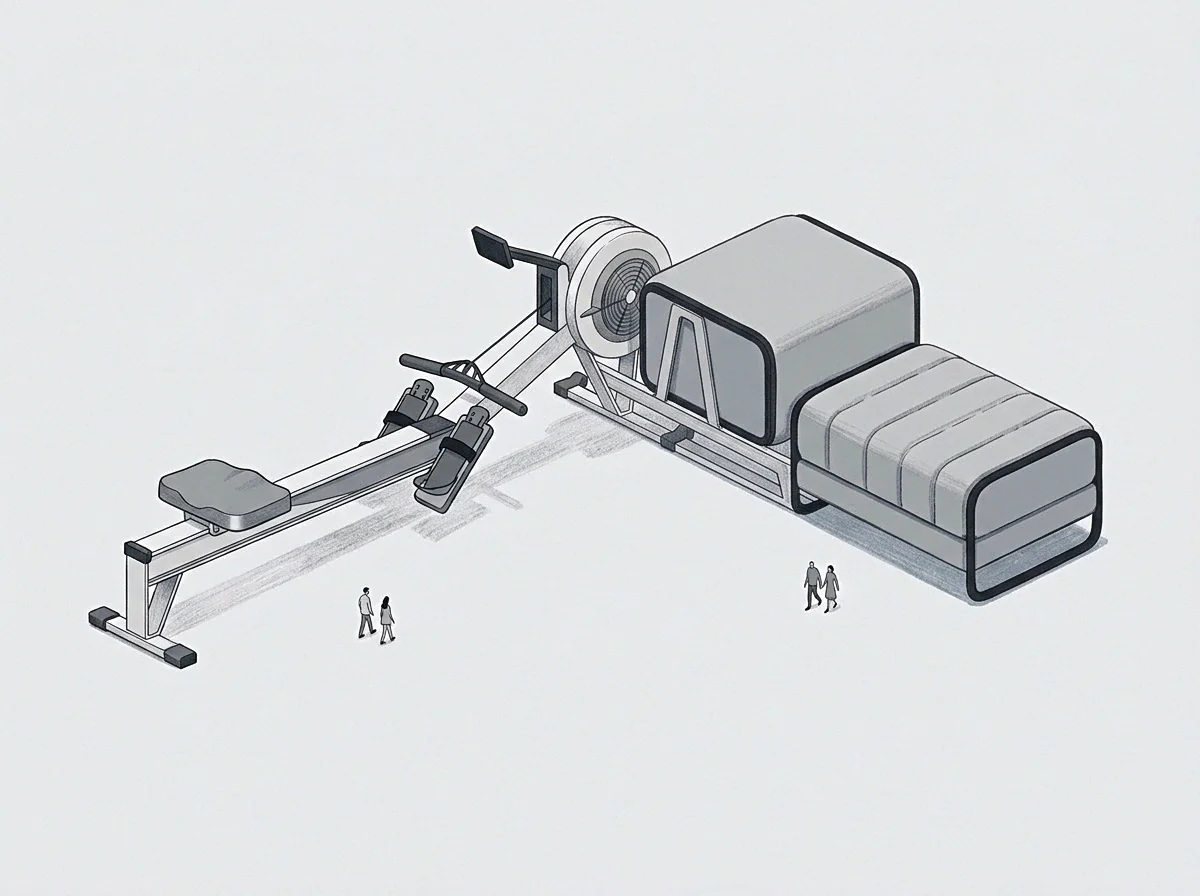
Work benches in early operational workshops collect physical prototypes, circuit boards, and marked test scripts developed during uncompensated night shifts. These tangible assets embody hundreds of hours of unbilled technical labor. To establish a legitimate tax and balance sheet valuation for this output before introducing secured debt, corporate treasurers utilize the replacement wage formula.
Take two operators who built an enterprise communications stack over twenty-four months with zero payroll distributions. To defend a pre-debt sweat equity valuation, the firm reconstructs a synthetic wage schedule based on objective market rates for technical staff.

The Cost Method Applied to Sweat Contributions
Assume the lead technical operator dedicated three thousand uncompensated hours to enterprise development. Arm’s length engineering talent in the local market commands sixty dollars per hour for comparable architectural scope. The baseline asset valuation from this single contributor totals one hundred eighty thousand dollars.
The enterprise supports these figures using contemporaneous time records, commit histories, and third-party salary surveys. By documenting these unbilled hours as capitalized software development under standard cost-accounting rules, the firm translates labor directly into an intellectual property asset. This asset sits on the pro-forma balance sheet as paid-in capital, expanding enterprise book value.
Capitalized labor records create verifiable balance sheet assets only when supported by contemporaneous technical repositories and market wage benchmarks.
Valuing contribution solely by hours worked carries operational hazards. Creditors reject hours spent on failed architectures or abandoned business models. The credit committee discounts speculative intellectual property that generates zero contractual revenue.
Market replacement calculations establish the ceiling of defensible valuation. The floor rests on the direct liquidation value of the code repository and registered trademarks.

Can Unpaid Contribution Support Formal Balance Sheet Valuation?
Auditors accept sweat contributions toward paid-in capital when explicit corporate resolutions document the exchange of intellectual property for specified share allocations. The participant assigns all inventions and created assets to the legal entity via an absolute invention assignment agreement. The board of directors assesses the fair value of the assigned property and authorizes the stock grant.
When third-party debt covenants arrive, the enterprise presents clean share certificates rather than unliquidated claims for uncompensated labor.
The enterprise records the asset at true production expense. An underwriter reviewing the facility requests documentation of the initial cash deposit or a verified cancellation of claims.

Seniority
Legal claims against corporate assets follow a strict pecking order established by bankruptcy statutes and commercial lending contracts. Senior secured debt occupies the highest rung of the capital structure. Holders of common stock occupy the lowest rung.
Early team members holding unvested options or unformalized sweat equity discover that bank debt instantly subordinates their economic claims. If the enterprise defaults on its debt service, senior lenders seize enterprise intellectual property, commercial receivables, and bank deposits before common stockholders collect a single dollar.

Creditor Claims Over Common Equity Allocations
Debt issuance fundamentally alters the risk profile of sweat equity. Prior to borrowing, contributors absorb operational loss without facing third-party foreclosure. Once debt instruments attach to enterprise assets, missed interest payments transfer governance power to creditors.
Secured debt holders hold blanket liens on corporate property through standard filing statements. Sweat equity holders find their theoretical enterprise share subject to rapid dilution if lenders enforce warrant coverage or debt-for-equity restructuring provisions during distressed cycles.
| Evaluation Dimension | Sweat Contributor Common Equity | Senior Secured Venture Debt |
|---|---|---|
| Liquidation Priority | Junior recovery ranking behind all creditor claims | Absolute priority claim on all corporate assets |
| Collateral Attachment | Zero security interest in enterprise property | Blanket lien on intellectual property and receivables |
| Return Mechanism | Variable dividend distributions and capital gains | Mandatory cash coupon payments and principal redemption |
| Dilution Profile | Absorbs structural dilution from incoming warrants | Preserves face value via anti-dilution protections |
| Governance Control | Standard voting rights on common resolutions | Negative covenants restricting asset sales and hiring |

Structural Subordination in Early Capital Stacks
Venture debt contracts contain extensive negative covenants designed to protect lender principal. These covenants systematically restrict the financial freedom of common shareholders. Founders who expected sweat equity to yield immediate salary once debt funding arrived face explicit contractual obstacles.
- Blanket asset pledges encumber all operational technology and customer contracts, eliminating the equity holders’ ability to pledge corporate property to settle internal disagreements.
- Compensation caps restrict executive payroll until debt service coverage ratios reach defined coverage thresholds, prolonging contributor wage freezes.
- Subordination agreements compel all officer notes and deferred payouts to defer recovery until the institutional debt balance clears.
- Warrant issuance grants the lender purchase rights for common stock at a predetermined strike price, reducing the ownership percentage held by the early building team.
The junior status of common stock remains absolute during insolvency proceedings. The loan covenant states that every cash distribution to equity owners remains frozen until the enterprise satisfies all quarterly principal and interest schedules.

Discount
Internal revenue regulations and independent appraisal standards enforce a heavy discount on early equity valuations. When an enterprise issues shares to compensate for sweat, tax authorities assess the fair market value of those shares. If the firm issues equity at an artificially low valuation immediately before securing substantial debt, auditors scrutinize the transaction for unpaid income taxes.
The common stock fair market value determined under Section 409A appraisal guidelines differs sharply from debt underwriting valuations. Appraisers apply significant discounts for lack of marketability and minority control, depressing common share values relative to senior securities.

Section 409A Penalties and Fair Market Value
A venture issuing options or restricted stock to sweat contributors must establish a formal valuation using accepted methodologies. Failure to obtain an independent valuation exposes contributors to immediate ordinary income taxes and substantial penalty assessments. Creditors review these appraisal reports during underwriting audits.
An unresolved tax liability arising from improper sweat equity valuation represents a priority administrative lien that alarms prospective lenders. Commercial debt facilities require clean balance sheets free from latent governmental tax penalties.
Independent enterprise appraisals isolate the value of historical contributions from future enterprise cash flows committed to debt maintenance.
The entrance of debt capital introduces a structural haircut to common equity value. Creditors assess enterprise debt capacity based on discounted future cash flows. When substantial debt joins the balance sheet, enterprise risk rises, increasing the cost of capital.
The resulting increase in discount rates reduces the calculated present value of common equity.

Creditor Haircuts on Sweat Capitalization
Lenders perform rigid balance sheet adjustments when underwriting early ventures. They identify intangible assets created through unbilled sweat and systematically remove them from tangible net worth calculations.
- Intangible asset exclusion removes internally generated software capitalization from eligible loan collateral bases, stripping book equity down to physical liquidity.
- Warrant coverage adjustment factors the economic dilution of lender warrants into the venture’s capitalization table, depressing common share upside.
- Debt capacity ceiling determination measures historical trailing revenue rather than projected growth, capping loan proceeds well below founder expectations.
How the enterprise demonstrates that sweat equity created durable enterprise value independent of future debt-funded operations remains an unresolved point of negotiation among appraisal specialists.

Call
The incoming debt facility forces a definitive call on unstated founder bargains. Prior to credit underwriting, participants allow ambiguities regarding ownership shares and uncompensated hours to persist. Debt contracts operate on absolute precision.
Lenders demand fully executed capitalization tables, unambiguous stock purchase agreements, and signed releases of all historical claims from current and past contributors. The arrival of institutional credit documents strips away informal understandings, replacing personal trust with rigid corporate structure.
Resolution of Covert Contributor Contracts
Every arrangement built on unspoken reciprocity breaks under the scrutiny of debt documentation. A contributor who delivered technical labor under the assumption of equal future treatment must formalize that exchange into an exact share certificate. If that share issuance remains unexecuted when credit agreements land on the boardroom table, the enterprise cannot issue shares without lender authorization.
Loan documents prohibit issuing dilutive securities or creating new equity classes without prior written consent, terminating any unstated contract on the spot.
Resolving sweat equity claims requires candid accounting of all past inputs. The enterprise secures formal liability waivers from every party who contributed uncompensated effort. These waivers certify that contributors hold zero residual wage claims against the business.
Failure to execute these releases allows historical contributors to assert claims against enterprise cash proceeds after loan closing, threatening technical insolvency.
Stated equity grants executed before loan execution eliminate future unrecorded wage liabilities.

Timing Formalization Before Note Execution
The calendar governs the capitalization process. Equity allocations must close before the board adopts debt authorization resolutions. Executing equity distributions afterward violates negative covenants and triggers automatic technical defaults.
The early operating team documents their equity allocations, files tax elections within statutory thirty-day windows, and establishes formal vesting schedules. These actions transform vague sweat contributions into verifiable corporate property that stands equal before enterprise bylaws, even as it sits junior to incoming creditor claims.
A contribution unformalized before the closing signature becomes an unpaid gift that corporate priority rules ignore.