
Managing Contributor Copyright Disputes Through Formal Clean Room Engineering Isolation
Formal clean room engineering replaces contested software modules with independently created code to eliminate copyright leverage and clear software title.
Taint
Unsigned code carries silent debt. A contributor writes thousands of lines of code during early software development without an executed copyright assignment or work-for-hire agreement. As long as the enterprise remains small and uncapitalized, the shared code sits in the repository without active dispute.
The moment commercial viability emerges, institutional investment arrives, or acquisition talks begin, the uncompensated contributor asserts statutory copyright ownership over core modules. In software engineering, copyright vests automatically in the human author upon creation, and absent a signed written transfer, the enterprise holds at best an implied non-exclusive license that can be challenged during structural transitions.
When financial terms break down between initial builders, copyright law transforms unassigned code into an operational bottleneck. Contributor disputes rarely start over abstract intellectual property principles. They start when one party feels an unstated ledger was ignored during equity allocations or compensation distributions.
Software contributions provided without explicit terms act as covert provision, where help arrives with an unpriced demand attached. When that implicit debt remains unpaid, the contributor revokes permission, files copyright claims, or sends demand letters directly to prospective investors and enterprise customers.
Unassigned Code as Covert Provision
In many early software projects, technical labor proceeds on informal understandings regarding equity, future compensation, or title. The contributor commits source code to shared version control, configures database schemas, and builds API endpoints under the assumption that ownership terms will be formalized later. This pattern creates a structural imbalance where the enterprise depends on software it does not legally own.
The enterprise receives immediate development velocity, while the contributor retains full statutory copyright over every line written.
The contributor kept the count.
Software copyright protection covers original code from the instant of expression. Without a formal contract specifying that contributions constitute a work made for hire or explicitly assigning all rights to the legal entity, the individual developer remains the sole copyright owner. Verbal promises, informal messaging threads, and corporate title titles fail to satisfy statutory requirements for copyright assignments.
The enterprise operates on fragile footing, using property that can be sequestered by its author at the moment of highest leverage.
The Mechanism of Injunction Threat
Copyright ownership endows the author with exclusive rights to reproduce, prepare derivative works, and distribute the software. When a dispute arises, the contributor can seek preliminary injunctive relief in court, asking a judge to halt the enterprise from running, distributing, or monetizing the contested software modules. Third-party acquirers and institutional investors conduct legal due diligence specifically to detect these ownership flaws.
A single unassigned core module can halt an investment round or force an escrow holdback equal to the entire valuation of the contested component.
Unsigned contributions accumulate as unpriced equity debt until valuation events make the code explicit leverage.
Consider an initial backend architecture built over fourteen months by a lead developer who received no formal salary and signed no intellectual property assignment. The company reaches product-market fit and secures an institutional funding term sheet. When equity distribution negotiations stall over percentage allocations, the developer asserts copyright ownership, demands immediate removal of the backend code, and serves notice to the prospective lead investor.
The enterprise faces a choice between yielding to the developer’s equity demands or replacing the entire backend infrastructure before funding expires. The software contains proprietary structural patterns built during unpaid personal time, and commercial deployment without equitable ownership constitutes direct copyright infringement.
Sieve
Copyright law protects original expression, not underlying functional concepts, ideas, or operational procedures. Ideas remain free for selection. Software sits at a complex legal intersection because source code contains both protectable literary expression and non-protectable functional logic.
Resolving a copyright dispute over software requires isolating what the law actually protects from what remains free for anyone to build.
When an enterprise attempts to resolve a contributor dispute by simply rewriting the contested code in-house, it frequently falls into the trap of non-literal copying. Non-literal copying occurs when a new software implementation copies the structure, sequence, and organization of the original code, even if every line of syntax is rewritten. Courts evaluate software copyright infringement using the Abstraction-Filtration-Comparison test to determine whether non-literal elements were impermissibly taken.
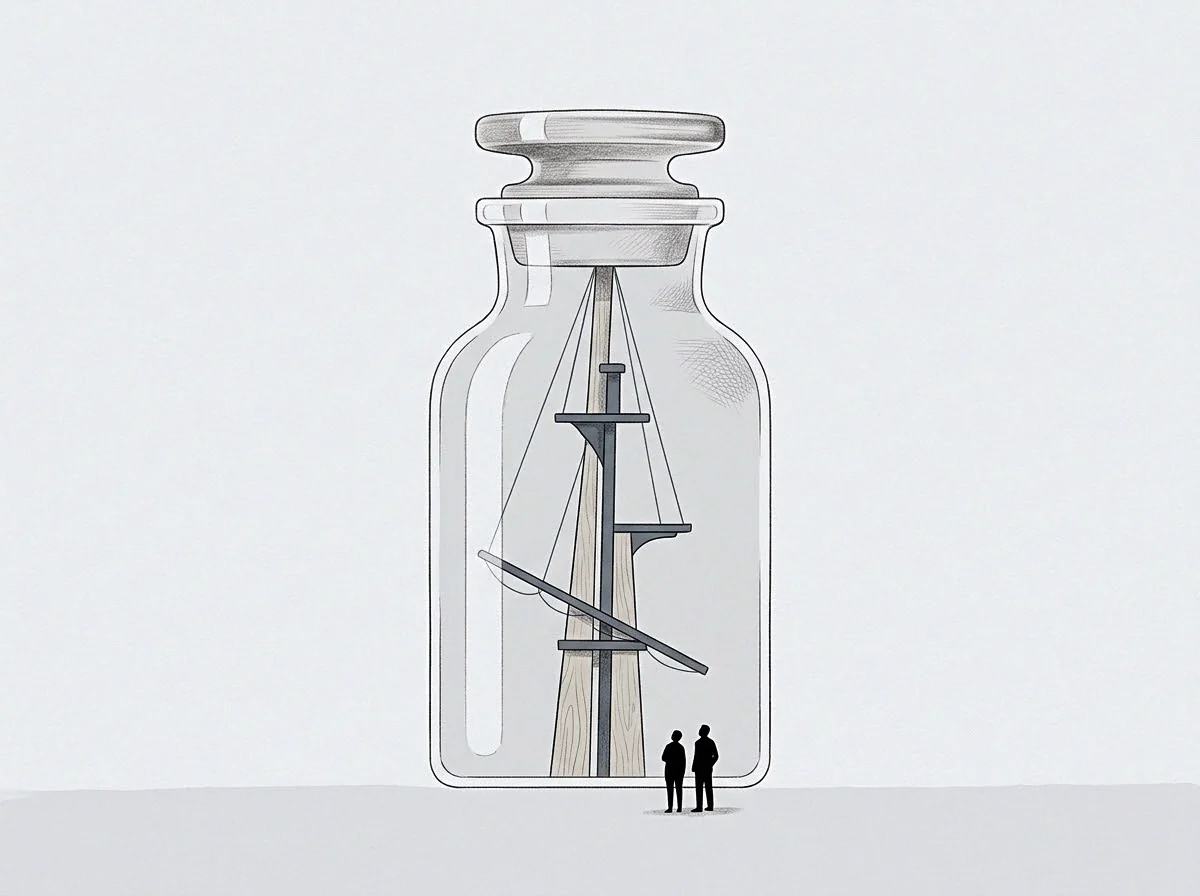
Separating Protectable Expression From Functional Logic
The Abstraction-Filtration-Comparison protocol breaks source code down into constituent levels of abstraction, ranging from object code at the bottom to high-level system architecture at the top. The analysis systematically filters out unprotectable elements before comparing two codebases for substantial similarity.
Copyright protects original expression. Three primary categories of software logic are filtered out during legal examination:
Logic dictated by efficiency or external constraints is unprotectable under the merger doctrine, which applies when an idea can only be expressed in a limited number of ways. Elements dictated by industry standards, hardware requirements, software compatibility specifications, or standard programming practices are filtered out as scènes à faire. Public domain algorithms, standard mathematical calculations, and open-source constructs are similarly removed from the copyright shield.
Can clean room engineering defeat non-literal copying claims?
Clean room isolation defeats non-literal copying claims by creating an unassailable evidentiary wall between access to protected expression and the creation of new source code. Access destroys independent creation proof.
When developers who worked on or read the original source code perform an internal rewrite, they carry the structural memory of the original architecture into the new implementation. A court examining the rewritten software will find identical parameter order, matching internal data structures, and identical sub-routine call sequences. Under copyright standards, this architectural matching constitutes derivative copying.
Clean room isolation prevents this by ensuring that the engineers writing the replacement code have never seen, read, or had access to the original source materials.
| Remediation Path | Evidentiary Protection | Non-Literal Infringement Risk | Operational Latency | Development Effort |
|---|---|---|---|---|
| Direct Source Refactoring | Low | Severe | Low | Low |
| In-House Independent Rewrite | Moderate | High | Moderate | Moderate |
| Formal Clean Room Isolation | High | Negligible | High | High |
Refactoring existing source code alters syntax while retaining protected structural expression.
The protocol extracts functional requirements into a neutral specification, permitting pure reimplementation without copying protected expression. Access to protected source code during reimplementation destroys the evidentiary presumption of independent creation.
Wall
Formal clean room engineering isolation relies on two physically and operationally separated engineering environments: the dirty room and the clean room. The structural barrier between these teams must remain complete throughout the development process. The dirty team analyzes the contested code to extract unprotectable functional logic, while the clean team receives that logic to build the new implementation.
The wall holds the boundary.
The dirty room contains engineers who have direct access to the contested software codebase. Their sole objective is reverse engineering the software to produce a functional specification document. They map inputs, outputs, system API behaviors, edge cases, performance benchmarks, and functional interface requirements.
They are strictly prohibited from writing replacement code or drafting specifications that include source code snippets, pseudo-code, or expressive architectural quirks from the original system.
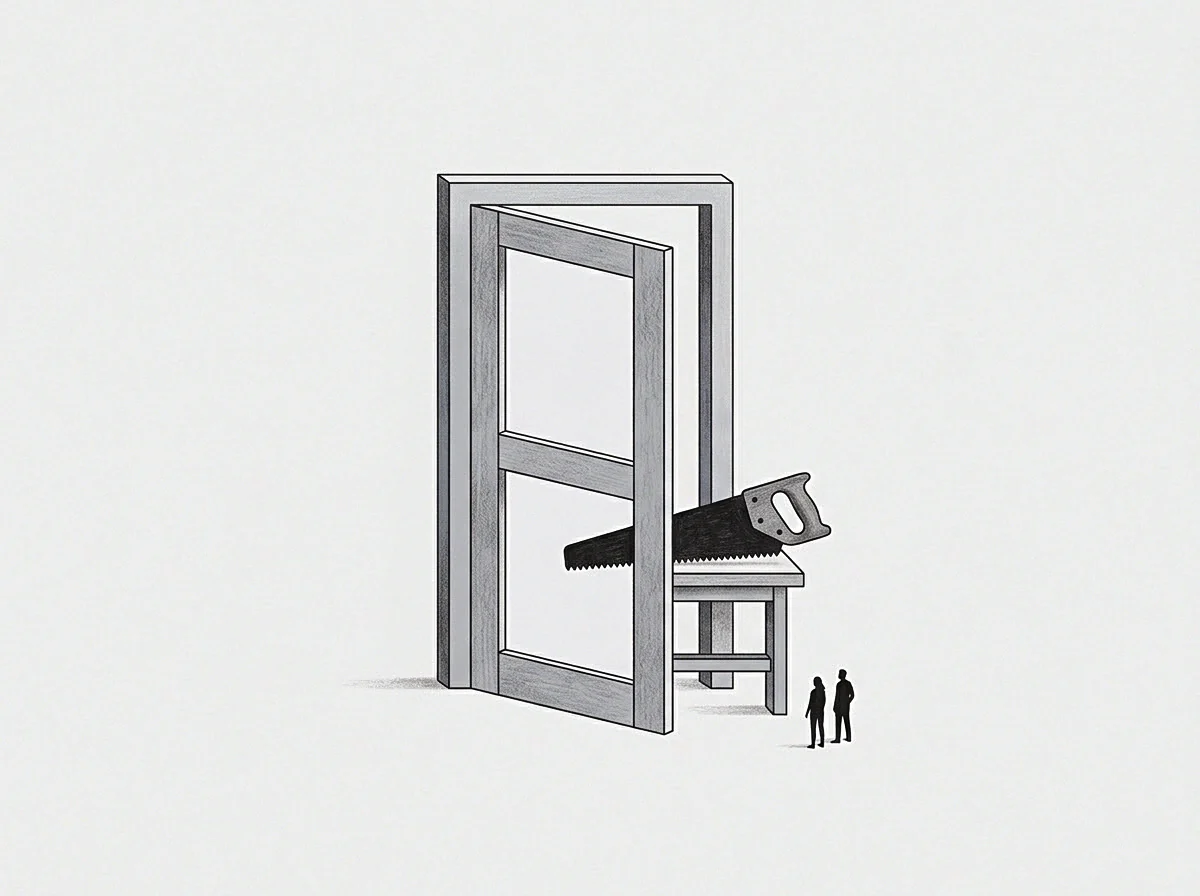
Architecture of the Dirty Room and Clean Room
Between the dirty room and the clean room sits an legal review barrier, often consisting of neutral legal counsel or specialized intellectual property auditors. This audit layer inspects every specification document before it crosses the boundary. The legal team strips away remaining structural choices, code-like structures, or expressive naming conventions, verifying that the document contains purely functional requirements, functional API schemas, and data formatting contracts.
The clean room consists of software engineers who have never examined the contested codebase, held repository permissions, or engaged in detailed technical discussions with the dirty team. These clean programmers build the replacement software relying exclusively on the audited specification documents. Every developer joining the clean team signs sworn affidavits confirming zero prior exposure to the original software and zero direct contact with dirty team members.
Specification Protocols and Data Flow Constraints
Operating a formal clean room requires strict operational rules governing communications and specification releases. Any direct contact between teams compromises the legal defense.
- Contaminated developer history prevents clean room participation if an engineer held prior source code access, repository commit privileges, or detailed architectural knowledge of the disputed software.
- Informal communication channels undermine legal isolation when dirty team members answer implementation questions directly through unmonitored chat systems or oral exchanges.
- Over-detailed functional specifications inadvertently reproduce expressive structure, sequence, or organization from the original codebase, reintroducing non-literal copying risks.
Dirty teams extract functional requirements.
A single unlogged technical exchange between dirty and clean teams invalidates the isolation protocol in court.
Clean programmers write pure code. The clean room methodology provides verifiable proof of independent creation, which functions as an absolute legal defense against copyright infringement claims. Under United States copyright law, independent creation defeats infringement claims regardless of similarities in the final output, because copyright prohibits copying rather than independent duplication.
The strength of this defense rests entirely on the integrity of the evidentiary record, including time-stamped version control repositories, sealed specification archives, complete communication logs, and verified developer histories. The explicit prohibition against clean team developers inspecting legacy repositories converts potential copyright liability into a documented record of independent creation.
Relay
Executing a clean room replacement during active contributor litigation requires an orderly sequence of technical and legal moves. Deviating from the established pipeline creates evidentiary gaps that opposing trial counsel will exploit to allege contamination.
The process begins by placing the contested software repository into absolute quarantine. Commit access is frozen for all participating engineers, and read-only snapshots are archived to establish the exact legal baseline of the disputed asset.
Execution Sequence for Contested Module Replacement
The technical deployment follows a linear operational relay designed to build an unassailable evidentiary trail:
- Quarantine contested modules and freeze commit access.
- Extract functional interface specifications inside the dirty room.
- Filter specifications through independent legal review.
- Deliver audited specifications to isolated clean room programmers.
- Validate clean implementations against independent behavioral unit tests.
During the specification extraction phase, dirty room engineers focus on defining public interface boundaries, database contract requirements, and data transformation logic. They capture what the system does while completely ignoring how the original author chose to express the internal logic.
Clean room engineering principles in software reflect similar isolation methodologies used in physical engineering and pharmaceutical bioequivalence testing. In bioequivalence trials, generic drug creators demonstrate that a generic formula achieves identical therapeutic results without utilizing proprietary manufacturing secrets or patented carrier compounds. The regulatory authority evaluates the output metrics independently from the origin formula.
Software clean room execution applies this same structural principle to literary expression in source code.
Evidentiary Trail Management and Archival Requirements
The audit records every keystroke. Every inquiry raised by clean room engineers regarding the functional specification must pass through a written request-for-information clearinghouse managed by neutral legal counsel. If a specification lacks detail, the clean room team submits a written question.
Counsel reviews the request, forwards it to the dirty room, inspects the dirty room’s written clarification, strips any emergent code references, and delivers the audited response back to the clean room.
Independent creation withstands infringement claims only when daily version control histories confirm zero access to protected source materials.
Black box tests confirm behavior. Testing the newly created clean room software must occur strictly through functional, black-box testing harnesses. Clean room software cannot be tested using unit tests written by original authors or dirty team members if those tests contain proprietary architectural assumptions.
The clean room team constructs new test suites based exclusively on the audited functional specification documents. Failure to maintain unbroken audit logs during reimplementation leaves the replacement software vulnerable to full copyright discovery and preliminary injunctions.

Bill
Replacing software through formal clean room engineering isolation carries severe financial, operational, and velocity costs. The enterprise spends substantial financial capital on duplicate engineering hours, legal compliance reviews, clean contractor fees, and project management overhead. The operational cost extends beyond direct cash outlays into product roadmap delays, lost sales momentum, and diverted executive focus.
Capital buys velocity back.
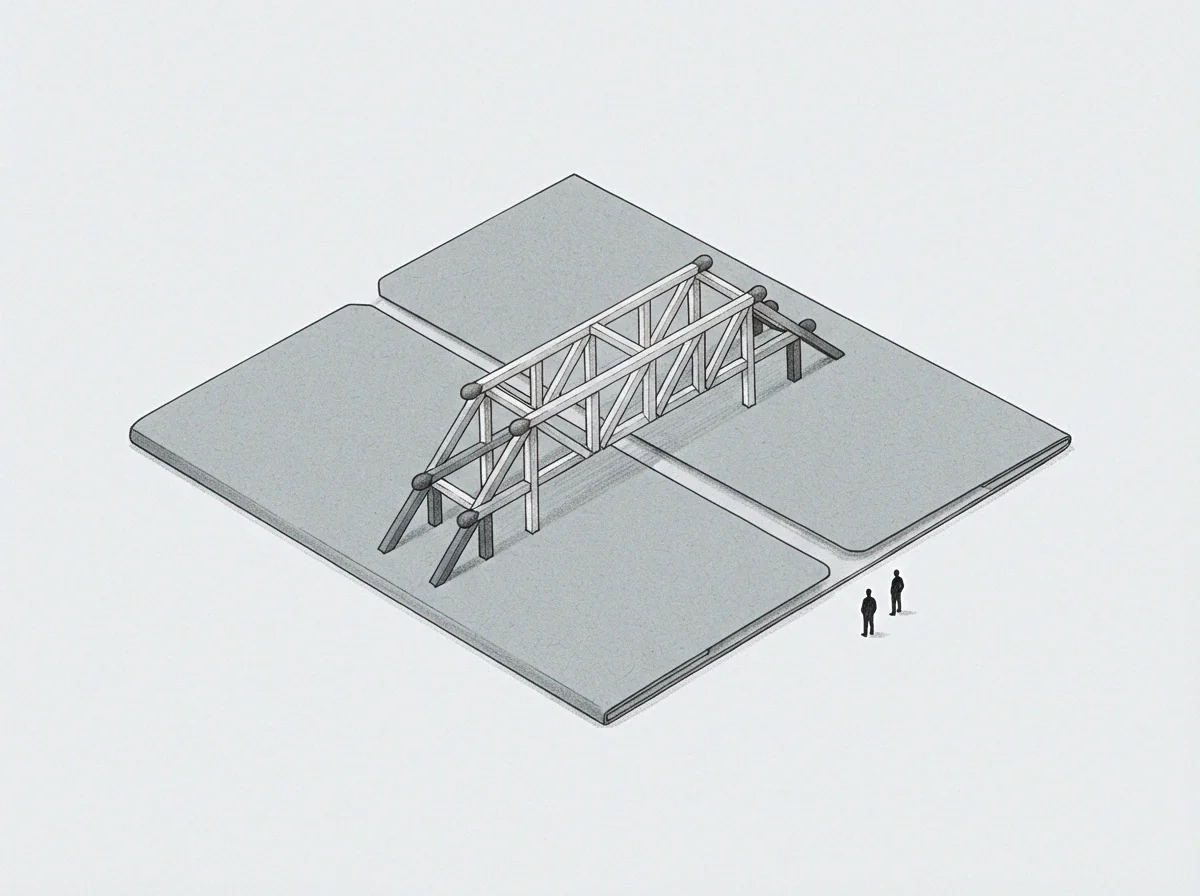
Despite these substantial costs, executing a clean room rewrite provides critical legal leverage during contributor copyright disputes. When a disputing contributor holds unassigned code, their primary asset is injunctive power: the ability to threaten a total operational freeze over the enterprise’s commercial activities. By successfully isolating, reimplementing, and deploying clean replacement modules, the enterprise eliminates the threat of injunctive relief.
Clean code replaces clouded title.
Capacity Costs and Equity Impact
Once the clean room code replaces the contested modules in production, the legal dispute shifts fundamentally in nature. The contributor no longer possesses a mechanism to block enterprise operations, secure preliminary injunctions, or halt investment transactions. The legal challenge converts from an emergency threat into a standard monetary dispute over past usage values and historic contribution credits.
Leverage shifts upon code deployment.
Settlement Dynamics Under Reimplemented Codebases
Courts evaluating damages for past copyright exposure on replaced modules look at actual profits attributable to the contested code during its active deployment window, rather than shuttering the business entirely. The enterprise negotiates from a position of security, having eliminated future infringement liabilities and cleared its core software title for institutional investors.
The choice to execute clean room isolation rests on calculating the precise cost difference between paying predatory settlement demands and funding an air-gapped development process. When a former contributor demands equity percentages or settlement figures that exceed the enterprise cost of clean reimplementation, formal clean room engineering becomes the rational corporate move. The enterprise trades temporary velocity loss for permanent legal certainty and clear software ownership.