
Splitting Early Company Equity Between Technical Code Contributions And Forward Labor
Early technical software contributions require valuation as separate intellectual property asset transfers rather than unvested forward operational equity.

Shelf
A software repository delivered before corporate formation sits quietly on a server, yet its presence alters every conversation about ownership. One person wrote six thousand lines over twelve weekends; another person agreed to step into the chief executive role on Monday morning to secure capital, build the commercial operation, and manage distribution. Friction appears because the software exists today in tangible form, while the operating labor remains promissory, stretching across four years of uncertain execution.
Early software contributions represent past expenditure, whereas ongoing operational involvement represents future capacity.

Separating Sunk Artifacts From Operational Delivery
When partners conflate completed programming with the continuous labor required to build a company, they misprice both inputs. The code written before incorporation is an asset transfer, identical in economic function to an intellectual property assignment from a third-party developer. In contrast, the operational labor is an ongoing employment service that demands regular retention incentives.
Treating past technical output as grounds for an unvested majority stake paralyzes capitalization tables because software without continuous maintenance rots within quarters.
A technical artifact contributed at formation functions as an asset purchase subject to commercial replacement cost, while forward sweat equity serves strictly as an incentive for operational retention.
The code repository depreciates rapidly once market feedback dictates changes to the architecture. If the initial engineer leaves after three months, an unvested equity grant leaves an inactive participant holding an outsized fraction of the enterprise. Replacing that person requires issuing new shares, heavily diluting the remaining partners.
Sunk programming labor deserves recognition through either cash reimbursement, deferred promissory notes, or a modest block of fully vested shares calculated strictly against fair-market replacement value. Future equity splits must align with ongoing operational delivery under standard forfeiture conditions.
Unspoken assumptions regarding the value of early engineering create persistent relational strain. The engineer believes the core asset is finished, while the commercial partner views the software as merely a prototype requiring total revision. The repository decays fast.
Software without maintenance rots. If this distinction goes unaddressed, resentment accumulates on both sides, poisoning operational coordination long before the first financing transaction closes.

Discount
Pricing an early software codebase demands an objective calculation of what replacing that code on the open market would require. Early contributors often view their initial effort through an emotional lens, assigning it valuation premiums based on personal sacrifice rather than professional market rates. Objective appraisal strips away sentiment by benchmarking the existing codebase against the cash compensation a qualified contract firm would charge to build an identical minimum viable version.

Contract Market Benchmarks
Consider two partners forming an enterprise where one contributor spent four hundred hours assembling the initial backend architecture. If the market wage for a senior systems engineer is seventy-five dollars per hour, the baseline replacement cash expense stands at thirty thousand dollars. Should the company possess zero cash, that thirty-thousand-dollar contribution earns equity, but only at a structured discount reflecting incorporation-stage risk.
Multiplying historical contractor rates by an arbitrary factor distorts the capitalization table. The fair valuation acknowledges the tangible build while isolating it from future operational compensation.
Past sweat equity converts to equity shares at replacement value plus a risk premium, while future equity accrues exclusively through continued calendar service.
The table below outlines the structural distinctions between historical code contributions and forward operational labor across core enterprise parameters.
| Evaluation Parameter | Historical Code Contribution | Forward Operational Labor |
|---|---|---|
| Temporal Orientation | Sunk historical output complete before incorporation | Future services delivered over a multi-year horizon |
| Valuation Benchmark | Market replacement cost of engineering hours | Opportunity cost of executive market compensation |
| Vesting Treatment | Fully vested at IP transfer or nominal upfront grant | Subject to four-year vesting with standard cliffs |
| Depreciation Profile | Rapid technical obsolescence without maintenance | Appreciating operational context and leadership value |
| Remedy for Departure | Retained share allocation or cash note settlement | Forfeiture of unvested equity via repurchase options |
Allocating outright equity percentages without calculating replacement hours creates permanent cap table distortions. When an engineer demands forty percent of the common stock solely for a working prototype that took eight weeks to assemble, the forward labor of all partners is discounted. Code sits on the server.
Investors routinely insist on recutting these arrangements prior to institutional funding rounds, forcing painful conversations late in development. Sunk effort settled at an early discount protects future corporate capacity from historical entitlement.
A pragmatic baseline prevents premature equity depletion: past contributions receive fixed value settlements, while forward equity remains bound to continuous employment.
Accrual
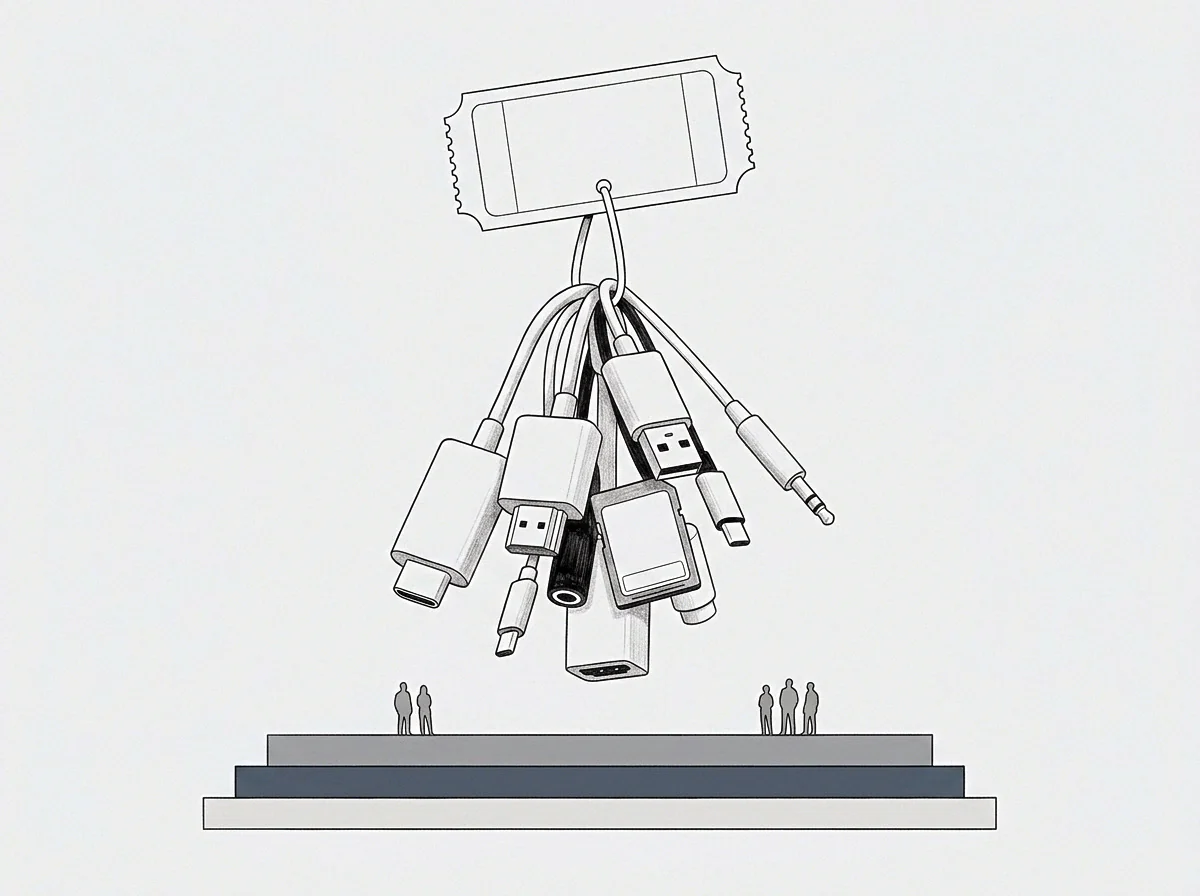
Vesting schedules exist to bind forward labor to corporate equity realization over extended operating horizons. When an early technical contributor insists on receiving their full equity allocation upfront because the codebase is functional, the company absorbs severe systemic exposure. If that person departs six months later, the business remains burdened by dead equity on the cap table, rendering it uninvestable to external venture capital sources.
Structuring Time-Based Retention
Standard vesting structures allocate shares incrementally across a four-year window, mediated by a one-year cliff. Under this mechanism, zero shares vest if an individual ceases service during the initial twelve months. At month twelve, exactly twenty-five percent of the granted equity vests immediately, with the remainder accruing monthly or quarterly in equal tranches thereafter.
- Milestone Tranches tie equity accrual directly to shipping demonstrable architectural deliverables rather than passive calendar progression, ensuring technical output satisfies actual product requirements. This stops inactive participants from capturing equity.
- Standard Time Vesting distributes ownership linearly over forty-eight months, aligning long-term operational retention across the entire executive cadre. Commitment carries real friction.
- Repurchase Options permit the company to buy back unvested shares at nominal cost upon an operator’s resignation or dismissal, preserving equity pools for successor talent. The company outgrows past scripts.
Equity grants divided between outright property payment and contingent vesting insulate businesses from early partner desertion.
A hybrid compensation approach provides the cleanest resolution to this split dilemma. The contributor receives an outright, fully vested equity grant representing between two and eight percent of the entity in exchange for the intellectual property assignment of the pre-existing repository. Concurrently, the contributor receives a separate, unvested allocation of thirty percent, subject to standard four-year vesting, reflecting their future role as chief technology officer.
If the individual resigns after nine months, they retain their IP grant, while the unvested operational allocation returns to the enterprise treasury.
The dynamic slice mechanism adjusts equity percentages continuously based on tracked hours, market rates, and contributed capital until institutional cash flow stabilizes, terminating the floating calculation once series funding establishes a permanent capital baseline.

Toll
Conflict over past contributions typically peaks during formal capitalization moments. When venture funds or angel syndicates review corporate records during due diligence, ambiguous intellectual property agreements and unbalanced equity distributions become severe liabilities. Investors refuse to fund companies where inactive early developers retain fifteen percent of the voting common stock while working a full-time corporate job elsewhere.

Whose Forward Labor Replaces The Early Codebase?
Consider an enterprise where the commercial partner dedicates eighty hours per week to business development, enterprise sales pipelines, and regulatory clearances, while the technical partner treats development as a weekend pursuit because the initial prototype works. The initial codebase represents an upfront hurdle, but sustained growth requires daily architectural rewrites, infrastructure scaling, database tuning, and customer support integration.
Capital investors discount enterprise valuations proportionally when inactive founding members sit on the common shareholder registry with unvested equity.
The commercial partner quickly realizes that forward execution dwarfs the difficulty of the original build. The hours compound every week. Early labor sets the baseline.
Replacement engineering demands cash. When the technical contributor asserts equal parity based entirely on their past code, the operating relationship breaks down. Agreements hold when written early.
Past builds cannot raise capital. The operational toll extracted by an unvested legacy partner manifests as stalled decision-making, investor avoidance, and executive burnout.
We built this entire product together during the initial sprint, so my equity should remain completely untouched regardless of whether my full-time employment continues through next year.

Severance
Resolving misaligned technical equity demands decisive restructuring before outside financing locks the capitalization table into permanence. Founders who delay formalizing these arrangements find themselves forced into expensive recapitalizations or asset liquidations when early contributors refuse to sign invention assignment agreements. Clean corporate hygiene requires definitive contracts separating historical technical delivery from prospective operational duties.
Restructuring Unbalanced Foundations
When an early developer elects not to continue on a full-time operational basis, the company must execute an intellectual property purchase agreement immediately. The entity issues a promissory note or a modest grant of common equity alongside a comprehensive release of all copyright claims. Delaying this action invites catastrophic litigation risks once enterprise valuation rises.
Equity preserves cash. A prototype proves limited feasibility. The business cannot proceed safely while ownership of its underlying source code remains legally ambiguous.
- Execute Proprietary Information Assignments to transfer complete title of all historical code to the corporate entity, extinguishing personal intellectual property claims permanently.
- Establish Replacement Fair Value Notes that document the agreed dollar value of pre-incorporation engineering, satisfying past contributions through deferred corporate debt obligations.
- Cancel Inactive Share Allocations through board-approved buyback mechanisms, restoring equity reserves to fund incoming replacement engineering leadership. Silence produces compounding debt. Unvested grants invite departures.
Failing to execute an explicit separation of historical software assets from forward employment vesting yields an uninvestable corporate structure where departing contributors capture the upside generated entirely by the forward labor of those who stayed.