
Calculating Sweat Equity Offsets in Founder Buyout Agreements
Sweat equity offsets deduct documented replacement wage deficits from repurchase payouts to reconcile uncompensated labor against company share value.

Wage
Two builders sit in an office after three years of building, looking at a share purchase agreement that values the equity at zero dollars and four hundred thousand dollars simultaneously. One operator devoted forty unpaid hours each week to software engineering, taking sixty thousand dollars in annual drawings against an executive market salary of one hundred and sixty thousand dollars. The remaining partner contributed fifty thousand dollars of initial cash savings, worked fifteen hours weekly on sales administration, and drew no compensation from company cash balances.
At the separation point, the departing partner asserts that three hundred thousand dollars in unpaid labor operates as an accrued loan payable by the enterprise, demanding that this sum reduce the repurchase price of their unvested shares. The staying partner argues that uncompensated time was already converted into thirty-five percent of common stock issued at incorporation.
This dispute exposes the operational collision between unquantified mutual assistance and cardinal contract terms. In early operations, participants routinely exchange labor under generalized reciprocity, giving technical skill or commercial effort unprompted, without logging daily debt or demanding immediate dollar parity. Mutual trust holds while effort arrives freely and goals align.
The arrival of an exit negotiation ends that unmeasured exchange abruptly. When one party leaves the operating seat, the staying partners refuse to continue carrying unpriced labor, while the departing person refuses to leave behind uncompensated years without financial credit. Converting historical sweat equity into a definite offset against a share buyout requires establishing an agreed market replacement baseline.
A sweat equity offset deducts proven market wage deficits from repurchase payments when corporate records substantiate an uncompensated labor deficit.
The standard calculation begins by establishing the market salary for the departing contributor’s specific role across each operating period. Independent commercial compensation surveys from regional enterprise databases supply this baseline, categorized by firm revenue and capital capitalization stages. From this replacement figure, the company subtracts all monetary distributions actually disbursed to that individual, including guaranteed payments, expense reimbursements exceeding verifiable corporate outlays, health insurance premiums, and cash draws.
The resulting annual difference defines the uncompensated wage gap. If an engineer performed work commanding one hundred and fifty thousand dollars annually on the open market but received forty thousand dollars from company revenues over twenty-four months, the gross uncompensated service value equals two hundred and twenty thousand dollars.

Contractual Treatment of Foregone Compensation
Corporate bylaws and shareholder agreements govern whether this gross service gap functions as an offset. In standard corporate finance arrangements, uncompensated hours do not automatically establish a balance sheet debt. Unstated hours carry no lien.
Without a formal deferred compensation agreement or an executed promissory note, corporate law treats historical labor as capital contribution absorbed into common equity value. When an agreement permits sweat equity offsets during buyouts, the clause explicitly defines whether the wage deficit reduces the repurchase price paid to the departures or increases the company obligation.
Early equity grants inherently compensate for early wage deficits through share price appreciation. Granting thirty percent of outstanding common stock at par value covers the enterprise development risk that uncompensated labor incurs. The remaining shareholders routinely reject attempts to claim both the full upside of stock ownership and a dollar-for-dollar cash offset for below-market salaries.
When buyout provisions authorize an offset, the equation adjusts the cash payout downward to account for unperformed contractual commitments or unpaid capital calls, or upward to reimburse agreed deferred salary obligations recorded on company balance sheets.
Failing to specify whether historical labor creates an enforceable corporate liability produces catastrophic litigation over back pay during buyout negotiations, draining company treasury reserves into legal fees and destroying operational solvency.

Table
Corporate records determine how uncompensated labor interacts with equity redemption prices when equity agreements permit economic adjustments. Shareholder agreements adopt two primary methods to reconcile uncompensated time against company equity buybacks: direct replacement cost offsets and enterprise valuation netting. The choice between these structures dictates whether the departing shareholder receives cash consideration or owes the corporation funds upon surrender of shares.
| Calculation Factor | Replacement Cost Offset Method | Enterprise Valuation Netting Method |
|---|---|---|
| Primary Valuation Driver | Market rate for replacement employee roles | Independent third-party business appraisal |
| Historical Labor Treatment | Treated as deferred company liabilities | Treated as absorbed equity contribution |
| Documentation Standard | Contemporaneous timesheets and payroll logs | Audited financial statements and capitalization tables |
| Adjustment Target | Direct additions or subtractions from cash notes | Adjustments to percentage equity valuation price |
| Cash Impact on Company | Fixed liability payable on defined terms | Variable redemption cost based on firm worth |
| Tax Classification | Ordinary income subject to employment withholdings | Capital transaction affecting share basis |
The replacement cost offset method operates through objective market surrogates. When a co-builder departs after thirty months, independent market data defines what an outside contractor would have charged to produce the identical software architecture or sales pipeline. This rate establishes the baseline service asset.
If the departing person drew zero cash while the business generated surplus revenues, the calculated service deficit increases the exit payout as a corporate repayment. Conversely, if the departing party failed to deliver the agreed technical deliverables before walking away, the company calculates the cost of hiring an external engineering team to complete that unfinished roadmap, applying that replacement cost as a direct offset that reduces the equity purchase check.
A contractual offset clause converts past unquantified goodwill into an adversarial balance sheet audit the instant one person exits the room.
The enterprise valuation netting method rejects wage baselines entirely. This structure assesses the company fair market value through earnings multiples or discounted cash flows, determining the dollar price per share. The buyout agreement then calculates the percentage of enterprise growth attributable to the departing contributor’s tenure.
If the business grew in appraised value by one million dollars during the working partnership, the equity holder receives their strict percentage share minus any contractual adjustments for premature resignation or unvested holdings.

Evidentiary Baselines for Offset Enforceability
Arbitrators and legal examiners dismiss sweat equity offset claims lacking contemporaneous paper verification. When builders seek to apply past labor credits against equity redemptions, administrative panels examine specific corporate documents:
- Written Board Approvals documenting accepted deferred compensation plans and defining the conditions under which unpaid salaries convert into exit obligations.
- Objective Timesheet Records proving specific hours devoted directly to enterprise deliverables rather than unverified personal estimates.
- Independent Salary Benchmarks establishing prevailing market compensation for equivalent operational roles within the company geographic sector.
- Capital Contribution Ledger Entries confirming whether uncompensated time was formally credited as non-cash capital investments.
The departing operator expected the team to honor uncalculated sacrifices, while the remaining leadership counted only the cash remaining in the bank.

Cliff
Reverse vesting schedules represent the contractual boundary where unperformed sweat equity triggers the absolute forfeiture of shares. Early contributors usually receive common stock upfront at company formation to satisfy corporate governance standards and capture favorable tax baselines. In exchange for this immediate grant, the shareholder enters a restricted stock purchase agreement granting the corporation an exclusive option to repurchase unvested shares at nominal par value if active service ceases before a defined milestone.
A standard four-year schedule with a one-year preliminary milestone ensures that participants contribute labor before locking in economic ownership. If a partner leaves after nine months, the company exercises its repurchase right over one hundred percent of the shares at the original purchase price of one tenth of a cent per share. Time spent creates no loan.
The uncompensated sweat equity provided during those nine months vanishes from the equity ledger, absorbed completely by the business without cash offset. The agreement presumes that nine months of effort represented the initial barter price for the contingent chance at enterprise success.
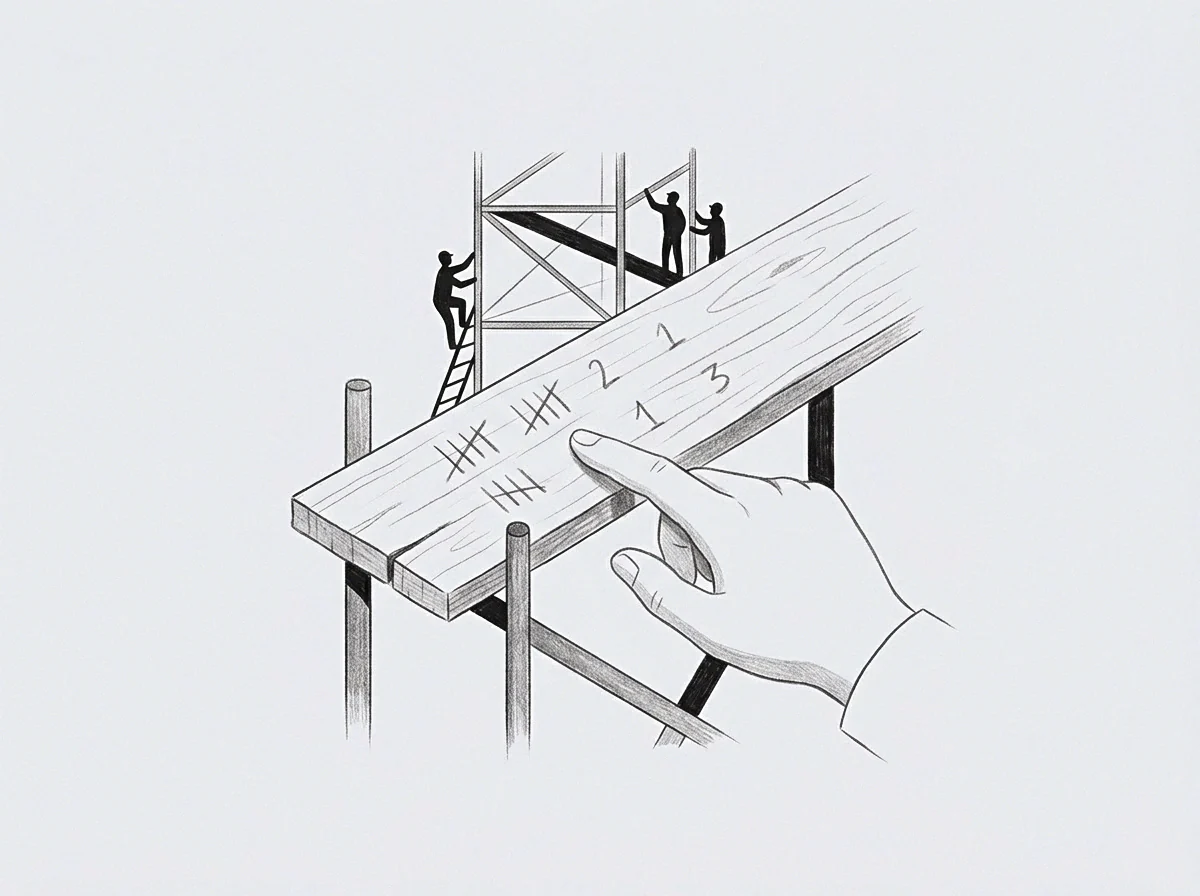
Centuries ago, English dry-dock shipwrights and agricultural tenants recorded daily labor tallies on notched tally sticks to calculate seasonal crop divisions. Modern venture vesting contracts replace wooden notches with temporal equity cliffs, executing the identical economic reality. The worker provides current muscle in exchange for a speculative future claim.
When physical labor stops arriving, the credit ledger terminates immediately.

Repurchase Calculations Across Vesting Milestones
Calculating the buyout sum after passing the initial milestone requires applying proportional temporal arithmetic. Assume an operator receives forty thousand restricted shares under an arrangement vesting monthly over forty-eight months following a twelve-month milestone. If that builder resigns after twenty-four months, precisely fifty percent of the shares have vested into permanent ownership.
The remaining twenty thousand shares remain unvested.
The company exercises its repurchase option over the unvested portion at nominal cost, paying twenty dollars to recover half the original allocation. For the vested twenty thousand shares, the buyout agreement determines the repurchase price using fair market value, book value, or an agreed formula. If the departing builder argues that their below-market compensation over the two active years warrants additional payment, the contractual vesting schedule acts as a legal defense against the claim.
The vested equity itself represents the full, agreed contractual offset for those uncompensated months. Equity carries risk.
Vesting schedules convert unprompted personal devotion into measured increments of corporate equity that lapse the moment labor stops arriving.
Disputes intensify when founders separate under involuntary circumstances without explicit definitions of fault. Terminations without cause frequently trigger partial acceleration clauses, vesting an additional twelve months of equity immediately. This acceleration recognizes that the contributor stood ready to supply continued labor, treating the enterprise decision to remove them as an interruption of generalized reciprocity that requires compensation through expanded share ownership.
Unvested equity surrendered at departure pays for the corporate risk that remaining partners shoulder alone.

Tax
Revenue authorities enforce strict divisions between sweat equity converted into cash and ordinary capital stock transactions. When a departing equity holder negotiates a buyout agreement that includes offsets for historical unpaid wages, the tax classification of those settlement funds alters dramatically. The Internal Revenue Service and state taxing bodies treat real wage offsets as compensatory payments rather than capital redemptions.
Ordinary income rates apply.
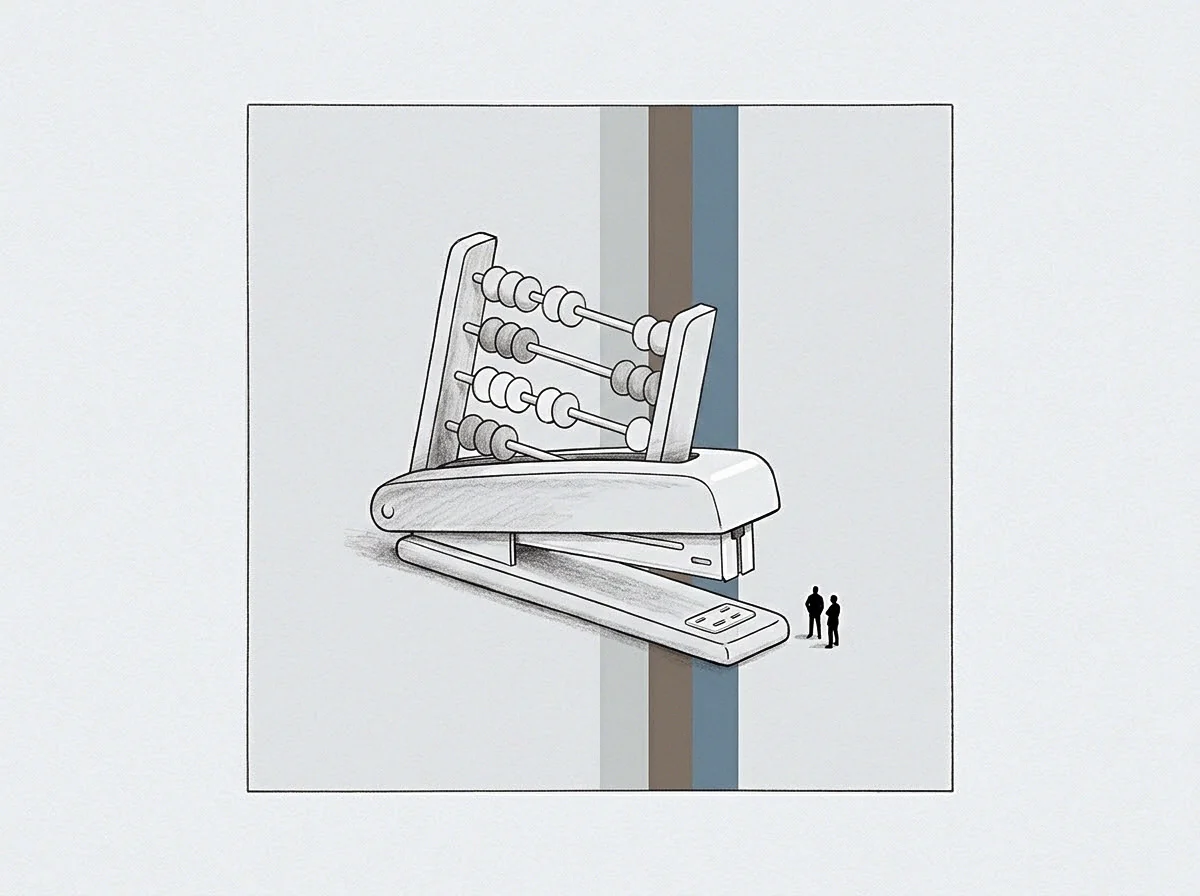
Labeling an equity buyout adjustment as an offset for unpaid historical salary converts what would have been a long-term capital gain into ordinary wages. Capital gains incur a federal tax rate capped at twenty percent for high-income thresholds, whereas ordinary compensation incurs marginal federal rates reaching thirty-seven percent, combined with federal payroll levies under the Federal Insurance Contributions Act. If a buyout contract allocates one hundred and fifty thousand dollars of a three hundred thousand dollar settlement to back pay offsets, the corporation must withhold income taxes and payroll contributions from that distribution.
The company also pays its matching employer share of social security and Medicare taxes, creating an unexpected cash drain on company bank accounts.

Section Eighty-Three Implications
Federal tax code section eighty-three dictates the tax events surrounding property transferred in connection with services. When builders receive shares subject to vesting restrictions, filing a timely Section 83(b) election within thirty days of the original grant fixes the stock tax valuation at the nominal grant price. Failure to file this election means the contributor recognizes ordinary income as each vesting milestone is reached, based on the fair market value of the stock on each vesting date.
During a subsequent buyout, this omission complicates sweat equity offset accounting. If an unregistered grant grew from pennies to two dollars per share at the vesting date, the owner incurred an ordinary income liability without receiving cash. When the enterprise repurchases those shares while applying an offset for unpaid labor, the entire settlement must be divided between stock basis recovery, compensation settlement, and cancellation of debt.
Capital accounts reflect cash.
Tax authorities routinely challenge buyout agreements that attempt to disguise compensatory wage settlements as capital share repurchases. An audit examining a departing operator who accepted a below-market buyout price in exchange for a separate, unverified corporate consulting note will recharacterize the note payments as immediate purchase price consideration, or reclassify the buyout discounts as disguised compensation, assessing penalties and back interest against both parties.
A Section 83(b) election signed and filed within thirty calendar days of initial share issuance permanently severs compensatory service taxation from subsequent equity capital payouts.
Remedy
Drafting the buyout instrument requires translating calculated sweat equity offsets into precise financial mechanisms that protect corporate liquidity while extinguishing all pending ownership claims. Startups and emerging operating businesses rarely possess surplus cash reserves to fund immediate lump-sum buyouts of departing shareholders. Instead, structured settlement terms reconcile the verified offset figures through staggered delivery methods.
Clean releases sever liability.
Subordinated promissory notes represent the primary financial tool for settling net buyout balances after sweat equity adjustments are calculated. The corporation issues an unsecured note to the departing party for the net purchase price, establishing an interest rate aligned with federal statutory baseline rates and setting amortization periods spanning three to five years. The note delays settlement.
Senior institutional lenders require that these shareholder buyout obligations remain subordinate to commercial bank operating lines and merchant credit facilities, preventing departure payouts from impairing company creditworthiness.
Promissory notes routinely include right-of-setoff provisions. This term allows the company to deduct future verified damages from note installment payments if the departed builder breaches restrictive covenants, misappropriates intellectual property, or conceals corporate liabilities discovered during post-departure operations. If the business discovers thirty thousand dollars of undisclosed tax penalties stemming from the departed officer’s tenure, that figure automatically offsets future note disbursements.
Drafting Definitive Severance Terms
The closing documentation must execute a complete separation of the corporate and personal channels. Incorporating four specific clauses guarantees that unquantified historical labor cannot resurface as future litigation:
- Mutual General Releases waiving every past, present, and contingent claim arising from employment, equity ownership, intellectual property creation, and wage compensation statutes.
- Cancellation of Equity Certificates requiring the physical return and formal corporate cancellation of all outstanding common stock, options, warrants, and profit participation rights.
- Definitive Intellectual Property Assignment transferring sole, exclusive ownership of all software code, client lists, trademarks, and technical documentation generated during the working tenure.
- Non-Disparagement and Restrictive Covenants establishing strict post-exit non-solicitation parameters to insulate enterprise customers and remaining staff from operational disruption.
Unquantified gifts invite dispute. When people build an enterprise together, the early hours arrive freely because both parties believe the shared future will balance every unlogged effort. The buyout agreement closes that accounting forever, replacing personal trust with cold mathematical arithmetic.
Whether any mathematical formula can truly capture the psychological debt felt by a builder who leaves their creation behind remains an enduring question of human enterprise.