
Evaluating Founder Service Distinctions In Pre Incorporation Corporate Asset Assignments Prior To Funding
Asset assignments convey completed historical property for vested stock, while service covenants bind ongoing performance under forward vesting terms.
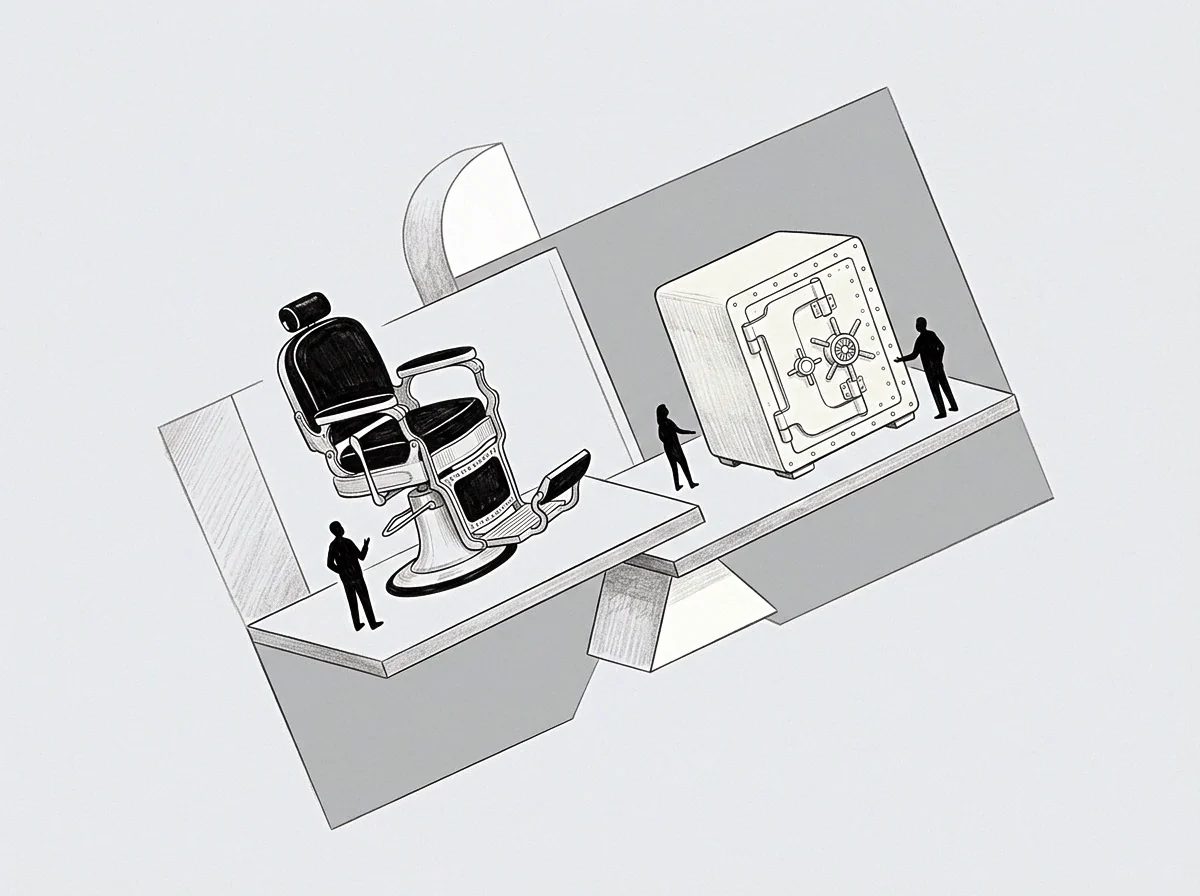
Arrival
A contributor commits eighty hours across four weekends to build an early software architecture, handing over repository files on an external drive without a signed agreement. Six months later, the entity incorporates, prepares a seed equity round, and discovers the intellectual property remains in that contributor’s personal name. Separating historical physical labour from the conveyance of created assets is what determines how pre-incorporation contributions are treated ahead of a financing round.
One person writes code at a kitchen table while another spends those same weeks securing pilot commitments by phone. The law handles those two efforts under different doctrines. Pre-incorporation contracts bind promoters personally unless formal novation occurs, while corporate law treats uncompensated time as uncapitalized until an instrument explicitly converts it into equity.
An asset transfer conveys property; ongoing service remains an uncompleted performance obligation.
A conveyance of property delivers completed ownership at a single date, whereas ongoing personal service remains an unfulfilled promise vulnerable to departure.
The tension comes from mixing what has already been built with what still needs to be done. Early contributors often assume pre-incorporation hours secure permanent equity, treating unbilled work as assignable title. Institutional investors take the reverse position, requiring clean intellectual property assignments upfront while conditioning ongoing equity retention on post-funding milestones.
That distinction dictates whether a contributor receives fully vested shares or restricted stock subject to corporate repurchase. Transferring an asset delivers a finished work; promising service sells future working capacity. From the receiving entity’s side, unassigned past effort is completed consideration that cannot support future corporate capitalization without an explicit bilateral covenant.

Conveyance
Assigning an intangible asset created before incorporation requires meeting specific statutory standards. Under intellectual property law, an agreement to assign drafted before an asset exists operates differently from a present conveyance of completed work. Patent and copyright statutes require written assignments of title, giving no legal weight to informal understandings regardless of the hours logged.

The Boundary Between Property and Labour
Balanced reciprocity appears in early corporate agreements as a negotiated exchange: an assignor surrenders absolute title to an asset in return for a fixed block of common shares. Negative reciprocity develops when an incorporation agreement absorbs pre-incorporation code or trade secrets without consideration, leaning instead on informal assurances about executive titles or future advisory seats. The author handed over a concrete asset, and the corporate shell took it without consideration.
Corporate codes in multiple jurisdictions, including Delaware General Corporation Law, establish that past services cannot serve as valid legal consideration for issuing fully paid stock. Property does qualify. A founder who transfers an existing codebase completes an asset conveyance; a founder who agrees to serve as chief technology officer promises forward labor.
Conflating the two creates direct exposure to tax liabilities and avoidable dilution.

Assignment Instruments and Consideration Mechanics
A contributor who turns over design files without an executed technology assignment agreement leaves the entity without legal title to proprietary assets. Transfer language at incorporation must use present-tense conveyance terms. Using hereby assigns rather than agrees to assign is mandatory, since promising to assign merely points to a future contract that breaks down if the contributor walks away before signing later documents.
| Dimension | Outright Asset Assignment | Ongoing Founder Service Covenant |
|---|---|---|
| Legal Classification | Conveyance of existing intellectual property or tangible assets | Bilateral agreement for continuous professional performance |
| Statutory Consideration | Recognized as property for valid stock issuance | Treated as future performance, often restricted by corporate codes |
| Vesting Applicability | Fully earned upon execution, resisting reverse repurchase | Subject to four-year vesting calendars with one-year cliff schedules |
| Failure Outcome | Defective corporate title, risk of patent or copyright clawback | Immediate forfeiture of unvested equity upon departure |
| Tax Treatment | Section 351 property exchange avoiding upfront income tax | Section 83 compensation subject to ordinary income taxes if unfiled |
When paperwork fails to distinguish between past creation and forward service, the initial equity allocation invites investor renegotiation. Financing partners routinely insist on reworking cap table percentages, treating unassigned code as an immediate risk to company solvency. A contributor who does not isolate historical production from ongoing employment ends up surrendering leverage on both.

Drift
Informal arrangements rely on presumed fairness, but drift sets in once a priced round approaches. Two people build software in a living room over nine months without bylaws. One assumes eighty percent of the equity covers the underlying code, while the other treats equity as compensation for the personal risk of leaving a salaried job.

Unspoken Calculations and Structural Divergence
Generalized reciprocity sustains early collaboration because neither founder logs daily contributions. One covers hosting bills; the other runs user interviews and prepares filings. The arrangement absorbs that ambiguity until institutional capital requires an exact count.
Priced equity forces every percentage point to demonstrate its underlying basis.
Unstated expectations compound quietly over time. One founder treats unpaid weekend work as an irrevocable property contribution to the company. The other treats those same weekends as the basic buy-in for joining an early effort.
When term sheets arrive, the venture capital firm applies a standard four-year vesting schedule across the board, ignoring the unvested weight of that earlier work.

What Happens When Contributions Get Revalued?
A technical creator asked to accept four-year reverse vesting on equity tied to pre-incorporation code sees the investor term as an outright clawback. Venture capital funds finance future performance, however, and systematically reject dead equity on the capitalization table if a founder leaves early. The assignor demands unencumbered ownership of historical work; the financier conditions all substantial equity on continued service.
A founder who yields proprietary title without receiving vested consideration loses both the asset and the standing to demand its return.
Take an arrangement where two creators spend twelve months drafting proprietary algorithms without salaries. Founder A writes the mathematical source code. Founder B prepares pitch materials and conducts initial customer discovery.
A venture firm offers two million dollars on the condition that both founders place all equity under a four-year vesting schedule with a one-year cliff, treating both as pure service providers.
Founder A seeks twenty percent non-dilutable or fully vested equity outside the service contract, arguing the algorithms represent completed property produced before incorporation. Founder B maintains that customer relationships and market validation carry equal standing, even though commercial contacts cannot be conveyed as proprietary property under corporate law. Talks stall because property and labor were treated as interchangeable units during the unpaid phase.
That friction often dissolves early alliances before incorporation papers are signed. Failing to document an asset assignment apart from service terms forces one contributor into unexpected subordination. Leaving the boundary vague produces a clouded title, stalling institutional capital until the creator signs an uncompensated quitclaim under pressure.

Tally
Evaluating pre-incorporation work requires setting aside personal narratives of sacrifice and applying balance-sheet valuation mechanics. Corporate tax rules draw a firm boundary between Section 351 property transfers and stock granted for uncompensated labor. That statutory divide requires an exact inventory of what digital or physical assets actually entered company hands before formal financing.
Transferring software, patent filings, or completed design schematics can qualify as a non-taxable exchange of property for stock under tax law, provided the transferor group maintains statutory control immediately after the transaction. By contrast, issuing shares to an individual for pre-incorporation advisory hours or future management constitutes ordinary taxable compensation governed by Internal Revenue Code Section 83.
The table below summarizes three failure modes that occur when teams merge past assets with forward service obligations:
- The Phantom Assignment occurs when a contract refers to intellectual property that was never assigned in writing, leaving legal title with the original author.
- The Tax Trap Allocation triggers ordinary income tax liabilities by granting non-vested stock for uncapitalized services without an accompanying Section 83b election.
- The Stranded Asset Deadlock blocks venture investment when an exiting collaborator retains title to core algorithms and demands cash consideration before signing a retroactive corporate assignment.
Take an engineer who builds an operational backend over eighteen months, then steps back to an advisory post right as institutional financing materializes. If the initial agreement issued common shares under a single unallocated founder contract, the company faces a structural problem: the engineer no longer performs full-time work, yet holds a substantial block of equity that incoming investors want returned to the option pool or re-vested.
Separating the transaction into two distinct instruments prevents that deadlock. Under this structure, the company executes an intellectual property purchase agreement, acquiring the backend in exchange for a fully vested five percent common equity grant. Alongside that document, the company signs an advisory agreement carrying an unvested two percent grant tied to monthly deliverables.
The property transfer is permanently closed, while ongoing compensation tracks actual service.
Failing to separate these two transfers can also create severe tax exposure for the technical contributor. If tax authorities recharacterize stock issued for an asset assignment as compensation for pre-incorporation labor, the founder incurs ordinary income tax assessed against the company’s new institutional valuation, despite having no liquid market to sell shares. The closing documents must establish whether shares represent payment for title or compensation for operational work.
In practice, these errors surface on cap tables as missing IP assignment warranties and qualified vesting footnotes. When early participants leave these lines blurred, due diligence identifies the cap table as defective. An unambiguous clause conveying proprietary technology in exchange for fully vested equity protects the company’s core asset from being tangled with ongoing employment commitments.

Pact
Resolving the tension between service and asset conveyance requires structured legal instruments signed well before institutional capital arrives. A distinct paper trail for property transfers and personal service contracts shields company assets from subsequent founder departures. The process requires an audit of contributed code or designs, board approval, and clean vesting terms.

Structuring Independent Instruments
Early operations require two independent contracts for each technical or operational contributor. The first is an Intellectual Property Assignment and Transfer Agreement. This conveys all code, inventions, trademarks, and design files created before incorporation to the corporate entity.
Consideration for the transfer consists of fully vested founder stock or a nominal cash fee, severed from any future role.
The second document is a standard Confidential Information and Inventions Agreement paired with a restricted stock purchase contract. It governs future work, responsibilities, and performance milestones, placing ongoing equity on a reverse vesting schedule. Hours worked after incorporation fall under standard work-for-hire provisions, while pre-incorporation assets remain secured by the initial assignment.
Separate legal instruments for historical property and future service prevent departing collaborators from retaining corporate assets or forfeiting earned ownership.
This structure protects the contributor whose primary value was delivered upfront. The engineer secures finality: completed work cannot be clawed back if circumstances force an exit before four years are up. At the same time, the company secures an unbroken chain of title, demonstrating to incoming investors that the underlying technology belongs to the corporate entity without competing claims.

The Reality of Contributor Negotiations
Negotiating these agreements means addressing the assumptions that take root during early collaboration. Contributors often hesitate to sign blanket assignments when a company cannot guarantee commercial survival or permanent corporate titles. Asking for an unencumbered technology assignment formalizes what had previously functioned as an open-ended partnership.
When an assignor seeks an explicit accounting for past sacrifice, the entity can realistically offer only equity, cash, or royalty rights. Because pre-funding startups carry minimal cash, stock is usually the only currency available. If that stock arrives subject to standard vesting rules, the assignor views the arrangement as an unreciprocated surrender of completed work.
Valuing unpatented, unreleased code at incorporation remains a point of active dispute. One legal perspective holds that unreleased software carries speculative value, justifying minimal upfront vesting and shifting the weight onto future operational milestones. The counter-argument holds that without the initial codebase, the company has nothing to capitalize, requiring clear equity recognition for the conveyance.
Teams generally resolve the disagreement by pricing the asset against its market replacement cost.
A disciplined approach decouples historical asset transfers from ongoing employment by executing the two agreements independently. The company purchases the asset, completes the filings, and establishes clear title. Afterward, the parties enter an employment relationship on terms comparable to any executive hire, complete with standard vesting.
The transaction clarifies what was sold upfront and leaves future compensation tied strictly to future performance.
A lingering technical risk is whether pre-incorporation code survives long enough to reach institutional funding without becoming obsolete. The assignment contract transfers the codebase as it existed on the signing date; if the primary author leaves behind undocumented or fragile architecture, the business remains vulnerable. That operational risk is something contracts alone cannot solve.