
Navigating Informal Technical Work Before Legal Entity Creation
Unquantified technical work performed before incorporation converts informal goodwill into retroactive equity claims when legal entities establish fixed capitalization tables.

Gift
Two developers sit before shared repositories, pushing lines of software long before filing articles of incorporation. In this early phase, technical contributions often move through generalized reciprocity, where work is offered without immediate pricing or explicit debt collection. One developer configures authentication pipelines, sets up database schemas, and refactors legacy modules during late evening hours.
The recipient accepts this labor because no commercial terms exist on paper to demand immediate settlement. Calculations begin later.

Early Architecture Work Without Stated Equity
Informal software creation relies on implicit social goodwill to cover initial build costs. When technical contributors donate hours without defining ownership, they establish a reliance on relational trust. Code sits in isolation.
The value of an unprompted contribution is located in the timing of the arrival rather than the numerical tally of lines written. A functional prototype delivered before a pitch meeting carries high emotional weight, yet its equity value remains completely unanchored.
Problems surface when the implicit expectation of equal partnership encounters corporate capitalization realities. Social exchange literature demonstrates that generalized reciprocity functions reliably only within close-knit groups with symmetrical operational capacity. When one participant possesses vastly superior engineering throughput, the unquantified exchange degrades.
Silence holds no equity. The high-capacity developer builds under an unstated belief that historical effort automatically yields proportional ownership, while the low-capacity partner assumes early help was a friendly favor.
Generalized reciprocity sustains informal technical development while neither contributor attempts to bill for past hours.

Generalized Reciprocity in Pre-Incorporation Repositories
Unprompted contributions create a fluid baseline where technical labor flows without immediate invoicing. An engineer may spend three weekends writing an end-to-end testing suit without asking for payment or contractual promises. The act of contributing technical assets without demanding a formal fee signals high commitment to the prospective venture.
Receiving such labor without an active invoice allows the prospective enterprise to test technical feasibility without burning cash reserves.
This dynamic shifts the moment financial capital enters the picture or legal entity creation becomes necessary. The informal channel that permitted uncounted labor must close to satisfy legal standards for entity registration. Converting unpriced technical gifts into fixed equity allocations exposes every hidden assumption held by both parties during the informal phase.
The initial software design was provided to test product viability rather than to claim thirty percent of the business.
Desk
Building systems on local machines establishes informal habits that define how software assets accumulate. Before registering a business entity, collaborators share server access, API keys, and repository admin rights across informal communication channels. The physical and digital desk where code is produced acts as an unmonitored zone.
The absence of legal boundaries invites rapid iteration, but it simultaneously obscures who owns the resulting intellectual property.
Structural Profiles of Early Technical Exchange
The nature of pre-incorporation contributions dictates how easily those contributions translate into corporate equity. Some work represents pure expense coverage, while other efforts represent deep core architecture that forms the primary value of the business. The structural differences between exchange models determine the strain experienced during corporate formation.
| Exchange Type | Reciprocity Model | Implied Expectation | Incorporation Impact |
|---|---|---|---|
| Unprompted Feature Commit | Generalized Reciprocity | Social Recognition | Negligible Valuation Conflict |
| Infrastructure Provisioning | Balanced Barter | Expense Offset | Direct Operational Reimbursing |
| System Architecture Design | Generalized Reciprocity | Equity Stake | Heavy Capitalization Friction |
| Full-Time Technical Execution | Covert Contract | Equal Ownership Split | Severe Retroactive Billing |
| Data reflects typical strain patterns observed during legal entity registration. | |||
The repository fills quickly. When collaborators treat infrastructure costs as minor personal outlays, they engage in balanced barter. One engineer pays out of pocket for cloud server hosting, while another covers domain registration fees.
The servers run quietly. These tangible cash expenditures generate minimal relational friction because the figures are explicit, cardinal, and easily cleared through reimbursement upon initial corporate funding.
A written memorandum specifying pre-incorporation ownership boundaries converts covert relational expectations into explicit commercial terms.
Disputes emerge primarily around unpriced architectural labor. When an engineer commits hundreds of hours building custom software algorithms, the exchange moves away from balanced barter into unquantified contribution. The worker assumes this labor buys a permanent seat at the equity table.
The party supplying infrastructure out of pocket always seeks dollar offset before equity splits are calculated.

Barter
When software contributions remain unrecorded, unspoken debt accumulates between early builders. Informal technical labor operates on an unwritten ledger where each contributor tracks their own inputs using subjective metrics. The software engineer counts sleepless nights and complex refactoring tasks.
The non-technical collaborator counts business networking events, sales prospects, and market analysis documents. Neither ledger matches the other.

Failure Modes of Unquantified Technical Labor
Operating without legal corporate boundaries breeds specific structural failure points in working relationships. Unstated expectations turn into active friction points when formal entity formation demands absolute precision. Capacity dictates the pace.
- Retroactive Hour Invoicing occurs when an unrewarded contributor suddenly converts past unprompted effort into an unpaid cash debt calculation.
- Asymmetric Ownership Drift expands the gap between what the primary coder expects and what the non-technical partner assumes.
- Code Base Holdback happens when a frustrated developer restricts repository access right before formal entity filing.
- Covert Equity Billing emerges when casual assistance turns into a retroactive demand for significant common stock.
Generosity has a limit. When one partner contributes vastly more technical execution than the other can offset through business operations, the informal arrangement fractures. The contributor who provided the bulk of the early technical momentum begins to view their work as an uncompensated loan to the prospective company.
Unprompted contributions land cleanly when capacity is equal, but heavy technical labor from one side eventually demands formal accounting.

The Friction of Capacity Imbalances
One partner spends forty hours weekly writing core infrastructure while the other manages market exploratory calls for five hours. This stark capacity imbalance dismantles generalized reciprocity. The full-time developer experiences the time commitment as an asymmetrical burden, while the part-time collaborator maintains that early equity promises remain equal regardless of hourly velocity.
Assumptions create immediate debt.
The psychological literature on workplace reciprocity confirms that unquantified contribution arrangements collapse under prolonged operational imbalance. The overburdened party begins to operate under a covert contract, an unstated mental agreement where they expect automatic compensation in equity later to balance current sacrifices. When the explicit equity terms are finally presented during legal formation and fail to match this internal tally, the working relationship deteriorates.
An explicit intellectual property assignment memorandum signed before repository creation changes the baseline from unquantified gift to defined company asset.
Conversion

Where Does Informal Technical Ownership Split Under Incorporation?
Filing corporate formation paperwork converts relational goodwill into concrete equity calculations. Take two engineers who spent five months building a data pipeline without a registered legal corporate entity. Assume the primary engineer committed ninety percent of the codebase while working full-time without pay, while the second engineer spent five hours a week configuring deployment server scripts.
When corporate incorporation approaches, the second engineer expects a fifty-fifty equity split based on early verbal conversations about equal partnership. Capital forces direct answers.
The primary engineer calculates that ninety percent of the committed code warrants an eighty-twenty share distribution. Because no pre-incorporation memorandum existed, the team enters legal entity creation with competing accounting models. The primary developer views the early code as personal intellectual property contributed on the condition of dominant equity control.
The secondary developer views the codebase as a joint enterprise asset created under generalized reciprocity. The partnership shifts instantly.
The ledger remains blank. Legal entity creation forces this implicit dispute into explicit terms through the mandatory execution of an intellectual property assignment agreement. Without signing this document, the newly formed entity does not own the software created during the informal phase.
The contributor holds individual title to their code, granting them absolute leverage during equity negotiations. The informal goodwill built over months vanishes in a single equity dispute.
Incorporation forces every past gesture of informal goodwill through the bottleneck of fixed capitalization tables.
The Moment of Formal Entity Formation
Transitioning to a structured business vehicle forces the resolution of historical commitments before signing shareholder agreements. Incorporating an enterprise requires translating informal historical technical contributions into formal capitalization tables. The process demands that early builders reconcile unpriced labor with future vesting structures.
- Analyzing past commit logs to assess relative code output volume.
- Evaluating out-of-pocket infrastructure expenses paid by each individual.
- Formalizing proprietary rights transfers through explicit invention assignment clauses.
- Establishing forward-looking vesting schedules that supersede past informal work.
Firms that attempt to gloss over past unquantified technical work during incorporation risk future legal challenge. An early contributor whose contributions were unpriced may later assert that their code was licensed, not assigned, to the corporate entity. Delaying equity formalization until institutional investors request clean capitalization tables results in costly legal mediation and lost software momentum.

Room
Drafting a lightweight preliminary agreement before writing software prevents historical contribution disputes. Early technical collaborators must enter a physical or virtual room to establish clear terms before pushing code to production repos. Establishing written clarity early costs far less than resolving complex ownership disputes after equity value has accrued.
Terms define the boundary.
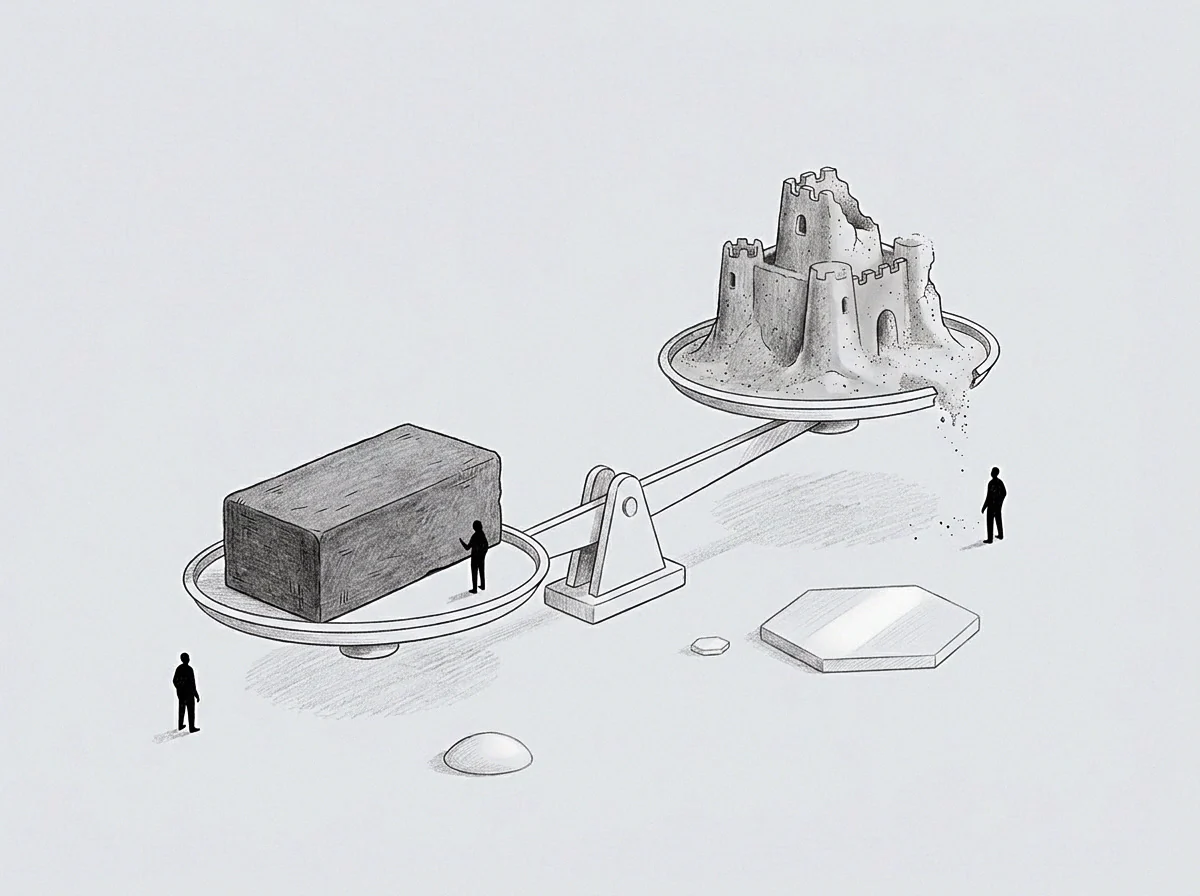
Pre-Incorporation Technical Memoranda
A simple pre-incorporation memorandum separates personal software tools from venture intellectual property. This instrument defines whether informal work represents an unprompted gift, a compensated service, or an advance on founding equity. Clear notes prevent friction.
By formalizing terms in a lightweight document, collaborators protect their personal relationships from the commercial pressures of corporate formation.
Informal trust fades fast. The document states explicitly how unpriced hours will be treated upon official registration. If early work is deemed an equity advance, the agreement defines the exact formula or milestone matrix used to allocate shares.
If the work is categorized as cash-compensable contracting labor, the document establishes deferred payment terms triggered upon external funding. The invoice arrives unprompted.
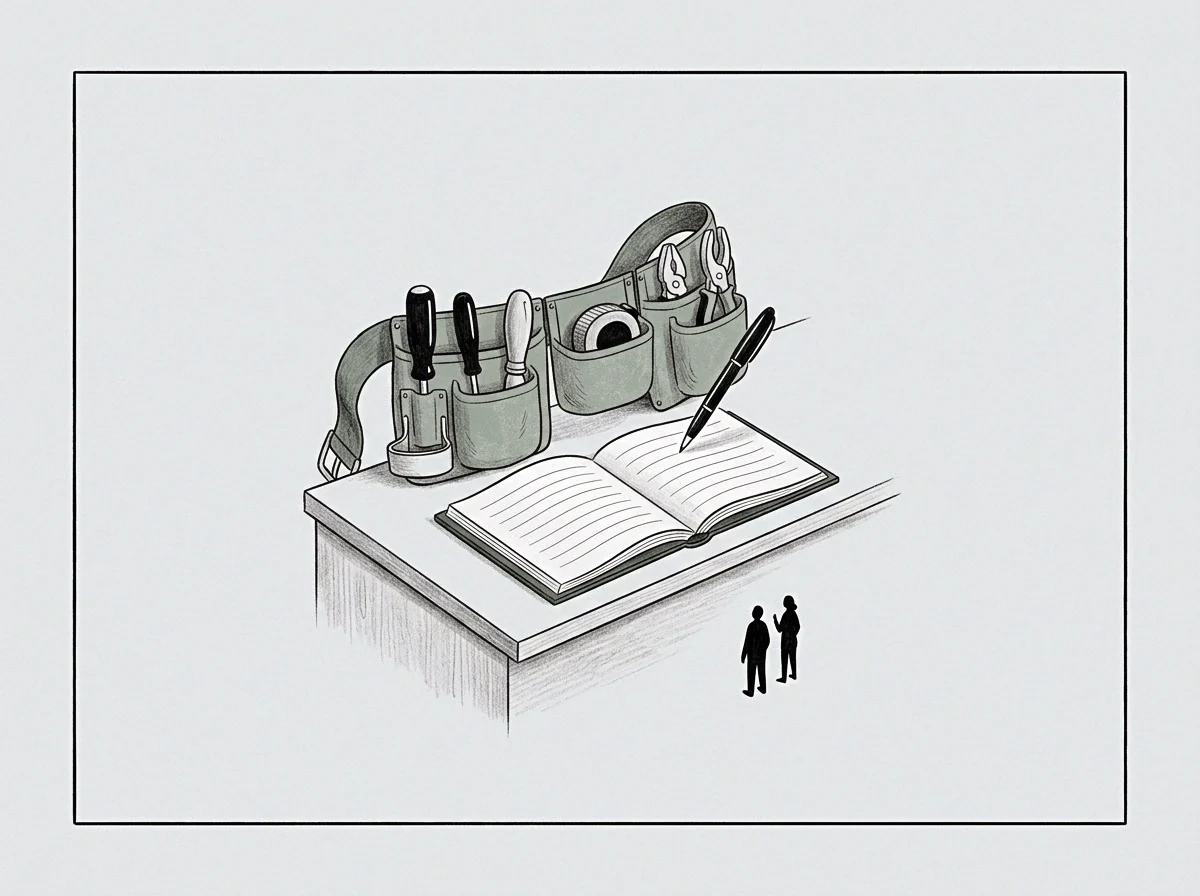
Resolving Retroactive IP Claims
Clear documentation of prior inventions separates personal software toolkits from product features. Engineers frequently reuse proprietary utility scripts or pre-existing libraries when assembling early prototypes. Without a written agreement specifying which pre-existing assets remain personal property and which assets are assigned to the project, entity creation creates severe IP ambiguity.
A formal pre-incorporation memorandum protects both the engineer and the future company. It grants the venture a non-exclusive license to necessary pre-existing code while preserving the engineer’s underlying ownership of their personal tooling. This distinction prevents scenarios where incorporation unintentionally transfers an engineer’s lifetime of personal utility code to a fledgling corporate vehicle.
Whether an early contributor whose unpriced code was completely replaced before incorporation retains a valid claim to founding equity remains dependent on how courts interpret initial verbal barter.