
Resolving Tacit Relational Expectations When Co Founders Shift From Equal Commitment To Unbalanced Operating Roles
Unstated contribution expectations convert equal co-founder equity into a daily ledger of unearned value transfer when operational commitment splits.

Parity
Three years into a software enterprise, two partners hold equal fifty percent equity stakes, yet their weekly schedules reflect entirely different realities. One partner logs sixty hours managing daily engineering deployments, sales calls, and hiring cycles. The other partner attends a single biweekly check-in call and reads monthly revenue summaries while pursuing a separate venture.
Neither partner spoke a single sentence about this divergence when the shift began eight months ago. The operating partner carries a quiet score of hours worked, while the non-operating partner operates under the quiet assumption that early equity grants are permanent records of initial risk.
Initial equity arrangements in early companies rely on generalized reciprocity. Partners contribute effort without tracking immediate return, trusting that total effort balances over time. This unquantified gift model operates smoothly while both partners sit in adjacent chairs.
When operational commitments split, unstated assumptions convert this open gift culture into an unstated debit ledger. The partner in the heavy seat interprets every unaccounted hour as an unearned transfer of value to the partner who stepped back.
Unstated contribution expectations convert shared equity into a daily tally of unearned value transfer.
Silent scorekeeping destroys trust faster than overt disagreement. The partner managing daily operations hesitates to raise the equity imbalance, fearing the conversation will end the personal bond that founded the firm. Meanwhile, the partner in the lighter role senses rising hostility and retreats further from operational governance.
The distance widens without a single term being stated.
The core friction stems from confusing equity ownership with operating labor compensation. Early equity reflects the initial risk and intellectual seed of the venture. Executive compensation and active share vesting reflect ongoing operational execution.
Conflating these distinct instruments ensures that any change in working capacity creates immediate relational strain.
The partner who stepped back from daily operations expects the original fifty-fifty split to remain unblemished because early sacrifices were shared equally during the initial product launch.
Board
Executive governance seats require explicit clarity when labor commitments diverge. When one partner transitions to a non-operating position while retaining board authority and equal equity, operational friction manifests in governance decisions. The operating executive demands autonomy to make capital allocations, while the non-operating partner exercises voting power to block decisions that alter ownership structures or executive pay.
Psychological contracts in founding teams break when tacit expectations encounter operational pressure. Psychological contracts consist of implicit beliefs regarding mutual obligations that are never formally drafted. In equal equity founding teams, the tacit expectation is continuous, equal effort until a liquidity event occurs.
When one partner drops operating hours without an explicit agreement, the operating partner experiences a fundamental breach of this psychological contract.
| Seat Dimensions | Operating Partner Role | Non-Operating Partner Role |
|---|---|---|
| Contribution Model | High weekly operational labor and direct execution | Strategic oversight, governance, or light advisory input |
| Psychological Contract | Expects equity equity value to reflect ongoing labor effort | Expects equity equity value to reflect early founding risk |
| Compensation Structure | Below-market cash salary combined with active equity vesting | Zero cash salary with static equity ownership |
| Decision Rights | Day-to-day tactical autonomy and operational direction | Board-level veto power and governance oversight |
| Relational Vulnerability | Resentment toward subsidizing inactive equity holders | Defensiveness over diminished status and influence |
Relational shifts accelerate when unprompted giving stops. In early stages, partners complete tasks for each other without keeping track. Once operational labor diverges, every unstated favor becomes a line item on an uncollected debt list.
The operating partner stops offering unprompted help, shifting the relationship from generalized exchange to balanced exchange, where every contribution demands an immediate, equal return.
Social exchange theory demonstrates that generalized reciprocity cannot survive visible capacity asymmetry without explicit terms. In small groups, unquantified giving requires perceived equity of effort. Once perceived effort diverges beyond a tolerable threshold, group members demand transaction boundaries.
Failing to establish transaction boundaries converts balanced exchange into negative reciprocity, where both parties attempt to extract maximum value while minimizing ongoing contribution.
A formal board amendment executed during labor shifts replaces unstated assumptions with defined voting thresholds and revised equity vesting schedules.

Capacity
Human capacity is variable across years of company building. Health challenges, family demands, burnout, or evolving career interests reduce a partner’s operating capacity. Problems arise when capacity drops but relational expectations remain fixed at founding levels.
The remaining operator often attempts to absorb the extra workload quietly, hoping the reduction is temporary. When months pass without recovery, silence hardens into resentment.

Why Do Unstated Debt Counts Destroy Shared Ownership?
Unstated debt counts destroy shared ownership because they eliminate the possibility of authentic gratitude. When one partner performs work outside their agreed role while keeping an unstated ledger, every completed task carries hidden interest. The receiving partner cannot acknowledge the contribution because the price remains unstated.
Over time, the unstated ledger grows so heavy that any future conversation carries the weight of years of silent accounting.
Help that arrives with an unstated price is impossible to receive cleanly. When an operating partner covers for a non-operating partner without defining whether the work is a gift or an obligation, relational debt accumulates. True assistance arrives unprompted and unquantified, or it arrives as a paid transaction.
Mixing the two creates relational toxicity that poisons governance conversations.
Unstated relational debt prevents clean negotiation by converting everyday business decisions into emotional settlement disputes.
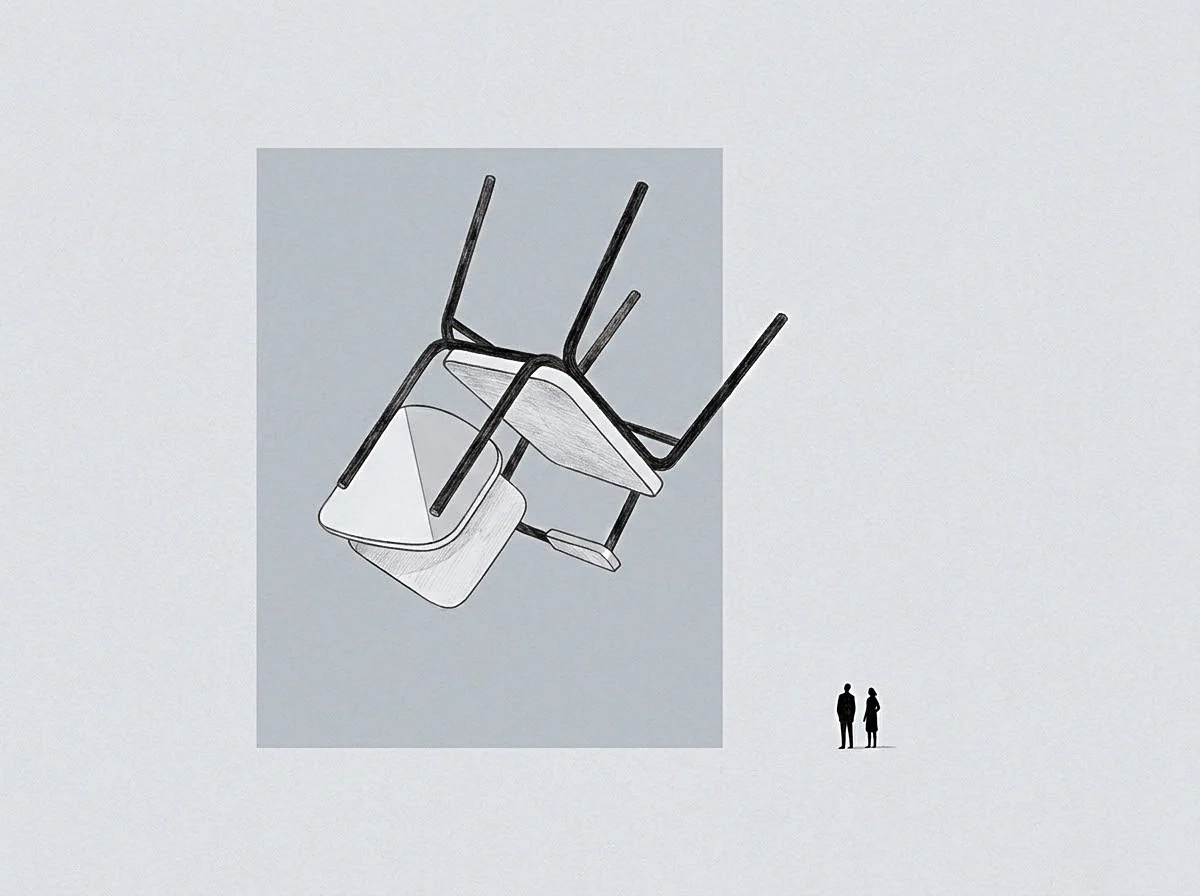
The physical reality of an empty chair in the office impacts team performance. Employees notice when one founder works late every evening while another founder visits once a month. This visible gap creates organizational ambiguity.
Key staff members register the disparity, questioning executive authority and compensation fairness across the leadership layer.
Ignoring operational labor splits leads to explosive founder split-ups, forced share buybacks under distress, and lost enterprise value. The organizational energy spent managing internal friction reduces market execution focus. The firm pays for founder silence through missed product milestones and delayed funding rounds.

Reckoning
Resolving tacit relational expectations requires moving from unstated assumptions to explicit terms. This process begins by auditing current operating realities against equity distribution. Take a worked situation involving two founders who launched a technology firm three years ago with equal fifty percent share holdings.
Assume Founder A manages product development, sales, and operations for sixty hours per week. Assume Founder B stepped back twelve months ago to take a part-time corporate advisory role, contributing ten hours monthly to board meetings while retaining fifty percent equity. The company generates two million dollars in annual revenue, but executive salaries remain below market rates to preserve cash flow.
Founder A receives seventy thousand dollars annually, while Founder B receives no salary but claims fifty percent of annual distributions.
Two distinct pathways exist for resolving this divergence:
- Tacit continuance allows the operational gap to persist without explicit terms. Founder A continues working sixty hours per week while earning a sub-market salary, effectively transferring earned value directly to Founder B. Resentment escalates over eighteen months until Founder A threatens resignation or demands a hostile buy-out. The firm suffers operational paralysis and valuation discounts during investor due diligence.
- Explicit restructuring introduces formal separation between labor compensation and equity returns. The founders normalize Founder A’s operating salary to a market rate of two hundred thousand dollars before any profit distributions occur. They implement a reverse vesting schedule for unvested equity, returning twenty percent of Founder B’s unearned shares to the company equity pool for future executive hiring. Founder B retains a board seat and reduced equity reflecting early founding risk, while Founder A gains operating control and fair compensation.
The structured resolution path restores operational focus and aligns economic incentives. The unstated debt count vanishes once labor receives market compensation and equity reflects real risk alignment.
Executing an operational role transition requires addressing several critical friction points across the founder dynamic:
- Equity compensation uncoupling establishes market-rate cash salaries for active operating roles prior to equity distributions, ensuring operating partners are paid for daily labor before non-operating partners receive yield.
- Reverse vesting activation subjects unearned founder equity to ongoing time-based or milestone-based vesting conditions, protecting the venture from stranded equity when a partner exits early.
- Governance seat realignment adjusts board voting structures to match operational accountability, preventing non-operating partners from blocking executive operational decisions.
- Advisory role formalization converts non-operating founder positions into structured advisory roles with defined deliverables, clear meeting cadences, and specific equity allocation caps.
Decoupling executive labor compensation from long-term equity returns eliminates the relational friction caused by divergent operating schedules.
Formalizing terms before emotional breach occurs preserves early founder relationships while protecting business operations.

Contract
Restructuring founder relationships requires replacing covert psychological contracts with formal legal covenants. Tacit expectations thrive in ambiguity; explicit agreements eliminate room for silent interpretation. When partners state terms cleanly, equity ownership and operating labor operate in separate legal channels.
This clarity protects both the enterprise and the interpersonal bond.
The transition move requires four distinct structural steps:
- Define the precise operating expectations for every active founder seat, including weekly time commitments, core responsibilities, and performance metrics.
- Set market-rate compensation for active executive roles, ensuring that operational labor receives direct cash payment before any capital distributions.
- Recapitalize or dynamic-vest unearned equity when a founder exits daily operations, returning unvested shares to the option pool to recruit replacement talent.
- Transition non-operating founders from executive management seats to structured board or advisory positions with defined oversight parameters.
Establishing these terms requires absolute honesty about individual capacity and interest. A partner who no longer wishes to work sixty hours weekly can step back without feeling guilty, provided their equity and compensation adjust accordingly. The operating partner can execute company strategy without tracking hidden debts, knowing that labor is fully compensated at market rates.
The unstated gift economy of early founding must eventually yield to structured corporate governance. Generalized reciprocity serves a company well when survival requires unquantified sacrifice from everyone present in the room. As the business matures and labor commitments split, formal contracts preserve the early value created without destroying the ongoing operation.
Whether early founding bonds can survive legal restructuring intact depends entirely on how much unstated relational debt accumulated before the terms were written down.