
Structuring Early Equity Splits Before Commercial Validation
Early equity splits resolve valuation uncertainty by coupling uncapitalized labor to performance-adjusted vesting schedules before commercial traction occurs.

Room
Early founding teams frequently assign permanent ownership stakes during initial collaboration when project risk is highest and information is lowest. Distinguishing an initial equity assignment from long-term operational entitlement separates the speculative phase of building from validated enterprise value. Static splits negotiated during initial excitement treat unverified promises as completed contributions.
Early equity allocation creates permanent rights. When founders divide ownership equally at inception, they assume equal future capacity, equal risk tolerance, and equal operational longevity without testing those assumptions in market conditions.
Pre-commercial validation requires building without market feedback. Unstated assumptions bill later. During this phase, participants contribute mismatched hours, asymmetric financial reserves, and varying functional expertise.
Assigning fixed ownership percentages before validating product utility creates relational debt. When one participant scales back involvement due to personal or financial pressure, the static equity split remains legally fixed while the operational burden shifts entirely to the remaining active builders.

Separating Early Presence From Long Term Contribution
Early presence in a venture does not equal execution capability over a four-year horizon. Static splits award unproven promises. A founder who brings an initial product concept often claims a dominant equity share, confusing the initial idea with the substantial labor of build out, distribution, and corporate scaling.
Anthropological observations of generalized reciprocity demonstrate that informal unquantified help functions effectively inside small groups only while project capacity remains symmetric. As soon as one participant bears primary financial and labor costs, unquantified reciprocity collapses into accounting conflict.
A equal equity split executed prior to customer revenue converts future unfulfilled expectations into an enforceable debt against the operating table.
Establishing clear ownership structures requires separating the early experimental period from formal corporate issuance. Teams that delay final equity caps until achieving specific technical milestones or initial commercial traction preserve flexibility. This distinction prevents early departing contributors from holding large blocks of voting equity that impede future institutional capitalization.
Assigning static equity prior to validation leaves the enterprise crippled by cap table deadweight before customer revenue can test the market.

Weight
Evaluating the relative value of sweat equity, intellectual property, cash reserves, and forgone corporate salaries presents severe valuation ambiguity before market entry. Pre-validation valuations are arbitrary numbers. Without external financing or customer receipts, founders lack a objective price signal to benchmark individual contributions.
Cash contributions de-risk early operations. Time commitment fluctuates unexpectedly. An hour of technical architecture provided by a senior engineer carries a different market price than early administrative setup, yet both are frequently lumped together in unquantified early arrangements.
Uncapitalized labor creates implicit equity expectations. When founders work without salaries, they implicitly bill the venture for their market rate in future ownership. If one partner works full-time while another maintains a corporate position to mitigate personal risk, the full-time builder absorbs greater immediate financial risk.
Failure to measure these asymmetric risks creates covert contracts where participants expect equity adjustments that were never explicitly written into corporate filings.

Quantifying Cash Versus Uncapitalized Labor
Formal equity architecture must separate capital risk from operational sweat risk. Cash placed into the company bank account directly funds early legal fees, domain purchases, and hosting infrastructure. Sweat equity represents uncapitalized human labor that must be tracked against explicit hourly or project benchmarks.
Mixing cash and labor without a standardized calculation mechanism generates immediate co-founder friction when financial requirements scale up.
- Overvaluing Early Concept Work Initial ideas receive large static equity allocations while downstream technical execution remains under-capitalized.
- Ignoring Asymmetric Opportunity Costs One participant foregoes a full salary while another operates during evening hours, creating unstated equity friction.
- Unquantified Personal Expenses Initial hosting costs and domain purchases remain unrecorded, converting informal generosity into relational leverage.
- Confusing Advisory Visits With Operations Occasional technical guidance receives operational equity parity without operational time commitment.
To prevent relational breakdowns, early teams establish clear theoretical valuations for uncapitalized labor. Assigning a standardized hourly credit rate for specialized labor and applying a multiplier to cash outlays accounts for the heightened risk of early capital. This formal tracking transforms informal sweat equity into explicit, transparent contributions.
Inserting an uncapitalized labor valuation clause establishes a fixed hourly credit rate, converting unquantified sweat equity into a bounded stock grant.
Granting fixed ownership for unquantified pre-revenue labor creates cap table debt before the initial product release.

Grid
Structuring equity allocations through systematic mathematical formulas replaces initial relational negotiation with empirical tracking. Adjustable slicing pie systems calculate ownership ratios continually until the venture reaches commercial validation or secures external seed funding. Cap tables remember every early grant.
Under an adjustable structure, participants accumulate theoretical risk units for unpaid hours, cash expenses, and introduced intellectual property. Ownership percentages update automatically based on cumulative risk units contributed by each party.
Formal terms protect relational capacity. Adjustable models track actualized labor. By utilizing an explicit mathematical grid, founding teams remove the emotional burden of renegotiating equity when personal circumstances force a partner to alter their time commitment.
If a founder reduces their weekly hours, their accumulation of risk units slows down, naturally diluting their ultimate ownership percentage relative to partners who continue full-time execution.
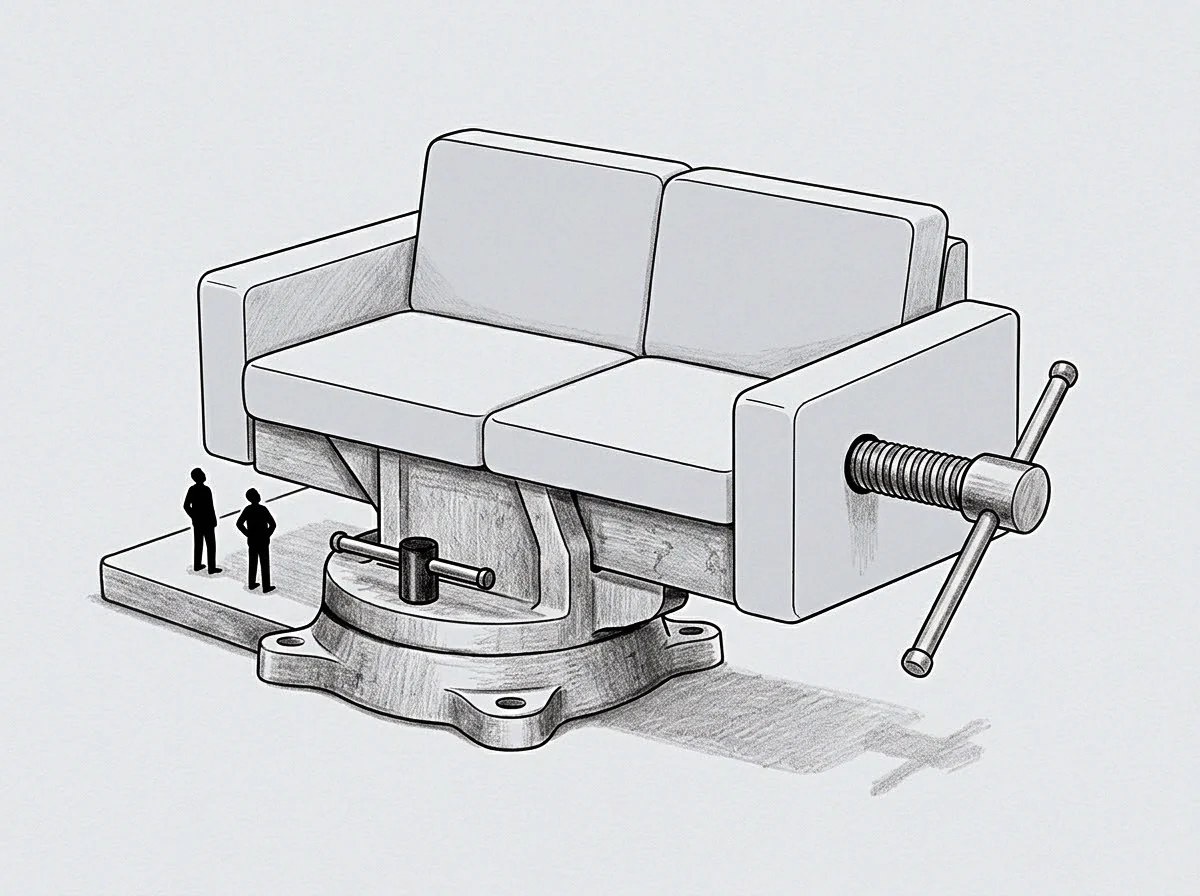
Can Adjustable Equity Splits Survive Shifted Commitments?
Adjustable allocation structures face resistance from contributors who prefer the certainty of fixed early grants. Fixed ownership grants security to early participants, but they expose the company to severe capital structure distortion if operational roles change. The table below compares conventional static and fixed structures against performance-adjusted allocation mechanisms before commercial validation occurs.
| Structure Model | Allocation Basis | Handling Unexpected Departure | Alignment With Strategy Shifts |
|---|---|---|---|
| Static Equal Split | Equal percentages agreed at inception | Leaves unearned equity with departing partner | Rigid; fails to account for altered contributor obligations |
| Fixed Time-Vested Split | Fixed percentage vesting over four years | Repurchases unvested equity; leaves vested portion unadjusted | Partial; protects time spent but ignores variable contribution quality |
| Performance-Adjusted Model | Relative risk units assigned to cash and labor | Recalculates equity percentages based on actualized inputs | Flexible; automatically reallocates equity when market conditions force strategy shifts |
Implementing an adjustable grid creates clear legal boundaries. The system converts raw hours and out-of-pocket expenses into explicit equity weights using agreed multipliers. For instance, cash outlays might earn a two-times risk weight to reflect immediate liquidity loss, while unpaid labor earns a one-times risk weight based on agreed fair market rates.
When commercial validation occurs, the pie freezes, locking in final equity percentages based on total actualized risk borne by each participant.
Unstated relational expectations inside early founding teams convert into cap table disputes at the first external valuation.
Initial sweat equity contributions were intended as a permanent ownership stake regardless of how many hours were spent after the second strategy shift.

Clause
Defensive legal provisions embedded within early operating agreements protect the venture from partner churn and unfulfilled personal commitments. An unvested share grants no protection. Reciprocity breaks without explicit terms.
Sweat equity carries high opportunity cost. Issuing stock without explicit buyback rights or vesting criteria invites severe operational risk. If a co-founder leaves after three months, they retain their full static equity block unless legal clauses mandate repurchase options or equity forfeiture.
Reverse vesting agreements serve as the primary defensive legal instrument for early ventures. Under a reverse vesting contract, founders receive their full stock grant upfront, but the enterprise holds an option to repurchase unvested shares at nominal cost if the founder ceases providing services. This structure ensures that equity accrues over time alongside verified ongoing service, shielding active builders from carrying inactive equity holders.

Mechanisms of Equity Protection and Buyback
Establishing formal protections requires executing specific legal instruments before distributing enterprise shares. The sequence below outlines the operational steps taken to secure company equity prior to commercial product validation.
- Execute a formal intellectual property assignment agreement transferring all preliminary codebase, domain names, and technical designs to the legal entity before issuing share certificates.
- Implement a standard four-year vesting schedule containing a twelve-month cliff to ensure no equity accrues during initial experimental phases.
- Insert a share repurchase provision permitting the entity to buy back vested stock at fair market value or nominal price upon voluntary exit prior to commercial launch.
- Specify explicit performance thresholds that convert operational founder equity into non-voting advisory equity should hours drop below agreed operational floors.
Incorporating a one-year cliff ensures that participants complete a full year of active contribution before vesting any portion of their stock. If a participant exits during the initial twelve months, all allocated stock returns to the company treasury. Terms stated before project inception cost less than relational equity negotiations conducted during corporate stress.
A four-year vesting agreement with a one-year cliff isolates the company from early participant departures.

Bench
Managing co-founder exits or reduced capacity prior to commercial validation determines whether an early venture retains sufficient equity room for replacement talent. Departures disrupt unvested ownership allocations. Unvested equity returns to enterprise treasury.
When a building partner leaves the active operational seat, keeping them on the active cap table starves the business of equity needed to recruit replacement operators. Early ventures cannot afford equity deadweight when seeking key hires or institutional seed financing.
Take two building partners who initiate a software project without external funding. Assume partner A commits forty hours weekly while partner B maintains twenty hours while retaining full-time employment. After six months of pre-revenue technical development, partner B takes a secondary corporate assignment, reducing weekly hours to five.
Under a static fifty-fifty equity grant without vesting, partner B retains half the enterprise while partner A executes all subsequent build out. Under a performance-adjusted model, partner B receives equity proportional to actualized hours worked during the first six months, while unearned future equity returns to the unallocated reserve.

Transitioning Inactive Contributors Out of Active Equity
Converting an inactive building partner into an advisor or passive shareholder clears operational space for active contributors. When a founder moves to the bench, their equity allocation must reflect their reduced operational status. Advisory roles typically carry stock grants ranging from one-quarter of one percent to two percent, rather than full operational equity blocks.
Formalizing this transition requires clear legal triggers based on verified operational hours or objective deliverable milestones.
The exit transition must execute without emotional litigation or relational destruction. Operating agreements that include clear repurchase rights allow active founders to exercise stock buybacks at predetermined nominal prices when a partner steps down. Reclaiming unearned equity preserves enterprise valuation capacity and aligns cap table ownership with daily execution reality.
What remains unsettled is how early building teams determine the exact monetary value of initial risk when no external investor has tested the underlying thesis.