
Enforcing Unwritten Founder Sweat Equity Claims During Down Round Restructurings
Unwritten sweat equity claims convert to low-priority common claims during down rounds, facing total elimination beneath senior liquidation preferences.
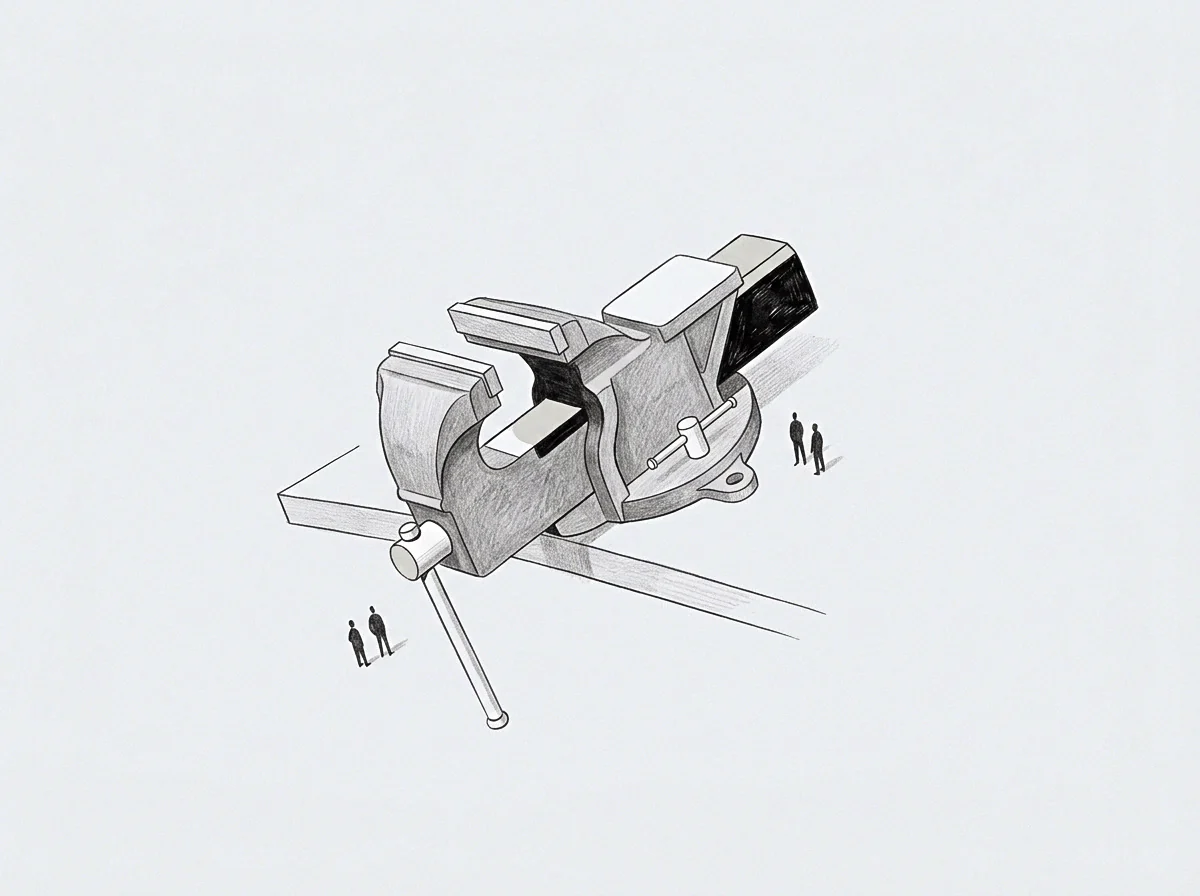
Lever
An operator sits at a wooden table in month eighteen with no signed stock purchase agreement, watching a recapitalization sheet arrive from a restructuring attorney. The file assigns zero percent common shareholding to eight hundred nights of technical labour. An oral promise from a co-founder assured thirty percent of the business upon financing, yet the legal entity holds only an initial incorporation certificate naming one director.
When capital needs force an emergency down round, that missing paper turns into an absolute structural lever.
Every informal agreement functions as a covert contract, an unstated psychological debt that bills the enterprise only when liquidation pressure removes the surplus value. In a growing firm with expanding multiples, loose allocations resolve through generous equity pools created to preserve peace. When capital tightens and enterprise valuation contracts below original targets, incoming recapitalization investors inspect the official shareholder register rather than personal memories.
The unrecorded contributor discovers that sweat equity without written title ranks behind registered common equity, which sits entirely beneath incoming liquidation preferences.
Unstated sweat equity converts to general unsecured claims once recapitalization terms establish senior distribution tiers.
Unwritten promises do not bind third-party restructuring investors who take control through fresh preferred stock series. The outside lender or down round lead investor insists on an unencumbered capital structure, demanding a signed waiver from every operational contributor who lacks registered shares. At this point, the informal founder retains only negative leverage: the capacity to threaten equitable litigation, cloud title to key intellectual property, or assert statutory employee wage claims against the operating entity.

Informal Allocations Face Capital Retrenchment
Informal arrangements hold up while valuations rise. Equity math remains abstract during early technical builds, allowing partners to substitute goodwill for cap-table documentation. Once new capital prices the business lower than prior rounds, incoming financiers impose punitive anti-dilution provisions, wash-out issuances, or complete management carve-outs.
These mechanisms demand clean legal title to all authorized shares, cutting away ambiguous operational claims.
The unwritten claimholder relies on equitable theories of promissory estoppel or quantum meruit. Under standard corporate governance, boards owe duties only to documented stockholders, leaving informal claims outside statutory protections. A down round recapitalization replaces old common stock allocations with new preferred series carrying senior liquidation preferences.
When restructuring documents extinguish legacy common shares, the unwritten equity interest disappears entirely, lacking formal entry in corporate registers.
Unregistered contributions leave zero footprint on state corporate records.

Weight
Valuation distress changes the legal character of operational contributions. Sweat rendered without immediate pay takes one of two competing legal forms: unvested equity ownership based on an unwritten partnership, or unpaid compensation owed to an employee or independent contractor. Choosing between these paths determines survival during corporate insolvency or aggressive down round restructurings.
The equity path asserts that oral discussions between founders established a general partnership prior to incorporation, entitling the contributor to a stake in the surviving entity. The compensation path characterizes the unwritten contribution as deferred wages, turning the contributor into an unsecured creditor of the corporation. In a restructuring where legacy common stock is cancelled to zero, equity status yields nothing.
Unsecured creditor status commands statutory priority over all shareholders.
Equity claims without formal stock subscription agreements face near-total forfeiture in cram-down scenarios. When restructuring plans dilute legacy common stock by ninety-nine percent, an equity claimholder absorbs identical dilution. Converting that sweat into a recognized monetary wage claim forces restructuring investors to settle through cash payments or fresh, non-diluted management incentive units.
A stated monetary wage claim commands payment before any junior equity holder recovers capital.

Evaluating Legal Paths For Operational Contribution
Navigating recapitalizations requires understanding how corporate entities categorize sweat contributions under distress.
| Evaluation Factor | Unwritten Equity Assertion | Deferred Wage Claim |
|---|---|---|
| Entity Standing | Junior common equity candidate | Unsecured general creditor |
| Down Round Dilution | Subject to complete wipe-out | Immune to cap-table dilution |
| Proof Requirement | Clear evidence of oral equity agreement | Time logs and market value of services |
| Restructuring Leverage | Threat of title clouding over equity | Personal director liability for unpaid wages |
| Resolution Outcome | Negligible fraction of common pool | Cash settlement or structured promissory note |
The operational contributor who insists on equity ownership during an insolvency event ties their outcome to an asset pool absorbed by preferred liquidation stacks. By shifting from an equity claimant to a creditor asserting unpaid compensation, the contributor gains practical bargaining authority against incoming restructuring investors.
Failing to declare this monetary position early leaves the contributor trapped in junior equity litigation, spending capital to pursue shares that incoming investors eliminate within thirty days.

Board
Corporate directors operate under specific fiduciary obligations during recapitalizations, particularly when private businesses enter the zone of insolvency. If an operating company faces a rescue down round, the board of directors must account for every exposure threatening the deal. Directors who disregard credible assertions of unwritten founder equity invite personal exposure, alongside claims of corporate opportunity waste and improper capital dilution.
When an unwritten founder emerges during negotiations, restructuring investors issue an ultimatum: clear the disputed equity exposure or lose the round. The governing board cannot issue new shares while ownership percentages remain contested. If the unrecorded contributor wrote code, filed patents, or built core assets without signing an explicit Intellectual Property Assignment Agreement, the operating company lacks clear title to its technology.
That missing transfer creates immediate pressure across leadership.

Which Legal Theories Force Board Concessions?
Directors evaluate four distinct arguments when assessing an unwritten sweat equity claim:
- Promissory estoppel demonstrates reasonable reliance on specific verbal promises of corporate shares, causing severe financial detriment through uncompensated labor.
- Quantum meruit recovers the reasonable market value of technical or managerial services performed, preventing unjust corporate enrichment during distressed reorganizations.
- Breach of fiduciary duty applies when incorporated co-founders hold documented equity while systematically excluding operational co-builders from formal cap-table issuances.
- Intellectual property ownership asserts personal copyright retention over software or product designs completed in the absence of valid proprietary information agreements.
An unwritten claimant uses these tools to stall corporate reorganizations. Filing a complaint alleging ownership of core corporate assets halts institutional funding commitments. Outside investors step back when capital structures face title challenges, forcing the board to resolve disputed stakes directly.
The board faces a direct choice between settling the contributor’s intellectual property dispute immediately and forfeiting the restructuring capital entirely.

Cost
Asserting sweat claims during distress carries concrete costs in energy, legal capital, and professional standing. Legal disputes against venture-backed restructuring firms require substantial hourly capital commitments, often demanding tens of thousands of dollars before preliminary discovery concludes. An individual operator rarely possesses liquidity matching the reserves of institutional private equity or venture debt groups backing the down round.
An operator’s personal capacity drains rapidly across months of adversarial depositions and motion practice. Hours spent on litigation cannot go toward building new ventures, generating independent income, or repairing personal balance sheets strained by unpaid founder contributions. The industry tracks contested departures, turning public cap-table battles into reputational baggage across regional startup circles.
Enterprise restructurings operate on compressed timelines. Liquidity runways during down rounds average three to six weeks before missed payroll forces receivership. An unrecorded founder attempting to stall a restructuring risks driving the company straight into liquidation.
Once an entity enters liquidation, senior secured creditors claim the remaining assets, leaving zero value for common shareholders or general unsecured claimants.
Litigation that forces enterprise liquidation destroys the asset base required to fund any operational settlement.
Restructuring settlements often hinge on three structured remedies:
- Granting restructured common equity allocations subject to standard four-year time vesting with full acceleration upon subsequent exit transactions.
- Executing an unsecured corporate promissory note carrying deferred interest payments subordinate only to primary bank lending facilities.
- Awarding immediate cash payouts from incoming restructuring funds in exchange for comprehensive intellectual property assignments and universal liability releases.
A claimant who misjudges company cash reserves and demands unrealistic cash terms often pushes the business into liquidation, securing an unenforceable judgment against an empty corporate shell.

Shift
Recovering value from unwritten contributions during distress requires a tactical change. The operator must step away from appeals to loyalty and historical effort. Institutional restructuring actors respond only to verified business risk, statutory employee exposure, and asset title certainty.
The contributor establishes clear terms by organizing past work into formal, auditable instruments.
The first step entails compiling complete operational archives: dated code commits, written communication confirming equity percentages, product deployment releases, and initial corporate registrations. The contributor pairs these records with a formal accounting of market-rate compensation for comparable professional services. This dossier converts historical partnership commitments into documented corporate exposure.
Once documented, the contributor presents the board and restructuring investors with a single resolution term. The proposal offers clean intellectual property assignment, full release of wage claims, and explicit resignation of corporate rights in exchange for either senior promissory notes or non-dilutable management incentive allocations. This term acts as an operational filter.
The institutional investor either prices the settlement into the down round recapitalization structure, or accepts the risk of losing the transaction.
An operator stating a clear financial settlement early, backed by title claims to company assets, bypasses years of cap-table ambiguity and secures tangible value from an otherwise destructive down round restructuring.