
Erosion Of Positional Authority Following Unverified Leadership Statements In Bureaucracies
Positional authority erodes when leadership declarations detach from technical reality, forcing subordinates to discount executive speech and govern informally.

Pledge
An executive steps onto an auditorium stage on a Tuesday morning and announces that the central records database will migrate to distributed infrastructure before the end of the quarter. Three hundred technicians in the seating tiers hear the deadline for the first time. The statement has no architectural sign-off behind it, no review from infrastructure teams, and no vendor verification.
By noon, middle directors are answering questions from staff members holding contradictory instructions: active project milestones still stand, but the public speech has committed the organization to an unvetted timeline.
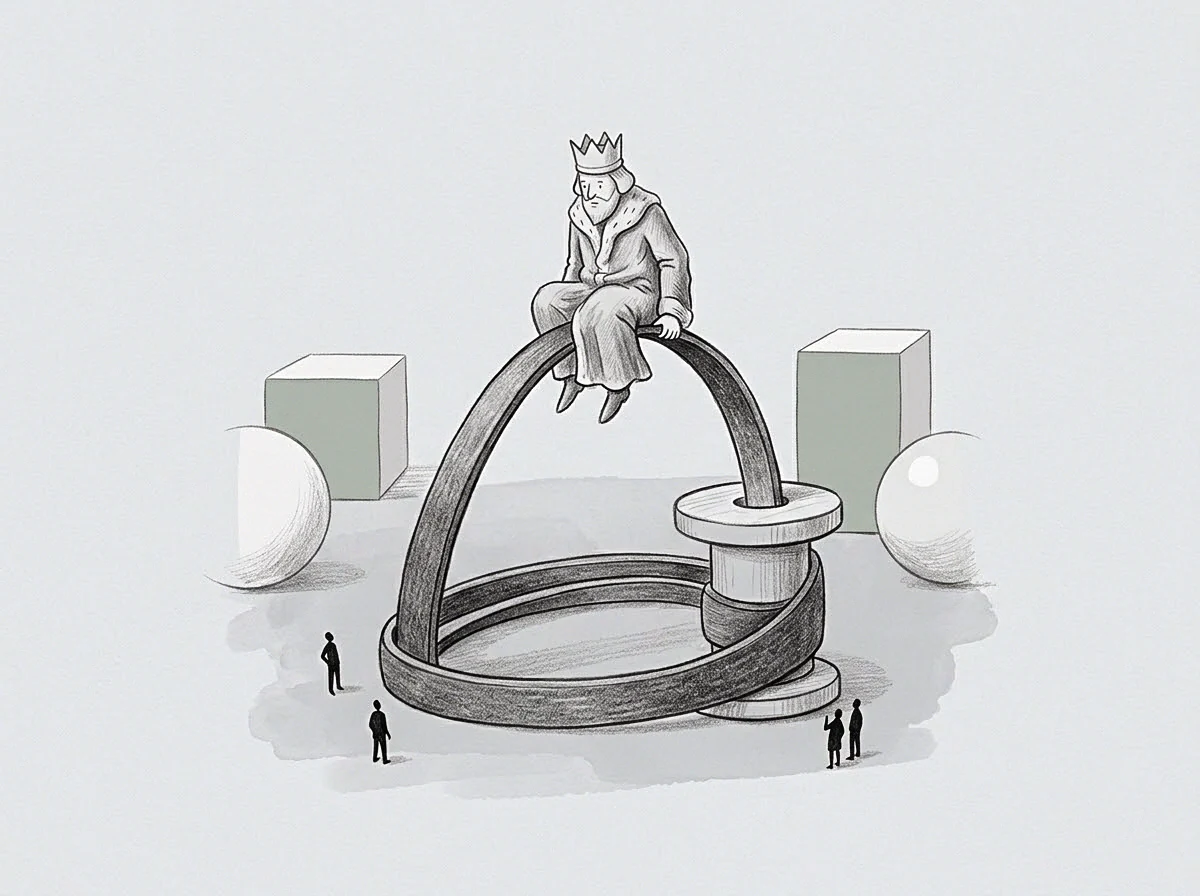
Formal authority depends on alignment between institutional declarations and operational reality. In classical administrative theory, an executive exercises positional power through directives that presumed organizational coordination has already tested. When announcements jump ahead of verification, the mandate loses its structural weight.
Subordinates treat the statement as personal speculation delivered in official language. The speech costs the speaker nothing to make, but it transfers immediate operational risk onto technical staff.
The administrative climate shifts almost immediately. An unverified public promise opens an operational gap between the executive suite and the working floor. Department heads stop organizing work against approved project plans and start calculating personal buffers instead.
The hierarchy still looks intact on an organization chart, but actual coordination stops running through formal channels.
A public declaration uncoupled from technical verification transfers operational exposure directly to line managers.
The distance between the claim and actual operational capability widens each time the executive repeats the target. Supervisors divert hours away from software delivery to draft protective documentation. Memos circulate with carbon copies spanning several departments, compiled solely to put on record that the timeline originated without technical review.
Friction accumulates until delivery grinds down entirely.
Desk
Operators sit directly between executive statements and physical system limits. If an executive claims an unstable enterprise system has achieved stability, the technician handling support tickets absorbs the contradiction firsthand. That technician has to decide whether to parrot the executive line or give customers the factual state of the service.
Positional authority only holds together as long as staff prioritize institutional loyalty over observable conditions.
Repeated exposure to ungrounded claims erodes that loyalty. In research on the psychological contract, broken institutional representations violate the implicit expectation that executive directives reflect operational reality. Staff develop specific habits once executive speech loses its factual grounding:
- Selective compliance protects departments from impossible requirements by acting only on orders that come with written procedural sign-off.
- Informational insulation keeps operational constraints away from senior leaders to forestall premature public promises, though the practice restricts lateral data sharing across units.
- Ritualistic reporting generates status dashboards for unvetted programs while engineers quietly spend their time patching legacy systems.
Compliance turns performative as middle managers praise the vision in quarterly reviews while quietly telling project managers to ignore the deadlines. The official directive fades into background noise while actual maintenance continues. When an instruction comes from a director with a history of unvetted announcements, recipients cross-check it with peers before committing resources, and positional leverage drains from the title.
A directive unsupported by physical capacity produces performative compliance instead of operational execution.
Middle managers learn to handle executive declarations as unbacked commitments. Every unverified promise requires bureaucratic work to shield clients, vendors, and staff from missed deadlines. The management layer builds informal buffers to keep operations steady against administrative improvisation.
The department confirms the schedule once the actual technical plan arrives.

Discount
Administrative hierarchies operate on informal credibility assessments tied to particular roles. When an official issues assertions that technical reviews immediately disprove, staff discount subsequent instructions from that office. The discount acts as a tax on managerial communication.
Directives that once carried authority by virtue of rank now run into demands for cross-verification, written documentation, and operational consensus.
Whose Signature Carries The Operational Liability?
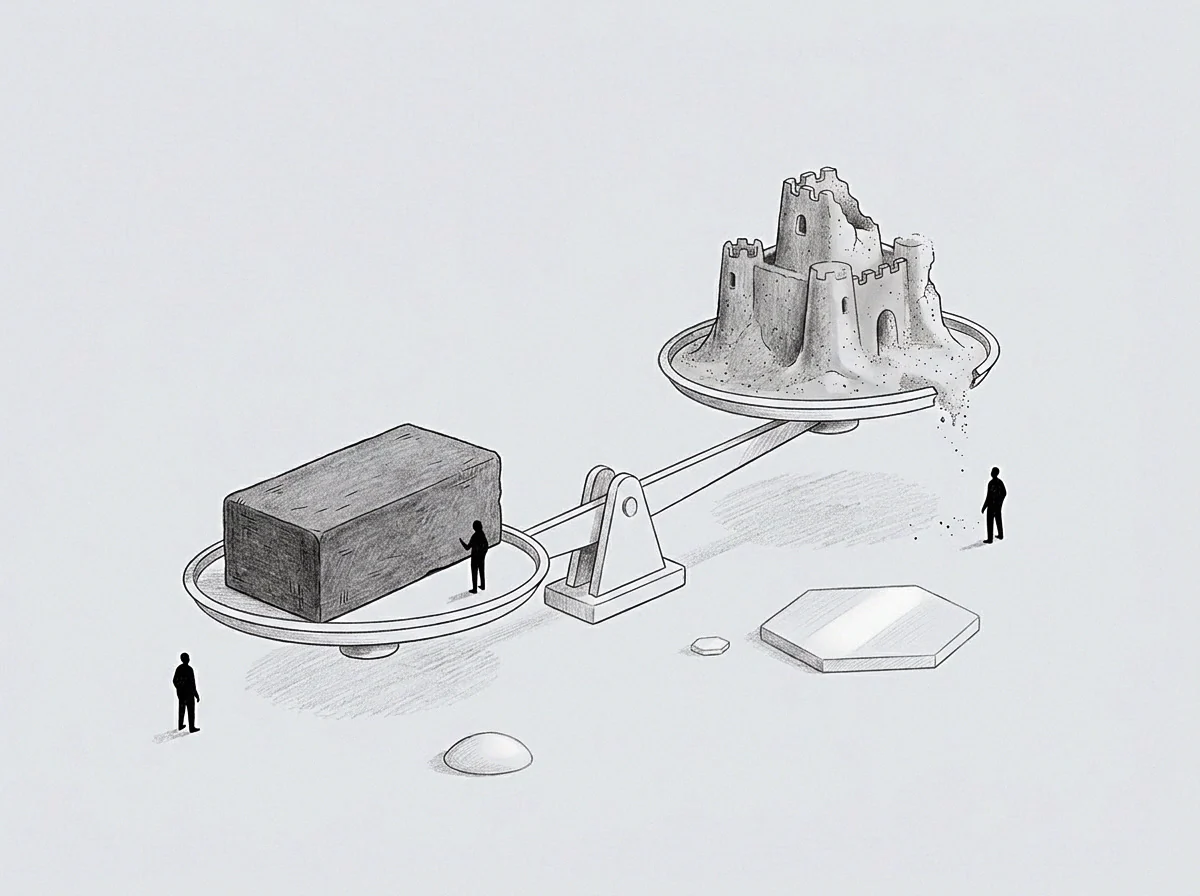
Liability settles at the operational level. While senior executives rarely face personal fallout from speculative claims, mid-level supervisors who try to carry out an unworkable mandate absorb the reputational damage. Subordinates learn to distinguish executive rhetoric from responsible oversight, and authority migrates toward managers whose statements match what is happening on the ground.
The division between verified administrative mandates and unvetted assertions produces operational splits across the organization.
| Directive Attribute | Verified Administrative Mandate | Unverified Leadership Assertion |
|---|---|---|
| Verification Basis | Pre-vetted through capacity audits and engineering review | Originates from personal intuition or public rhetoric |
| Subordinate Response Mode | Direct resource allocation and schedule alignment | Protective documentation and informal delay |
| Operational Impact | Predictable schedule progression and resource stability | Misallocated labour and institutional exhaustion |
| Authority Trajectory | Consolidates legitimacy around the formal role | Accelerates erosion of positional standing |

The Compounding Devaluation Of Formal Directives
The first unverified statement produces surprise, the second brings cynicism, and by the fifth, the organization discounts formal notices as a matter of routine. Middle managers lose hours in lateral meetings trying to decipher whether a company-wide email represents actual strategy or a passing executive interest.
When assertions routinely conflict with reality, subordinates discount formal authority by default.
Staff stop taking strategic announcements at face value, narrowing their focus to local tasks inside their own unit where technical conditions can be verified directly. Executive authority becomes largely symbolic, limited to company-wide presentations while actual operating governance passes to ad hoc groups. Positional influence drains away whenever verbal commitments separate from physical constraints.

Fracture
The division between formal hierarchy and operational credibility weakens organizational coherence. Under social exchange theory, bureaucratic compliance relies on perceived competence alongside procedural fairness. Research on psychological contract breach shows that perceived misrepresentation of working conditions correlates with immediate declines in organizational citizenship behavior.
This pattern comes primarily from survey data gathered across corporate bureaucracies, and it softens during acute crises where immediate survival forces compliance regardless of factual precision.
A related observation in organizational sociology suggests that institutional trust declines along a non-linear curve. It erodes quietly over early discrepancies before breaking sharply once an unbacked assertion leads to public embarrassment. That dynamic is documented through case studies of public-sector agencies undergoing reorganization.
If longitudinal tracking in decentralized technology firms demonstrated steady retention under chronic executive distortion, the principle would not hold, but industrial data repeatedly points in the other direction.
Consider two administrative programs running concurrent software modernizations over two fiscal years. The first agency enforces strict review protocols, barring directors from announcing migration dates without written confirmation from lead architects. The second allows executives to offer delivery targets during legislative hearings and public conferences without consulting technical staff.
The first organization maintains steady resource use and keeps its lead engineers. The second sees recurring schedule slips, forty percent staff turnover across senior engineers, and total withdrawal among middle managers.
Administrative machinery behaves like a gear train in manufacturing. If a drive gear is machined out of spec, its teeth grind against adjacent parts rather than transferring torque. In an enterprise, inaccurate statements introduce slack throughout daily operations until the motor runs without turning the wheels.
- Rhetorical overreach begins when leadership promises system capabilities that engineering teams have never built.
- Defensive insulation takes root as technical staff stop escalating operational problems up the reporting chain.
- Informal realignment shifts actual decision-making to ad hoc technical groups working outside formal channels.
The exact pace at which staff begin cross-checking executive statements before settling into informal resistance remains difficult to quantify. Given that uncertainty, prudent managers set up independent verification paths across lateral departments before assigning budgets to top-down mandates.
The friction between formal rank and functional competence continues to sharpen. When an executive title no longer carries reliable information, the hierarchy ceases to serve much practical purpose beyond distributing salaries.

Silence
Unchecked erosion of authority eventually produces organizational silence. Once administrative staff recognize that correcting an executive claim carries professional risk while attempting to fulfill it guarantees operational failure, they retreat into passivity. They sit in steering committees without raising technical objections, sign off on plans without reviewing specifications, and let flawed initiatives drift toward breakdown without sounding an alarm.
Silence functions as an effective bureaucratic defense. When an executive announces an artificial intelligence rollout across administrative workflows, the room offers neither pushback nor real agreement; attendees nod and let the presentation finish. Project managers create tickets that remain untouched for months.
Leadership interprets the quiet as alignment simply because no one objects openly.
Institutional muteness signals the complete severance of formal rank from operational reality.
The organization hollows out from the inside. Capital trickles into phantom initiatives that produce voluminous status reports but zero working software. Senior engineers leave for companies where leadership directives reflect technical realities.
Those who stay learn to look productive while avoiding any work that depends on executive credibility.
Rebuilding positional authority requires stopping unverified claims at the source. Executive standing only stabilizes when leadership adheres to a strict standard: no public statement about technical capability, project schedules, or infrastructure capacity enters formal communications without written sign-off from the engineers responsible for the work.