
Determining The Precise Threshold Where Unmonitored Directive Erosion Triggers Psychological Contract Breach
Unmonitored directive erosion breaches the psychological contract when retrospective enforcement penalises deviations previously tolerated by managerial silence.

Room
A written directive sits on a shared drive untouched for six months after an executive meeting. During the third week of the quarter, an operator alters the client intake sequence to save twenty minutes per account, yet nobody examines the change or calls the deviation into question during the Friday sync. Directives degrade in quiet environments; when an instruction lacks active supervision, operational drift begins within days.
While the written standard remains filed, daily practice adopts whatever path offers the least resistance to the person performing the task.
The gap between the documented standard and daily execution widens without verbal conflict. One partner assumes the other verifies compliance, while that second partner assumes the operational team adheres to the agreed process because no complaint was ever registered. Operators notice the omission immediately.
When leadership stops inspecting a standard, teams interpret that absence of scrutiny as implicit permission to modify the protocol.
Unchecked operational divergence persists until an external failure reveals the distance between the documented process and daily practice.
The Decay Of The Unchecked Mandate
The erosion of an instruction follows an orderly decay curve. In the first phase, workers skip peripheral steps under schedule pressure, and because production numbers remain stable, they conclude those omitted steps carried no real function. Without active supervision, the omission becomes standard procedure inside four weeks.
By the second month, new staff learn the informal shortcut as official policy, turning the original written agreement into a historical artifact while the unwritten shortcut governs daily operations.
The danger gathers inside the cognitive disconnect between management and execution. Management operates under the belief that the original directive governs daily output, whereas staff work under the conviction that management approved the shortcuts through continued silence. Both parties hold opposing models of reality while sharing the same office floor, and neither surfaces the variance because neither experiences an immediate operational penalty.
If leadership wanted those specific steps executed, someone would have checked the files before the client delivery date.
Line
The psychological contract operates on perceived reciprocal obligations that remain unwritten. A founder gives operational autonomy with the unstated condition that core directives remain intact, while an operator accepts heavy workloads assuming managerial silence signifies approval of operational trade-offs. When unmonitored deviation crosses into client impact or financial variance, this implicit arrangement shatters.

What Pushes Unmonitored Drift Across The Edge?
The exact threshold of psychological contract breach occurs when unmonitored operational erosion produces an outcome that forces public accountability. As long as drift stays internal, managers tolerate procedural variance as minor friction. The moment an external party questions a deliverable, however, management retreats to the written directive and treats the drift as deliberate disobedience—an enforcement operators experience as a direct betrayal of the autonomy granted through months of administrative silence.
Researchers in organisational behaviour identify two distinct stages in contractual breakdown: breach and violation. Breach represents the cognitive assessment that an obligation was unmet, whereas violation represents the emotional reaction of anger, resentment, and alienation that follows.
A tacit operating consensus fractures whenever retrospective enforcement penalises behaviours that previous supervision permitted through silence.

The Point Of Contractual Fracture
Contractual fracture arrives through retrospective auditing. A founder discovers an omission during a quarterly review and imposes immediate sanctions for noncompliance with the original text. While the founder points to the document signed eight months prior, the operator points to eighty consecutive working days where managers observed that identical shortcut without comment.
The dispute centers on authority over the baseline. The founder believes the formal directive holds authority until explicitly rewritten, whereas the operator believes daily practice rewrites the directive through managerial acquiescence. When punitive corrections are imposed, the operator registers a direct breach of the psychological contract of trust while the founder registers a breach of loyalty—two interpretations that each hold internal logic while driving deep operational disengagement.
Retrospective enforcement of dormant rules dissolves goodwill faster than deliberate managerial cruelty.

Scale
The severity of contract breach correlates directly with the operational distance between the written directive and observed daily practice. When drift remains limited to formatting or secondary reporting, cognitive breach occurs without functional collapse, but when it touches cash flow, delivery dates, or core legal liabilities, that threshold falls rapidly.
The table below establishes the comparative dynamics across three distinct tiers of unmonitored directive erosion, detailing the operational variance, the prevailing unstated assumption, and the resulting contractual status.
| Erosion Tier | Observable Practice | Implicit Operational Assumption | Psychological Contract Status |
|---|---|---|---|
| Peripheral Drift | Staff compress internal status documentation to meet daily delivery deadlines. | Management values delivery speed over administrative compliance records. | Latent alignment; minor cognitive divergence without active relational breach. |
| Methodological Shift | Staff eliminate mandatory quality checks to absorb an unresourced volume spike. | Supervisory silence indicates approval of operational trade-offs during stress. | Perceived breach; frontline staff view sudden audits as bad-faith leadership. |
| Core Directive Abandonment | Operators reallocate dedicated capital reserves to cover recurring operational costs. | Historical permissions override formal governance mandates in cash emergencies. | Full contract violation; complete collapse of trust and reciprocal obligation. |

The Progression Of Directive Attrition
The transition from peripheral drift to full abandonment develops because operational environments treat silence as validation. When an operator omits a secondary reporting step, saving four hours of administrative labour each week, management often praises the speed of output without inspecting the reporting trail that made it possible. Through this dynamic, the organisation incentivises the erosion of its own directives.
The boundary between acceptable adaptation and contract breach shifts according to operational outcomes rather than process fidelity. An operator can bypass safety protocols for two hundred days without managerial interference if project margins improve, yet the day a margin compresses, that exact bypass becomes gross insubordination. This outcome-dependent enforcement acts as the structural catalyst for psychological contract breach.
A written agreement that requires periodic re-validation loses legal and cultural weight each week it goes uninspected by the person who signed it.

Toll
The cost of contractual breach extends beyond damaged personal relationships. When an operator perceives that leadership enforces rules opportunistically, they withdraw discretionary effort—the uncompensated problem-solving that keeps early-stage ventures solvent. Once breach occurs, employees execute only the specific tasks named in their formal descriptions.
The Accumulated Deficit Of Noncompliance
The accumulation of unmonitored drift extracts a measurable organizational penalty across four distinct domains:
- Operational drag slows routine processes because employees demand written confirmation before executing minor adaptations to formal directives.
- Administrative bloat multiplies reporting requirements as distrustful managers introduce redundant compliance checks that throttle operational velocity.
- Talent attrition claims high-autonomy operators who refuse to work under unpredictable enforcement patterns where managerial silence masks future liability.
- Executive distraction consumes strategic leadership hours settling jurisdictional disputes between department heads whose informal workflows clashed during delivery.

When Informal Tolerances Expire
The formal system invariably attempts to reassert dominion after an operational scare, initiating an audit that treats every deviation as personal dereliction. While the operator points out that management observed these identical practices for two full quarters, the founder asserts that a directive remains binding until formally amended in writing.
Unspoken managerial tolerance of operational drift creates an inevitable conflict the moment external pressures expose the procedural deficit.
The resulting damage permanently changes the operating baseline. Team members calculate the risk of taking initiative and conclude that rigid compliance carries lower personal liability than problem-solving. Innovation halts because the unwritten terms of employment changed without notice, leaving the organisation slow, legalistic, and brittle.
When leadership treats its own supervisory failure as employee insubordination, experienced talent departs and leaves the company staffed exclusively by literalists who refuse to move without explicit written orders.
Charter
Preventing psychological contract breach requires replacing managerial surveillance with unambiguous, self-enforcing operational terms. A term is a clear statement of conditions delivered once and tied directly to operational consequences, eliminating the ambiguity that allows covert contracts to form and replacing daily inspection.
Operating agreements stay durable when leadership states non-negotiable boundaries once and leaves process implementation entirely to the operator.
Stating Operating Terms Early
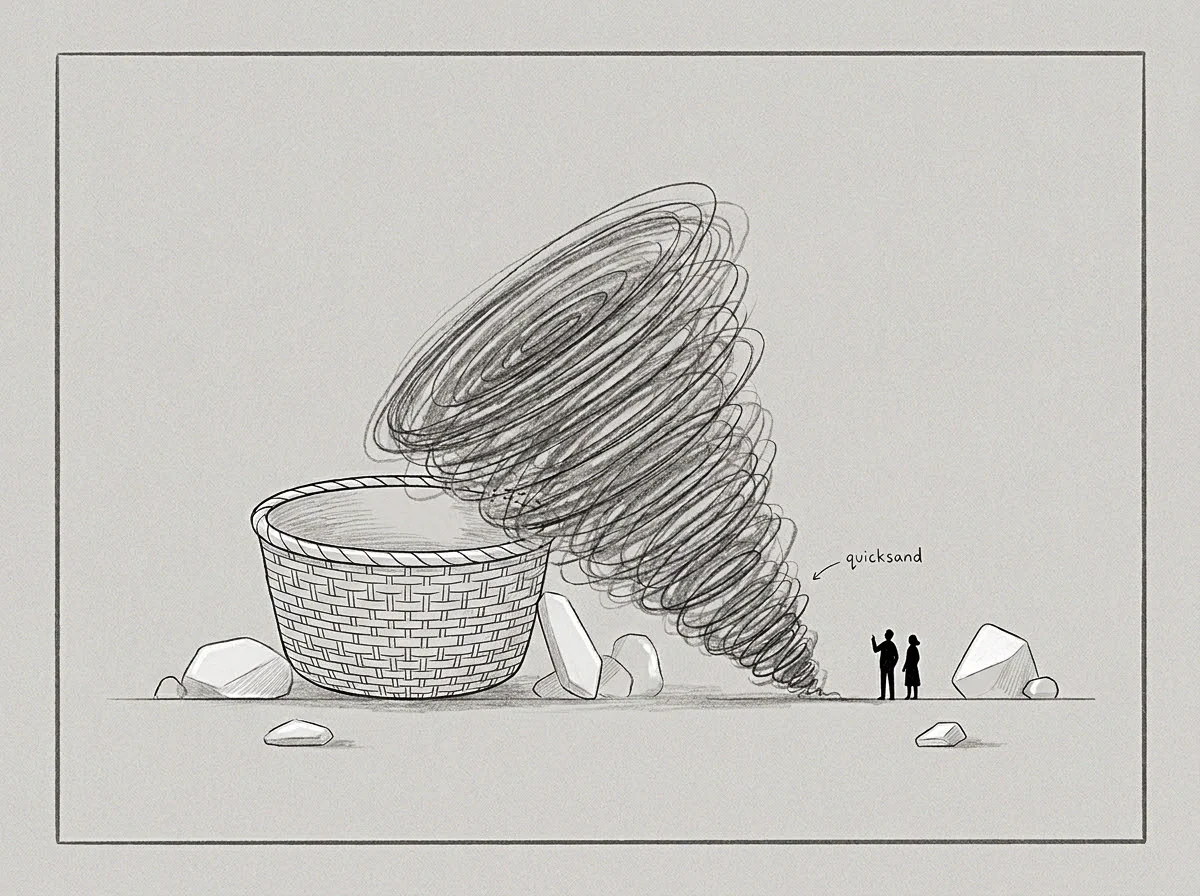
The founder states non-negotiable metrics once during project initiation, specifying that process changes remain entirely within the operator’s discretion provided three hard constraints remain intact: regulatory compliance, margin floors, and customer data privacy. Deviations outside these three constraints trigger an immediate restructuring of the working arrangement. Stating these boundaries at the outset eliminates the need for continual, low-grade managerial policing.
The operator receives clear autonomy within defined parameters. If an operator alters an internal sequence to save time, they act within the stated term; if they alter a regulatory filing to save time, they breach an explicit term rather than an unstated managerial expectation. Ambiguity dissolves because the boundary was defined before operational stress occurred.
Eliminating The Supervisory Vacuum
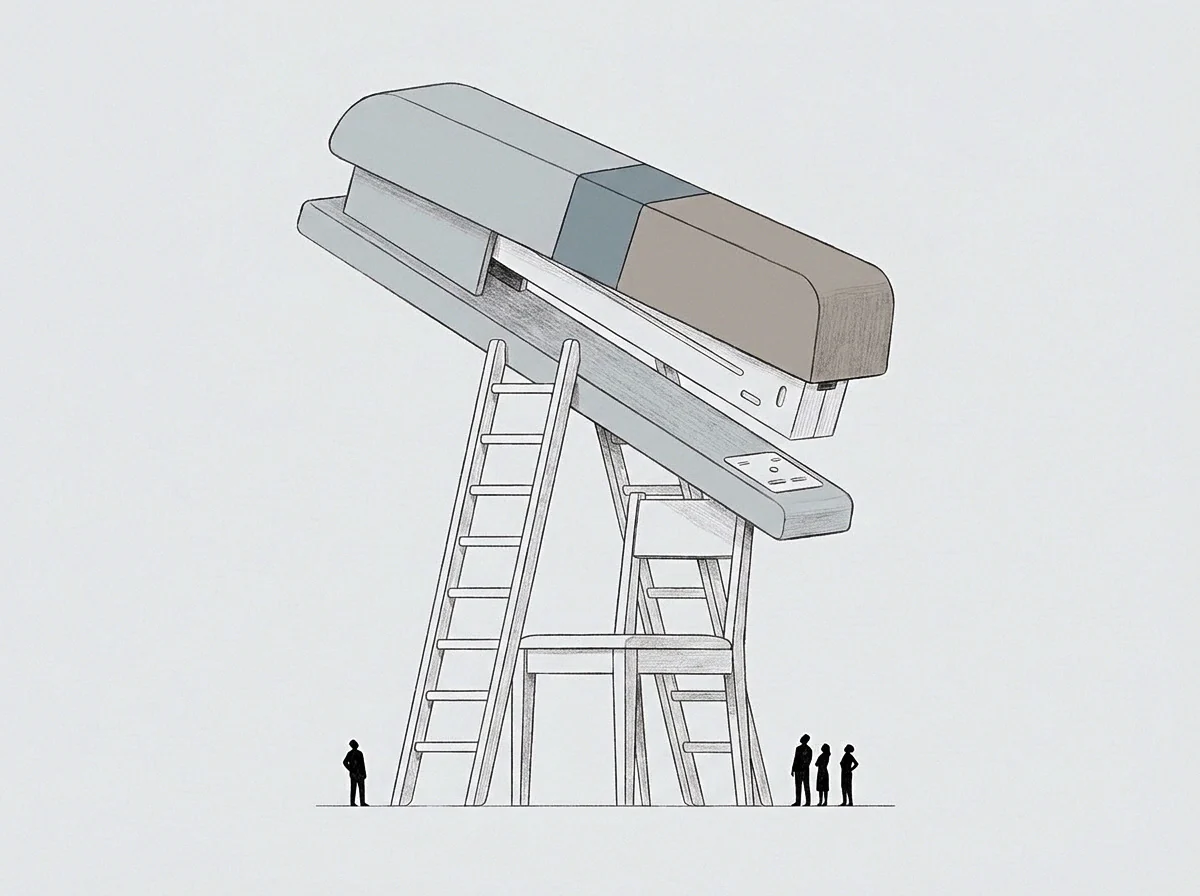
Directive erosion thrives in environments where founders confuse delegation with total administrative detachment. Delegation requires defined feedback loops and explicit thresholds for executive re-engagement. When a founder hands off an operational domain without specifying triggers for review, they create the precise conditions that generate psychological contract breach.
A founder who establishes clean terms tests them through early observation. If an operator crosses a stated constraint, addressing the deviation immediately at its first manifestation prevents an informal precedent from forming. Early clarification protects both parties from the corrosive dynamic of retrospective enforcement.
The open operational question remains whether distributed teams can sustain adherence to structural constraints without periodic physical auditing, or whether the complete absence of visual oversight inevitably accelerates procedural drift regardless of how clearly leadership articulated the original terms.