
How Shadow Operational Pacts Undermine Formal Executive Governance Structures
Shadow operational pacts bypass formal governance by establishing unstated resource commitments that override executive board authority prior to voting.

Bypass
An executive committee gathers to vote on an annual capital allocation plan. The charter assigns approval power over product expenditures exceeding one million dollars to this room. A formal presentation lays out financial projections, risk models, and deployment timelines for three competing initiatives.
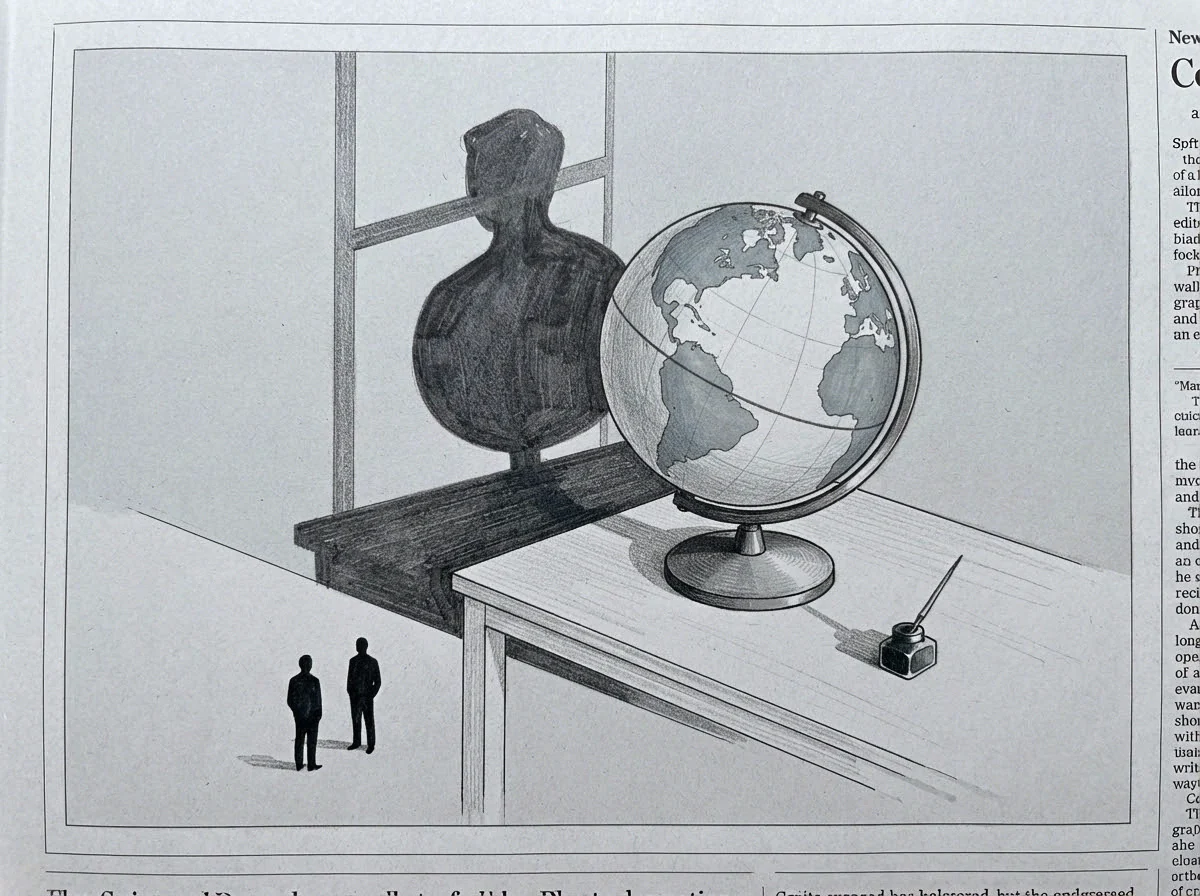
Voting appears structured, transparent, and binding. Yet thirty minutes before the meeting began, two executive vice presidents met in a corner office and agreed to withhold head-count approvals from the second initiative to protect the engineering resources of the first. The formal vote proceeds on schedule, but the true operational decision occurred outside the charter’s design.
The Informal Preemption of Voting Rooms
Shadow operational pacts take root when formal governance mechanisms fail to match the velocity or social cost of real-time executive decision-making. Executive officers construct bilateral agreements to secure resources, shield departments from scrutiny, or avoid public friction during board meetings. The bypass functions silently.
These bilateral bargains sit outside the articles of incorporation, board minutes, and written delegation limits. Executive consensus forms elsewhere. When an unstated operational pact governs how executive officers deploy staff, budget, or attention, formal governance transforms into a recording instrument for decisions negotiated in secret.
Shadow operational agreements redirect executive authority whenever unstated side commitments commit company capital prior to board review.
Formal executive governance structures rely on public debate, recorded votes, and explicit accountability. A shadow operational pact operates on hidden reciprocity. One executive agrees to absorb operational slip in a partner’s department in exchange for reciprocal backing during capital allocation rounds.
Over time, these pacts create parallel governance structures that starve formal committees of actual discretionary power. The board of directors retains nominal oversight, while real authority shifts immediately to the network of unwritten executive bargains.
The decision was already settled in the hallway, leaving the formal agenda to record an arrangement already in motion.

Weight
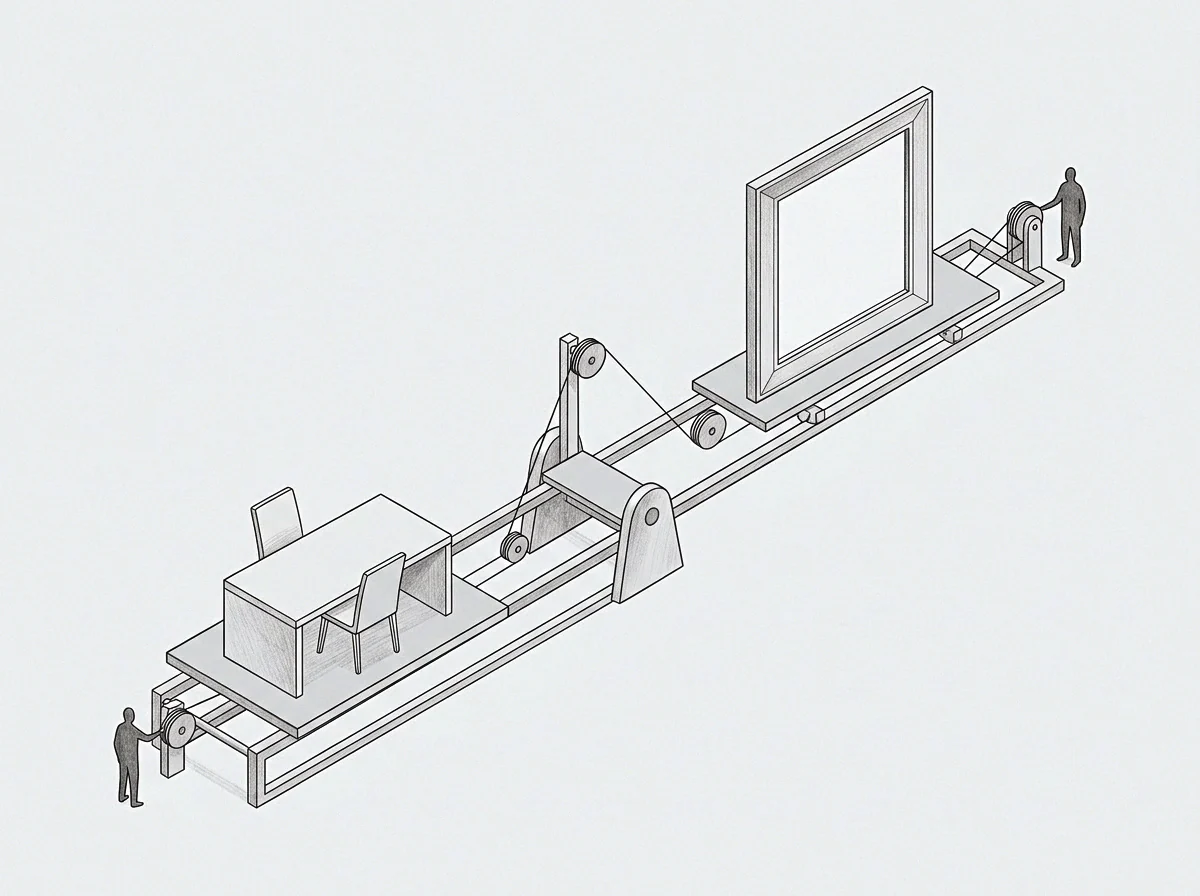
The accumulation of unstated operational agreements alters the structural balance of executive management. Formal org charts depict linear authority running from the chief executive officer through vice presidents to functional leads. Shadow pacts establish horizontal dependencies that override these vertical lines of command.
When a chief technology officer and a head of sales enter a covert pact to prioritize custom client features over platform stability, the chief operating officer loses effective control over engineering capacity.
Which Operational Agreements Silently Void Board Authority?
Subtle compromises between departmental leaders regularly displace board directives without triggering formal reporting requirements. These bargains appear small in isolation, yet their cumulative structural weight distorts corporate priorities.
- Resource Reservation Pacts lock engineering hours or marketing budgets into unapproved projects through informal executive handshakes, leaving formal committee allocations understaffed.
- Reciprocal Immunity Agreements prevent executive officers from challenging underperformance in peer divisions during board reviews, suppressing early warnings of operational risk.
- Information Filtering Alliances align two or more executives to present unified, curated metrics to the board, masking internal disagreements over strategic direction.
- Veto Protection Tradeoffs secure voting blocks inside executive councils to block governance changes that would introduce transparent operational tracking.
Side agreements bill early. When executive team members manage covert commitments alongside formal responsibilities, the energy available for public strategic execution drops. The psychological contract literature demonstrates that unstated expectations produce intense interpersonal friction whenever one party alters operational priorities without consultation.
In governance settings, this friction manifests as passive resistance, delayed product launches, and unexplained operational friction. Board oversight collapses.
Stating structural terms early costs one uncomfortable conversation, while managing shadow pacts consumes executive capacity indefinitely.
When formal executive governance fails to enforce stated terms, the organization pays a persistent structural penalty across every operational tier. Informal terms dictate capacity.
Arrangement
Evaluating the functional differences between formal governance structures and shadow operational pacts clarifies why traditional oversight mechanisms struggle to detect covert executive bargains. Formal structures rely on written authority, visible voting records, and explicit performance criteria. Shadow pacts depend on implicit obligation, verbal consensus, and unspoken trade-offs.
| Governance Dimension | Formal Executive Structure | Shadow Operational Pact |
|---|---|---|
| Source of Authority | Board resolutions and corporate charters | Interpersonal leverage and covert reciprocity |
| Decision Visibility | Minuted meetings and published charters | Private conversations and unwritten consensus |
| Resource Allocation Trigger | Approved budget lines and formal votes | Informal trade-offs and personal concessions |
| Enforcement Mechanism | Fiduciary duty and executive performance metrics | Social exclusion and withheld operational cooperation |
| Cost of Non-Compliance | Contractual penalty or role termination | Interpersonal breach and immediate political friction |
The presence of shadow operational arrangements distorts internal performance metrics. A department head operating under an unstated bilateral deal appears highly collaborative to their pact partner while demonstrating insubordination toward the corporate charter. Silence becomes acquiescence.
When financial auditors or board members evaluate company health, they examine published budgets and committee minutes, missing the unstated debts that actually dictate capital deployment.
Executive teams that tolerate covert side bargains trade institutional governance for fragile interpersonal truces.
A formal corporate charter specifying that all resource allocations above a fixed monetary threshold require minuted committee approval alters executive behavior only when the board systematically penalizes off-book operational deals.
Erosion
Institutional decay accelerated by shadow operational pacts follows a predictable sequence. Formal governance structures do not fail overnight; they erode as executives discover that informal pacts offer faster outcomes with lower immediate confrontation. Research on psychological contract breach in executive cohorts indicates that once covert trading of operational favors becomes the dominant mode of execution, formal processes are treated as administrative friction rather than binding commitments.

The Decay Sequence of Corporate Charters
The shift from formal governance to shadow control progresses through four distinct operational phases.
- An executive officer encounters friction in the formal board approval process and resolves an immediate resource constraint through an unwritten side deal with a peer.
- The side deal succeeds in the short term, prompting both executives to repeat the informal mechanism for subsequent operational requirements.
- Peer executives notice that informal channels bypass committee delays, leading to the formation of competing bilateral pacts across the leadership team.
- Formal committee meetings become purely ceremonial venues where pre-negotiated side deals receive rubber-stamp approval without meaningful debate.
Shadow alignment costs parity. The written charter fails. Consider a physical manufacturing plant where safety protocols require three sign-offs before a line modification, yet plant operators routinely accept verbal text messages from the vice president of production to maintain hourly output quotas.
The official logbook shows compliance, while the physical floor runs on informal risk absorption. Executive governance degrades in identical fashion when written charters collide with unstated operational demands.
Empirical studies on executive exchange systems demonstrate that leadership teams relying on covert agreements experience double the rate of unbudgeted operational drift compared to teams enforcing explicit written terms. This finding rests on direct observation of executive committee voting alignment across mid-market enterprise firms over five-year operational horizons. The primary vulnerability in this research lies in its reliance on self-reported executive communications; if executives conceal shadow agreements during interviews, the measured incidence of governance drift represents a conservative baseline.
Voting rooms record outcomes.
An executive team that relies on unstated side deals inevitably mistakes temporary interpersonal alignment for permanent institutional strength.
Reckoning
Eliminating shadow operational pacts requires a deliberate return to explicit contractual terms. The chief executive officer and board of directors must identify covert bargains and replace them with clear, transparent operational parameters. Stating terms flatly transforms unstated executive expectations into measurable organizational commitments.
Covert pacts extract yield. Terms replace shadow arrangements.

Establishing Explicit Terms Over Unstated Expectations
When an unstated pact surfaces during executive deliberations, leadership must force a choice between formal institutional sanction and explicit termination of the arrangement. A want remains a personal preference until constructed into a formal term. If a head of product wants dedicated engineering resources for an unapproved initiative, that desire carries no institutional weight until submitted through the capital expenditure committee.
Stating the term forces the hidden cost into the open, allowing the board to evaluate its merit against corporate strategy.
Replacing shadow pacts with formal governance demands constant enforcement of explicit boundaries. Executive officers who attempt to negotiate off-book resource shifts incur an immediate governance audit. When the formal structure proves too slow for operational realities, the correct move is updating the corporate charter, rather than tolerating informal bypasses.
Stating allocation limits clearly once, recording them in minuted meetings, and measuring executive performance exclusively against published targets closes the structural space where shadow operational pacts form.
The governance structure recovers its authority when every executive seat operates under identical, visible rules. Operational capacity returns to the formal organization, capital deployments align with published board strategies, and executive accountability resumes its proper position inside the recorded charter.