
Reconciling Unstated Operational Trade Offs Against Institutional Oversight in Enterprise Asset Management Systems
Enterprise asset management systems reconcile unstated operational trade-offs by establishing explicit structural terms that link local overrides to capital allocations.
Split
In physical enterprise asset management systems, formal software dashboards display complete compliance while local operational units routinely alter run rates, bypass scheduled sensor recalibrations, and delay component overhauls to meet quarterly production targets. Enterprise software records asset state as a series of planned maintenance windows, work order closures, and regulatory inspection logs. The physical assets operate under heat, stress, and friction that exceed the static parameters programmed into institutional governance models.
The central oversight authority relies on clean telemetry reporting zero open critical work orders. The plant manager keeps the turbine running past its manufacturer thermal limit to fulfill a spot-market supply obligation. That divergence creates a covert operational debt.
The software database remains green while the underlying metallurgy degrades ahead of schedule.
Institutional oversight structures treat asset management software as an objective mirror of physical reality. Governance boards configure approval workflows, environmental compliance filters, and capital allocation algorithms based on the assumption that logged maintenance records reflect actual asset fatigue. Local plant operators face daily performance incentives tied to immediate yield.
When an unexpected vibration anomaly appears on a high-pressure valve during peak revenue cycles, logging a critical defect forces an automated system shutdown. The operator suppression of the diagnostic signal maintains nominal operational availability. The enterprise oversight system interprets continuous uptime as high operational health.
In truth, operational health drops while administrative performance indicators remain pristine.
System availability metrics remain static when operators suppress diagnostic warnings during high-revenue cycles.
Unstated trade-offs accumulate in the gap between system assumptions and operational real-time choices. Enterprise asset management architectures assume linear asset wear and predictable operator compliance with written standard operating procedures. Operations in field environments depend on tactical flexibility, informal improvisations, and unrecorded resource shifting.
Senior executives receive consolidated risk reports generated by system algorithms that cannot account for unlogged operational modifications. The operational layer absorbs physical risk to protect central financial projections. The corporate risk committee evaluates paper safety while field equipment approaches structural failure.
Operations staff clear pending alerts to prevent automated workflow escalations to regional safety auditors.

Valve
Operational workarounds act as human pressure relief valves inside rigid corporate oversight systems. Asset management frameworks enforce standardized procedures across diverse physical facilities without accounting for regional environmental variance or supply chain delays. When critical spare parts face six-month procurement lead times, maintenance teams repurpose worn components or adjust operational thresholds to keep production lines live.
Software records show routine servicing completed on schedule. Physical inspection reveals modified mounts and third-party fittings operating outside safety margins.

Structural Workarounds in High-Oversight Settings
Institutional oversight relies on digital documentation as proof of physical risk mitigation. Automated compliance engines continuously audit work order duration, sign-off timestamps, and technician certifications. This audit environment creates strong incentives for operational teams to satisfy administrative filters rather than resolve root physical defects.
Software design decisions dictate how operators interact with machinery. Strict software gates often incentivize manual overrides when real-world conditions diverge from software logic.
Mechanical stress compounds rapidly under unrecorded operational changes. A compressor running ten percent above rated capacity to offset line leaks wears internal seals at three times the baseline rate. Enterprise financial models calculate depreciation based on chronological age rather than true mechanical stress.
The capital replacement plan budgets for gear replacement five years out, unaware that current operational stress demands replacement within six months. Operational trade-offs convert long-term equipment lifespan into short-term output.
- Unlogged operational overrides clear active diagnostic alerts directly at the control panel to avoid automated work order generation.
- Deferred component overhauls extend service intervals past safety thresholds to maintain uninterrupted revenue runs during peak demand seasons.
- Cannibalized spare parts extract functional sub-assemblies from idle machinery to service active assets without updating central inventory tracking.
Governance frameworks fail when they treat operational non-compliance as an individual worker training issue rather than a structural system response. Field teams modify equipment parameters because standard operational procedures make target output mathematically impossible under existing resource constraints. Stating the constraint aloud forces a formal shutdown.
Suppressing the constraint maintains baseline operations until catastrophic component fatigue forces an unplanned outage.
Continuous operation under unstated trade-offs accelerates physical failure while blinding executive management to true asset replacement costs.

Metric
Institutional oversight relies on key performance indicators that privilege compliance metrics over operational reality. Mean time between failures, work order backlog volume, and percentage of preventative maintenance completed on time serve as primary variables in corporate risk models. Operational units optimize work practices to satisfy these exact variables.
A maintenance team splits complex repair jobs into multiple minor work orders to close them within the target twenty-four-hour window, presenting an illusion of high operational efficiency while systemic structural flaws remain unaddressed.
Telemetric data collection systems process millions of data points daily from asset sensors. software platforms aggregate this data into executive dashboards, applying predictive algorithms that calculate asset health scores. These algorithms rely on clean baseline inputs. When field operators adjust sensor calibration offsets to prevent nuisance alarms during heavy load periods, the baseline data becomes corrupted.
The software calculates low risk profiles for equipment operating in extreme hazard zones.
| Evaluation Domain | Formal Enterprise telemetric Metric | Unstated Operational Trade-Off Signal | Institutional Risk Impact |
|---|---|---|---|
| Maintenance Execution | Ninety-eight percent preventative maintenance compliance rate | High volume of fast-closed work orders without replaced parts logs | Underfunded capital reserves due to false asset longevity assumptions |
| Asset Health Status | Green health index based on aggregated thermal and vibration sensors | Manual suppression of local diagnostic control panel alarms | Unplanned catastrophic asset failure during peak operational periods |
| Inventory Management | Zero reported stock-outs for critical operational spare parts | Unrecorded component swapping between active and standby machinery | Inaccurate supply chain lead-time planning and inventory valuation |
| Regulatory Compliance | Full administrative audit pass rate for safety procedures | Widespread use of informal workarounds to hit yield targets | Legal exposure and regulatory fines following safety incidents |
Quantifiable enterprise metrics create an environment where institutional leadership feels informed while operational reality remains hidden. Executive managers review quarterly reports showing high preventative maintenance execution while plant assets operate on borrowed time. The distance between reported compliance and physical degradation widens until physical constraints override administrative assumptions.
Systems break mechanically before they break administratively.
A stated term requiring physical verification of overridden diagnostic alerts lowers unexpected capital asset replacement expenditure.
Reconciling these metrics demands moving past automated dashboard indicators to measure physical wear directly. Relying on software logs creates false confidence in asset resilience. True operational oversight requires tracking the frequency of informal workarounds, manual alarm silences, and unrecorded part substitutions.
Contractual terms requiring joint operational sign-offs on diagnostic overrides restore visibility to asset degradation rates.

Silo
Organizational structures enforce a strict separation between corporate compliance divisions and site operations teams. Executive leaders establish policies designed to minimize legal exposure, optimize tax depreciation schedules, and comply with environmental mandates. Operational leaders manage physical throughput, equipment availability, and site-level labor efficiency.
Communication between these silos occurs through standardized enterprise software interfaces designed to remove subjective operational context.

Where Do Systemic Failures Settle Unnoticed?
Oversight departments view operational deviations as policy violations requiring disciplinary correction or re-education. Operational departments view oversight policies as impractical rules generated by distant administrators who do not understand mechanical realities. This mutual cynicism solidifies an informal covert contract between the two layers.
Operations promises to keep production numbers high while generating clean administrative records. Oversight promises to accept digital records at face value without probing daily site routines.
- Plant operators suppress minor system fault signals during high-demand contract execution cycles.
- Central compliance officers review aggregate green dashboard indicators and mark regulatory audits complete.
- Unlogged thermal expansion damages internal structural seals across extended operational runs.
- Subsurface fluid leaks contaminate structural foundations over eighteen months of continuous use.
- Sudden structural failure forces an emergency site shutdown and triggers catastrophic asset write-offs.
Psychological contract breach occurs when physical reality breaks the informal arrangement. When an asset fails catastrophically, corporate leadership blames site operators for failing to adhere to written maintenance protocols. Site operators blame corporate leadership for setting production quotas that made full compliance impossible with allocated budgets.
Both parties operate from distinct, unstated expectations that were never reconciled during annual capital allocation reviews.
The cost of maintaining separate operational and administrative truths grows with system scale. Small facilities absorb operational friction through informal communication between plant staff and local managers. Multi-site global enterprises rely entirely on digital asset management software to bridge geographical and organizational distance.
In large enterprises, the digital representation completely displaces physical inspection. The executive team manages a software simulation of an enterprise that does not exist on the factory floor.
What structural mechanism ensures field operators report physical asset fatigue when high yield is rewarded and operational downtime is penalized?

Terms
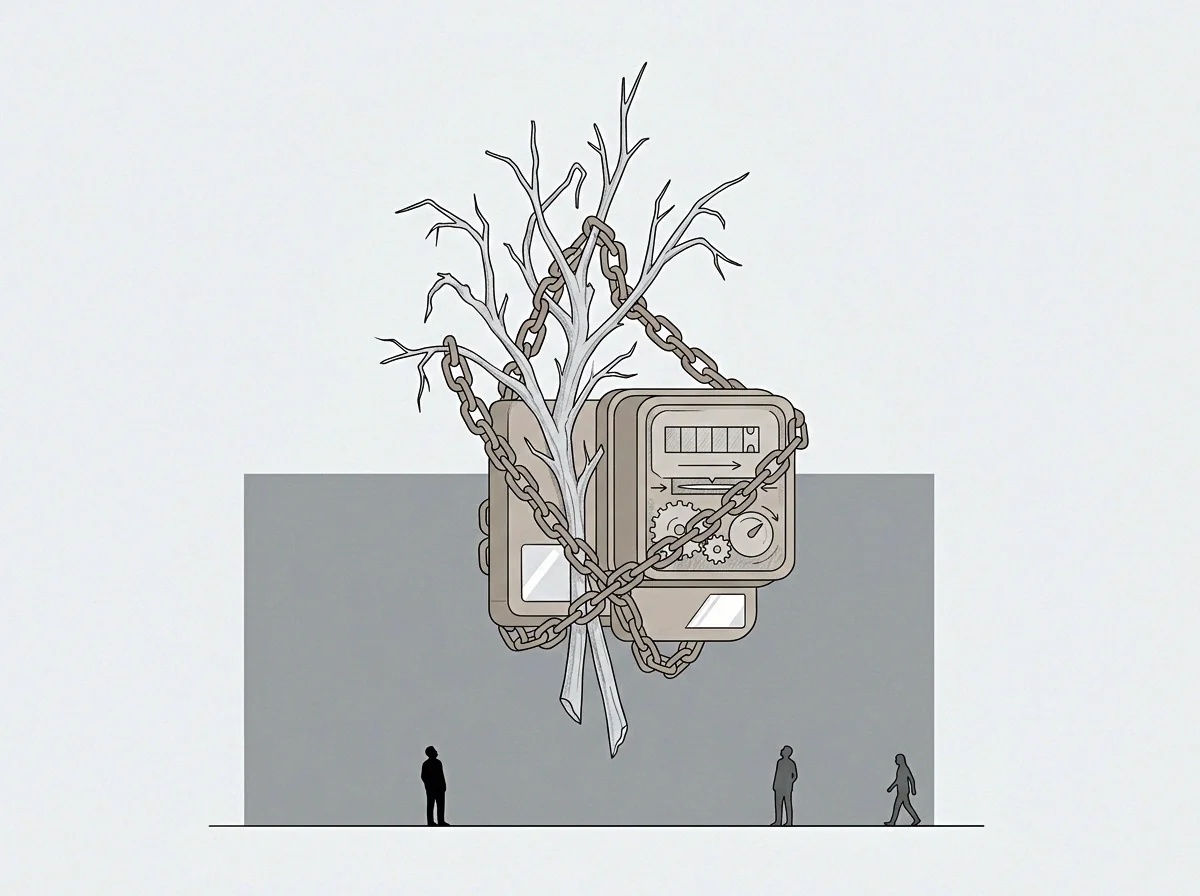
Reconciling operational reality with institutional oversight requires replacing unstated covert expectations with explicit structural terms. Enterprise asset management cannot function as an enforcement system that punishes operators for reporting physical realities. Stating operational trade-offs explicitly transforms covert workarounds into visible engineering decisions.
If operating an asset past design capacity is necessary to fulfill a commercial obligation, that choice must enter the enterprise system as an explicit operational term with immediate capital allocation consequences.
A term is a clear, written condition established before operational stress occurs. Unlike an intangible operational boundary, a term defines the exact physical parameters under which equipment can operate, the specific trade-offs permitted during peak demand, and the automated capital adjustments triggered by operational overrides. When a plant manager chooses to bypass a routine service window to maintain yield, an explicit term automatically updates the asset depreciation schedule and recalculates the replacement timeline.
The trade-off becomes visible to executive leadership instantly.
Stating terms early removes the psychological burden of covert operational workarounds from field staff. Technicians no longer hide diagnostic overrides to protect local uptime scores. The system records the override as a deliberate operational decision that consumes asset lifespan for immediate revenue generation.
Financial planning software reflects the true cost of short-term production spikes by adjusting future maintenance budgets in real time.
Institutional oversight shifts from administrative policing to true physical risk management when enterprise systems capture unstated trade-offs as concrete terms. Operational flexibility and corporate compliance exist within the same verifiable model. Executive leadership regains visibility into physical asset integrity, while field operators receive realistic maintenance windows backed by executive capital commitments.
Explicit terms linking operational overrides directly to capital depreciation schedules eliminate hidden asset degradation.
Defining clear operational terms before peak demand runs prevents unexpected structural failures during critical production periods.