
Relational Contract Breach In Asymmetric Commercial Co-Founder Arrangements
Asymmetric co-founder arrangements rupture when implicit psychological contracts regarding effort and equity diverge from explicit legal allocations.

Weight

Asymmetric Contributions in Early Stage Ventures
A commercial arrangement between two co-founders often begins with a structural imbalance in equity allocation. The initial allocation frequently reflects early capital contributions, commercial networks, or intellectual property brought by one party, while the second party commits to daily operational build. In these arrangements, the commercial founder often holds a majority equity stake while working limited hours, relying on early deal origination as their primary contribution.
The operational partner commits full-time labor under the assumption that long-term equity allocations will eventually reflect ongoing operational burdens.
Research in psychological contract theory demonstrates that formal legal contracts rarely capture the complete set of mutual expectations between business partners. The equity measures initial risk. Psychological contracts consist of unstated beliefs regarding obligation, compensation, and reciprocal fairness.
When one founder contributes capital or initial relationships while another provides continuous labor, two distinct relational frameworks emerge within the same enterprise. The commercial co-founder evaluates their majority stake as permanent compensation for early risk. The operational co-founder views the capitalization table as a temporary arrangement that ought to adjust as operational milestones are hit.
The static model fails. The formal capitalization table remains unchanged while the daily allocation of effort diverges further every month. The commercial co-founder views their early network access as an asset that continues to yield value, whereas the operational co-founder experiences the daily burden of execution as an uncompensated transfer of value.
Without explicit mechanisms to recalibrate ownership against ongoing contribution, the arrangement generates structural friction that worsens over time.
The equity percentage was agreed upon at inception to cover the risk of raising initial capital, and subsequent operational hours do not retroactively alter that baseline valuation.

Claim
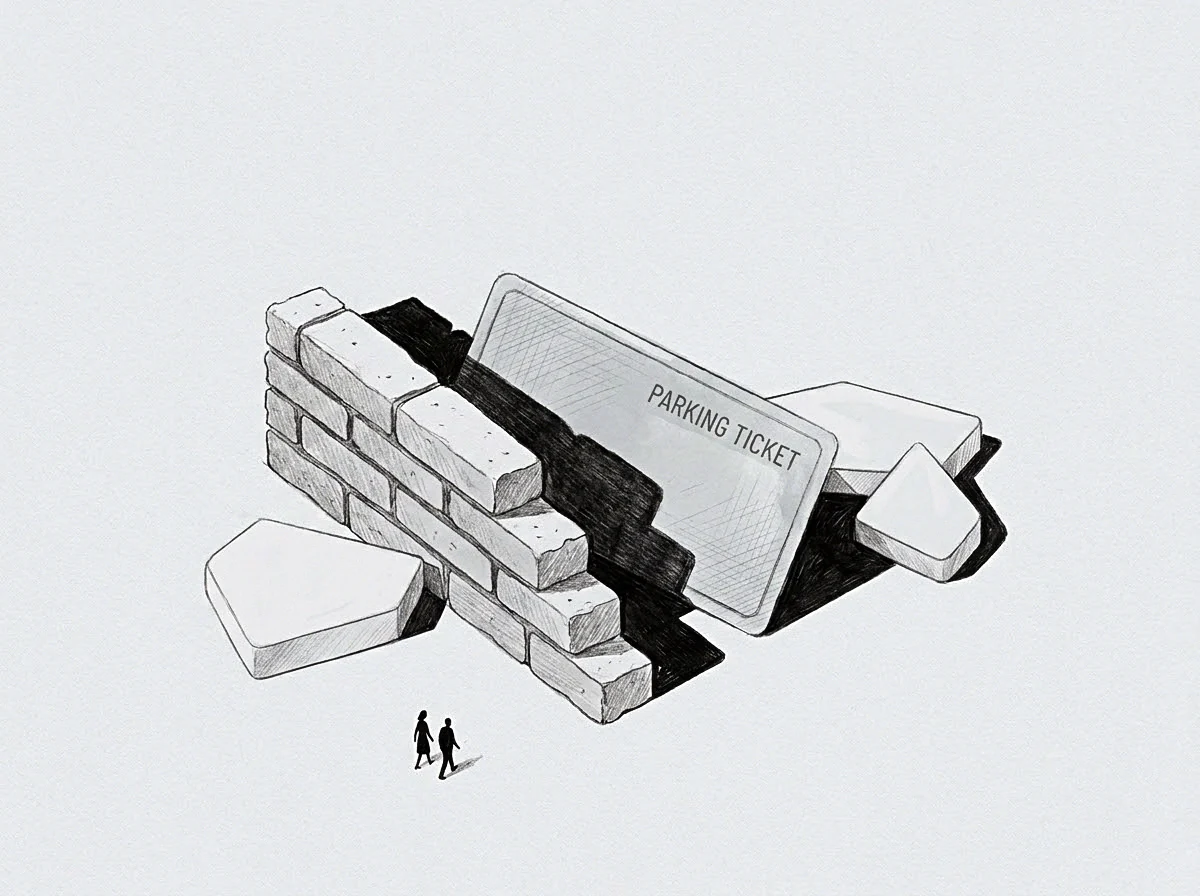
Why Do Unstated Commercial Expectations Accumulate Silent Interest?
Unspoken expectations formed during the early months of a venture create a psychological contract alongside the formal legal paperwork. When equity asymmetry exists, the founder contributing higher daily operational hours often constructs a covert expectation. This implicit expectation assumes that sustained operational execution will yield future equity adjustments, cash compensation, or governance authority.
The covert contract operates without explicit verbal confirmation, relying instead on perceived norms of fairness and reciprocity.
Expectations accumulate silent cost. In psychological contract literature, breach occurs when one party perceives that the other has failed to fulfill their relational obligations. Because covert contracts are never stated aloud, the commercial founder remains entirely unaware of the accruing relational debt.
The operational founder tracks every uncompensated hour, treating each milestone as evidence that an equity revision is overdue. The split remains static. The divergence between perceived obligation and legal reality expands continuously.
Unstated expectations regarding commercial re-balancing convert daily operational effort into unbilled structural friction whenever legal equity remains static.
The accumulation of unstated expectations manifests through distinct operational failure modes in asymmetric partnerships:
- Silent Effort Accumulation occurs when the operational partner absorbs unassigned company functions under the unspoken assumption of equity recalculation.
- Deferred Valuation Disputes surface when early capital contributions are treated by one party as permanent leverage and by the other as a temporary advance.
- Role Compression develops as market outreach, product delivery, and administrative execution fall to a single founder while equity remains divided along initial capital lines.
The operational load shifted. When relational breach manifests, the operational partner experiences a sharp decline in organizational trust. Psychological research shows that perceived breach reduces civic virtue behaviors, lowers task performance, and increases intentions to leave the organization.
In a commercial co-founder context, this reaction leads the operational partner to withhold strategic effort, restrict communication, or quietly prepare an exit. Leaving operational expectations unstated in asymmetric arrangements results in total relational rupture, where the operational founder withdraws performance while the commercial founder retains legal voting dominance.
Default

Operational Divergence and Trigger Events
Relational breach manifests when a founder recognizes that perceived reciprocal obligations will not be met by the counterparty. Resentment follows unstated terms. In commercial partnerships, breach is rarely an abstract emotional shift; it is triggered by specific inflection points in the business life cycle.
Revenue milestones, external capital raises, product launches, or pivotal client contracts force the implicit relational contract into direct opposition with the explicit capitalization table.
Operational loads shift quickly. Take an arrangement where Partner A provides initial capital and commercial introductions for sixty-five percent equity, while Partner B builds the core product for thirty-five percent equity. Assume the software launches, achieves market traction, and generates five hundred thousand dollars in annual recurring revenue by year two.
Partner A continues working ten hours per week on external partnerships. Partner B works sixty hours per week managing product engineering, customer support, and infrastructure operations. Partner B requests an equity adjustment to achieve parity, pointing to two years of continuous operational delivery.
Partner A refuses, asserting that early capital and client access established the enterprise’s foundation. Capital risk recedes quickly.
The intensity of relational breach scales with the duration of unstated performance before the first explicit refusal.
Breach alters relational trust. The structural deadlock occurs because both positions possess internal logic within their respective frameworks. Partner A operates strictly within the boundaries of the legal contract, viewing early contribution as equity earned permanently.
Partner B operates within the framework of the psychological contract, viewing equity as an active reflection of ongoing labor input. The refusal to adjust equity converts psychological contract breach into a psychological contract violation, characterized by anger, betrayal, and intentional disengagement. The covert contract bills.
What remains uncertain in empirical contract research is whether a co-founder who experiences relational breach can fully recover operational velocity without restructuring the underlying capitalization table.

Split

Evaluating Equity Structures Against Operational Contribution
Capitalization tables built on static percentage grants frequently mismatch the ongoing operational inputs required by a commercial enterprise. Asymmetric arrangements vary significantly in their underlying assumptions, structural risks, and exposure to relational breach. Comparing these structural models highlights how specific equity splits generate predictable expectation gaps during the operational phase.
| Structure Type | Initial Equity Allocation | Primary Operational Risk | Relational Breach Trigger |
|---|---|---|---|
| Capital-Dominant Asymmetry | 70/30 in favor of Capital Founder | Operational burnout of minority technical founder | Product launch without equity re-balancing |
| Network-Dominant Asymmetry | 60/40 in favor of Commercial Dealmaker | Shift from deal origination to daily account servicing | Transition from sales launch to routine operations |
| Time-Commitment Asymmetry | 50/50 split with unequal weekly hours | Accumulation of unbilled operational debt | Part-time founder refusing transition to advisory status |
The table demonstrates that structural friction is endemic to static allocations. In capital-dominant arrangements, the technical founder absorbs long-term execution risks while holding a minority position. Network-dominant arrangements suffer when initial commercial introductions conclude, leaving the commercial founder with diminished daily utility but majority equity ownership.
Time-commitment asymmetries generate hidden friction as the full-time founder subsidizes the part-time founder’s equity growth through uncompensated labor hours.
Static equity allocations applied to dynamic operational roles guarantee an expectation gap as product development gives way to market execution.
Data replaces emotional assumptions. Mitigating these structural hazards demands moving away from static equity grants toward dynamic legal provisions. Incorporating explicit equity adjustment clauses directly into the co-founder agreement aligns legal ownership with operational realities.
A dynamic milestone vesting clause adjusts the cap table based on verified hourly commitments and milestone delivery, converting unspoken promises into deterministic share issuances.

Term

Constructing Stated Terms Before Operational Drag Accrues
Constructing explicit written parameters before operational drag accumulates converts ambiguous expectations into observable behavioral data. A clear term differs fundamentally from an unstated boundary or a personal want. A want is an internal preference discovered during operational conflict.
A term is a constructed, legally binding rule stated once and integrated into governance records. Stating a term early acts as a operational filter: the counterparty’s immediate reaction provides clean data regarding their structural intent.
The term creates clarity. When a founder states an explicit limit regarding time commitment, equity dilution, or role boundaries, the counterparty must accept, reject, or negotiate the parameter. The written term holds.
If the commercial co-founder rejects a proposed operational performance metric, the operational founder gains immediate clarity on the structural limits of the arrangement before investing years of undercompensated labor. Position follows stated limits.
- Milestone Equity Accelerators tie equity releases to concrete delivery thresholds rather than arbitrary temporal benchmarks.
- Capacity Floor Conditions establish minimum weekly hours and provide automatic share repurchase mechanisms if contributions drop below agreed levels for two consecutive quarters.
- Commercial Contribution Caps establish finite value allocations for early client introductions, preventing initial deal access from claiming permanent rights over long-term labor.
Negotiation research reveals that clarity in legal provisions reduces the cognitive overhead required to monitor relational compliance. Stating a commercial limit once early costs one uncomfortable discussion, while defending an unstated limit daily consumes the capacity required to build the enterprise.

Exit

Re-Aligning Legal Contracts and Relational Positions
Restructuring an asymmetric commercial arrangement requires replacing implicit psychological contracts with explicit legal instruments. When relational breach has already occurred, continuing operation under unstated assumptions guarantees complete organizational failure. The process of alignment requires a systematic progression: identifying individual wants, converting those wants into explicit legal terms, evaluating the cost of execution, establishing a firm structural position, and executing governance actions.
The sequence begins by auditing the capitalization table against real-time operational inputs. If the commercial co-founder’s active involvement has ceased, their equity position must be restructured to reflect their actual role. Available legal mechanisms include voluntary equity forfeitures, share buybacks at nominal valuation, or transitioning the commercial founder to a advisory role with a reduced equity cap.
The operational founder must present these options not as emotional demands, but as governance decisions necessary to preserve enterprise viability.
When the commercial founder accepts an equity revision matching their reduced operational role, the operational co-founder resumes product execution. The formal contract amendment replaces the covert contract, the governance filings reflect the revised capitalization, and the enterprise operates under explicit terms.