
Resolving Administrative Resource Exhaustion Generated By Continuous Strict Compliance Auditing Across Noncritical Workflows
Resolving continuous audit exhaustion requires establishing an explicit floor that exempts noncritical workflows from manual evidentiary logging.

Burden
Every operational system maintains an unstated tolerance for procedural friction. When an enterprise applies continuous, strict compliance auditing across noncritical workflows, administrative capacity drains away from core operations. These secondary routines, such as internal documentation updates, status logging, low-tier vendor re-verifications, and supplementary asset tagging, do not carry the exposure of primary financial ledgers or safety controls, making equal evidentiary rigor an inefficient use of verification labor.
Operational teams absorb this friction quietly during initial deployment. Hours stretch to collect artifacts, generate audit logs, and clear verification queues. The overhead accumulates invisibly because individual ticket submissions seem negligible day to day.
Over six months, however, the compounding volume of low-value audits consumes the discretionary attention needed to maintain primary operations.
A compliance standard applied indiscriminately across all workflows converts peripheral administration into the primary consumer of operational hours.
The breakdown begins when teams trade substantive quality for audit readiness. Staff prioritize closing verification tickets over resolving structural defects in core work products. Inspection mechanisms intended to guarantee quality yield defensive administrative habits instead, as teams build paper trails for automated engines while actual output decays.

Indiscriminate Verification And The Dispersal Of Focus
High-frequency inspection mechanisms rely on binary pass criteria, checking whether an operator attached a specific receipt, filled a form field, or secured secondary approval within a fixed window. These systems lack contextual awareness of operational consequences, so a missing field on a peripheral checklist triggers the same administrative alert as an unauthorized change to an encrypted production database.
Faced with uniform alert severity, operators flatten their priorities. When every procedural deviation carries identical verification penalties, equal effort goes into clearing minor discrepancies. The result is administrative exhaustion: continuous low-stakes justification cycles drain cognitive capacity, leaving critical vulnerabilities unmonitored.
When administrative overhead expands without clear limits, skilled personnel leave operational seats to escape purely clerical verification demands.

Floor
Resolving this structural bottleneck requires setting a clear floor below which strict continuous auditing ceases. Grouping operations by failure consequence keeps regulatory focus where it belongs. While high-consequence workflows retain continuous programmatic inspection, peripheral tasks move to periodic batch sampling or self-attestation paired with spot checks.
Tiered governance models define evidentiary requirements for each operational layer based on direct exposure rather than administrative habit. If the complete failure of a process results in no financial loss, security breach, or statutory penalty, it belongs in the noncritical tier.
| Workflow Classification | Verification Cadence | Evidentiary Requirement | Administrative Burden |
|---|---|---|---|
| Tier One Primary Regulated | Continuous Programmatic | Deterministic Artifacts With Cryptographic Attestation | Sustained Systemic Allocation |
| Tier Two Operational Core | Event Driven Checkpoint | Dual Peer Authorization And State Validation | Bounded Episodic Review |
| Tier Three Noncritical Internal | Sampled Interval Review | Aggregated Metadata Logs With Exception Reporting | Minimal Background Overhead |
| Tier Four Auxiliary Routine | Passive Telemetry | Self Attestation On Standard Completion | Negligible Operator Interaction |
Without this distinction, operators treat routine documentation as high-liability output. The floor marks the line where strict continuous proof is formally waived. Establishing this boundary recovers operational velocity by lifting continuous evidence requirements from auxiliary tasks.

Establishing Explicit Boundaries Between Operational Tiers
Classifying workflows requires an unyielding filter based on concrete loss metrics. Organizational units often resist down-tiering processes because continuous auditing creates a cosmetic illusion of total operational control.
- Deterministic Loss Potential measures the direct financial, statutory, or physical consequences of an uncorrected procedural defect within twenty-four hours.
- Evidentiary Replacement Cost defines the administrative hours needed to produce third-party verification artifacts relative to the value of the underlying operation.
- Systemic Couplings determine whether a procedural breakdown within the workflow spreads into external client-facing or regulatory systems.
A workflow with negligible loss potential, high evidence costs, and zero systemic coupling belongs in the lowest inspection tier. Codifying this status eliminates requirements for continuous evidence submission, replacing automated ticketing with passive telemetry collection.
A written governance amendment classifying internal logs as Tier Four telemetry permanently eliminates manual ticketing for standard file updates.

Clause
The relationship between oversight bodies and operational units requires explicit contractual terms. Ambiguity in audit mandates allows oversight teams to expand into noncritical areas to justify their presence. An operational unit protects its capacity by defining precise audit scope before inspection protocols deploy.
Establishing audit scope early sets clear boundaries. When a mandate restricts continuous automated auditing to statutory compliance domains, expanding into peripheral workflows exceeds that mandate. Operators maintain this line by declining manual evidence submissions for processes outside the agreed scope.
A term stated once defines operational territory before inspection protocols expand into unmanaged administrative territory.

What Governs The Recalibration Of Inspection Frequency?
Inspection frequency should mirror the rate of system changes. Noncritical workflows run on long cycles with static risk profiles; auditing them in real time generates alerts over minor documentation delays rather than true operational failures.
Auditing systems shift from continuous programmatic verification to periodic sampling based on stability triggers. For example, when an auxiliary workflow maintains clean operational records across two consecutive quarters, the system automatically reduces inspection frequency from weekly audits to quarterly statistical sampling.
- Threshold Definition sets the quantitative boundary separating critical statutory operations from internal auxiliary routines.
- Contractual Codification inserts explicit scope limits into operational level agreements between governance teams and operating units.
- Cadence Modification reconfigures inspection engines to perform statistical batch sampling on auxiliary tasks instead of real-time blocking checks.
- Telemetry Substitution replaces manual tickets with background metric collection across down-tiered workflows.
Calibrating inspection intervals prevents administrative exhaustion while maintaining confidence in procedural health. Oversight functions retain diagnostic clarity without consuming unnecessary operational hours.
Audit frequency depends on the rhythm of underlying risk rather than the capacity of the monitoring engine.
Weight
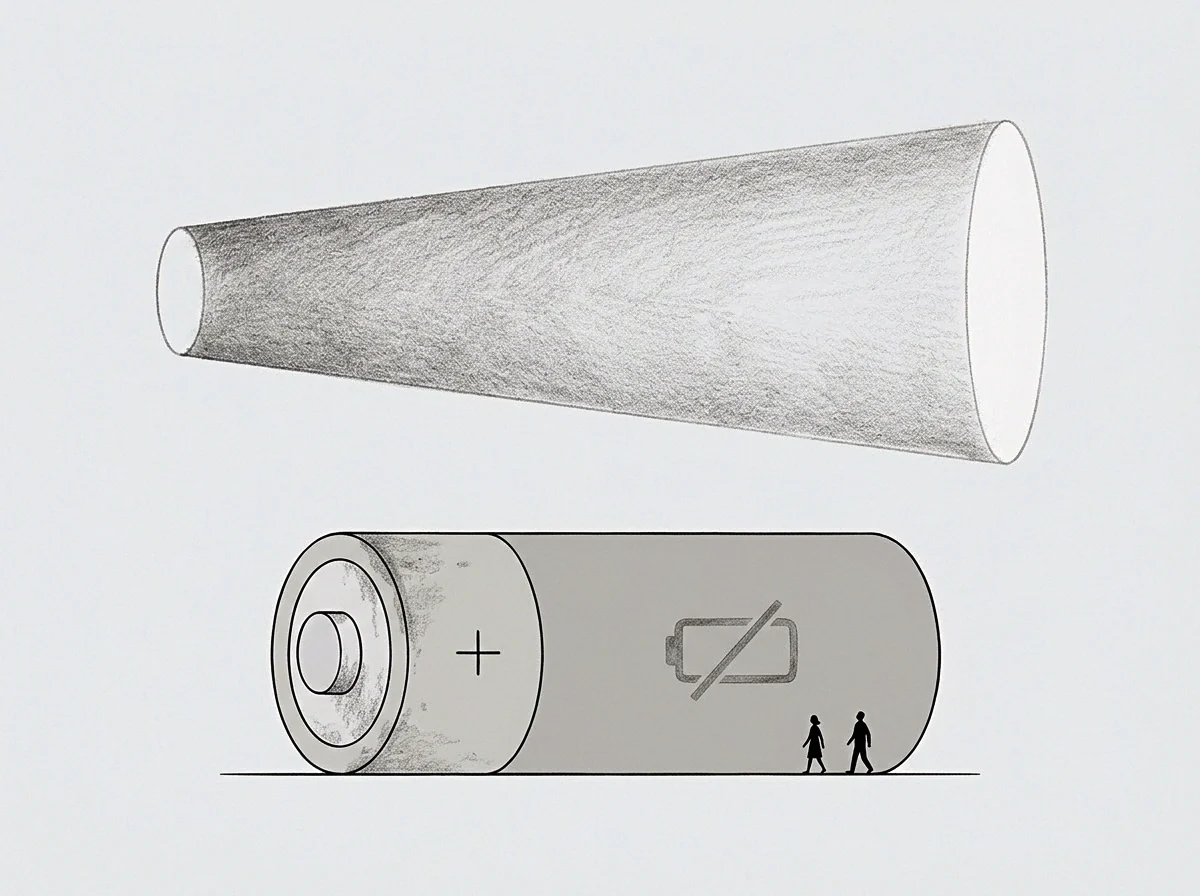
Continuous compliance checks impose costs in attention and morale that mirror structural degradation. When operators face constant verification requests for tasks with negligible risk, the relationship between the organization and the worker strains, as repeated demands for trivial proof read as systemic distrust.
This dynamic encourages passive compliance. Staff complete checklists strictly as required while withdrawing discretionary energy from complex operational challenges, shifting focus from execution to procedural defense.
Relentless verification of low-consequence tasks signals systemic distrust and forces capable personnel into purely defensive administrative routines.
Research on operational autonomy shows that unstated expectations of independence break down under intrusive oversight. When personnel hired for technical judgment spend forty percent of their week generating compliance artifacts for auxiliary routines, the mismatch leads directly to burnout and administrative cynicism.

The Unstated Cost Of Total Verification
Organizations frequently adopt automated compliance tools assuming verification software operates without friction. While software creates minimal friction for management, it places notable cognitive demands on operators who must document, cross-reference, and upload evidence for routine actions. The administrative workload simply moves down the hierarchy.
Operational teams absorb this transferred burden through lower output, longer turnaround times, and unrecorded overtime. What appears as a cost-free compliance metric on an executive dashboard functions as operational drag on the floor.
When a system requires five separate approvals to archive a draft note, teams stop writing draft notes altogether.

Release
Decommissioning strict continuous compliance on noncritical workflows requires a structured approach. Leadership inventories active audit monitors, isolates those attached to auxiliary pathways, and disconnects automated ticket escalation for low-tier processes, immediately restoring administrative capacity to the operating unit.
This transition requires administrative resolve. Compliance officers often warn of reduced visibility when continuous monitoring ends for peripheral routines. Operators counter this by showing that high-frequency monitoring on noncritical tasks generates dashboard noise that hides genuine operational hazards.
Removing continuous verification burdens recovers trapped hours, allowing operators to focus on primary deliverables and high-consequence compliance duties. Organizations gain better security and reliability when audit resources concentrate strictly where failure carries material cost.
Operational recovery completes when teams stop manual logging for down-tiered tasks and shift entirely to passive telemetry. Discretionary attention returns to core work, resolving the structural exhaustion caused by bureaucratic over-monitoring.