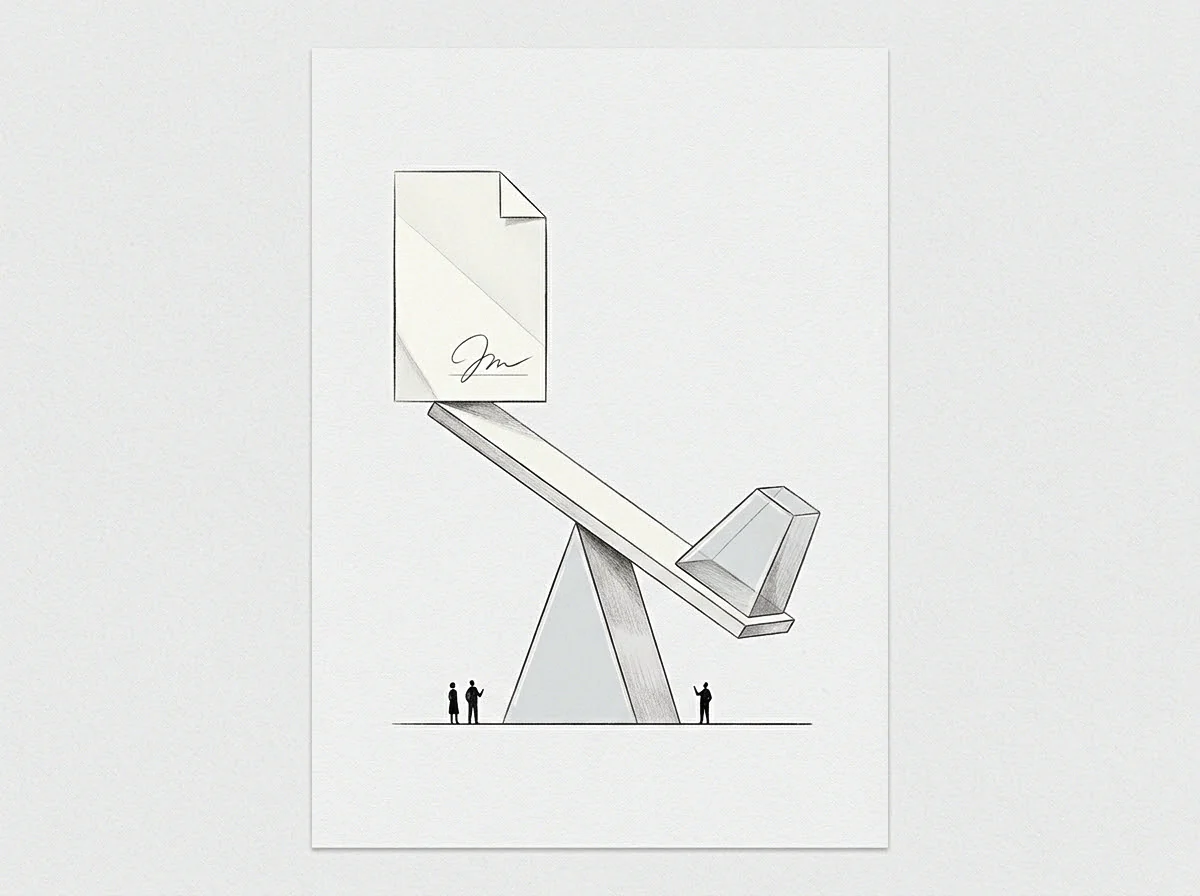
Meaning
Document types establish the primary goals and boundaries for a project or an organization at its inception. An initial directive provides the foundational instructions that guide the first actions of a team or a new department. It sets the scope of work and the expected outcomes before more detailed operational plans are developed.
The authority of this document remains until it is superseded by a formal policy or a project completion report.
Command Clarity
Leaders use these instructions to align a group toward a single objective. The initial directive defines the problem to be solved and the resources allocated to the task. It avoids the confusion that arises when multiple people assume different priorities for the same effort.
By stating the mission in plain terms, the document remains a reference point for every subsequent decision made by the team.
Bound Definition
Constraints on time, budget, personnel and methodology are clearly stated to prevent scope creep. An initial directive identifies what is not part of the mission as much as what is included. This clarity protects the organization from wasting capacity on tasks that do not contribute to the primary goal.
It functions as a contract between the person issuing the order and the team responsible for its execution.
Process Evolution
Early instructions eventually give way to more complex systems as the work matures. The initial directive is the starting point of a feedback loop where the results of the first actions inform the next set of orders. As the team gathers data and encounters obstacles, the rigid nature of the first document shifts toward a more adaptive management style.
This progression matches the transition from a vision to a functioning operation. Effective directives are brief and focus on the immediate next steps.