
Longitudinal Impact Of Informal Authority Capture On Enterprise Resource Allocation Mechanics
Informal authority capture diverts enterprise capital when unstated peer approvals override formal budget rights, hollowing out governance over time.

Lever
Informal authority capture begins when an operator, early contributor, or founder proxy acquires unwritten veto power over capital deployment and engineering assignment. Formal organizational charts delegate resource release rights to department heads, executive committees, and budget officers. Operational reality diverges when team leaders seek undocumented pre-approval from an influential peer before committing capacity.
Informal vetoes hollow out formal budgets. Capital allocation protocols specify investment criteria, return hurdles, and approval sequences, yet project velocity remains subject to the tacit assent of figures whose authority rests entirely on historical status, technical dependency, or personal proximity to ownership.
This dynamic transforms governance mechanisms into decorative administrative steps. When an executive steering committee approves a strategic initiative, work fails to commence until the informal authority node validates the assignment. Operational bandwidth flows toward initiatives favored by the shadow authority, while officially sanctioned projects experience unexplained delays, key personnel reassignments, and chronic under-resourcing.
Permission replaces governance.
The operational mechanics of this capture rely on three distinct leverage points within the enterprise structure:
- Tacit Veto Escalation occurs when an informal authority signals dissatisfaction with an approved project through public skepticism or withheld cooperation, prompting department leaders to pause execution to avoid relational friction.
- Deferential Bandwidth Reservation manifests when engineering and product leads quietly hold back core operational capacity from formal allocations to address unvetted requests originating from the informal leader.
- Shadow Allocation Routing emerges when capital and headcount are formally booked under conventional operational line items but programmatically directed to support unvetted legacy systems defended by the informal authority.
Informal authority capture converts formal capital governance into an administrative post-script whenever unspoken peer consent governs operational bandwidth.
Unspoken arrangements billing for unstated past contributions create an ongoing tax on enterprise resource distribution. Capital follows social proximity. The informal authority operates under a covert contract, holding the organization accountable for historical debt that was never formalized as equity, executive compensation, or explicit board authority.
The organization pays this bill continuously through diverted engineering cycles and deferred strategic pivots. A written mandate establishing sole resource release rights in the chief executive resets allocation authority to formal budget holders within one quarter.

Vault
To analyze the mechanics of resource diversion, consider an enterprise software firm with seventy engineers and twelve million dollars in annual product development expenditure. Assume the company maintains a formal governance structure comprising a chief executive, a chief product officer, and three vice presidents. Assume further that an early chief architect holds no formal executive title, retains zero budget sign-off authority on paper, but possesses deep institutional knowledge of the legacy codebase and maintains direct personal access to the founding board members.
When the executive committee allocates four million dollars and twenty engineers to rebuild the core data pipeline, the project schedule projects a twelve-month delivery window. Six months into execution, audit reports reveal that only six engineers actively work on the new pipeline. The remaining fourteen engineers have been quietly reassigned to optimize legacy infrastructure.
The chief product officer issued no transfer orders. The vice president of engineering approved no line-item shifts. Unstated expectations become operational debt.
The reassignment occurred through informal requests issued by the early chief architect during weekly peer reviews. Department managers, fearing technical friction and recognizing the architect’s unwritten veto power, acquiesced without escalating to the executive committee. The shadow approval path holds.
Formal budget records show the data pipeline project fully funded and staffed, while actual operational capacity remains locked inside legacy system maintenance.
The table below compares resource allocation outcomes between nominal governance protocols and captured informal authority channels across five key enterprise allocation vectors.
| Allocation Vector | Nominal Governance Protocol | Captured Authority Flow | Longitudinal Structural Impact |
|---|---|---|---|
| Engineering Headcount | Assigned by product managers based on quarterly roadmap priorities. | Diverted to unvetted technical initiatives backed by informal leaders. | Strategic initiatives stall due to undocumented capacity leaks. |
| Capital Expenditure | Released through line-item sign-off by department vice presidents. | Committed through informal assurances to third-party vendors. | Budget variances expand while formal accountability controls break down. |
| Technical Debt Resolution | Prioritized by potential revenue impact and system reliability metrics. | Guided by informal authority preferences and historical system ownership. | Critical architectural bottlenecks persist to protect legacy domains. |
| Roadmap Priority | Set by executive committee during annual strategic planning sessions. | Altered continuously through tacit vetoes in operational meetings. | Product delivery cycles lengthen as formal commitments lose authority. |
| Executive Bandwidth | Spent evaluating market opportunities and scaling operations. | Consumed arbitrating disputes between formal leaders and shadow authorities. | Leadership focus shifts from external execution to internal mediation. |
The financial cost of this capital misallocation extends beyond delayed software releases. Talent shifts toward quiet authority. High-performing operators recruited to lead new divisions discover their formal authority throttled by shadow approval requirements.
They face a choice between accepting operational stagnation or engaging in continuous political friction to reclaim control over their assigned budgets. Many choose exit. Leaving informal approval nodes active inside operational workflows degrades corporate governance until formal capital commitments fail to yield functional enterprise software.

Shift
The longitudinal trajectory of informal authority capture follows a predictable multi-year degradation curve. What begins as reasonable deference to expertise evolves into structural gridlock as the enterprise scales. The shift occurs over three distinct temporal phases, during which governance decay deepens and institutional capacity erodes.

Phase Progression of Governance Capture
During the initial phase, spanning the first six months after rapid enterprise expansion, informal capture manifests as helpful intervention. New managers consult early contributors to navigate legacy technical structures. Formal approvals arrive after allocation.
This informal consulting phase establishes a precedent where formal managers trade structural autonomy for immediate execution context.
Between seven and eighteen months, the dynamic hardens into institutional dependence. Informal authorities establish informal review gates prior to formal project intake. The written roadmap loses force.
Middle managers learn that submitting resource requests through formal channels without prior shadow clearance guarantees operational friction.
Beyond eighteen months, captured allocation mechanics become permanent structural distortions. Formal governance structures become nominal validation stamps for decisions reached inside private channels. Capacity drains without explicit consent.
- Initial deference turns into structural dependency during the first six months.
- Formal governance mechanisms adapt to shadow approvals between seven and eighteen months.
- Enterprise capacity locks permanently around captured priority paths past eighteen months.
Longitudinal resource misallocation deepens automatically when informal approval channels operate longer than formal budget cycles.

What Breaks When Informal Influence Outpaces Governance?
Friction accumulates in quiet meetings. When informal authority outpaces formal governance, executive decision-making velocity collapses. Strategic plan execution halts because the allocation of human and financial capital requires two distinct sign-offs: the official budget approval and the unofficial structural blessing.
Tacit priority overrides executive strategy. The original term remains unwritten.
The organization develops systemic opacity. Board members and investors reviewing quarterly operational reports observe adequate capital deployment alongside lagging output metrics. The cause remains invisible on financial ledgers because engineers remain listed under correct cost centers while their actual daily focus is claimed by informal priorities.
The remaining uncertainty lies in whether institutional capital can force structural realignments before informal authority capture induces key operational departure.
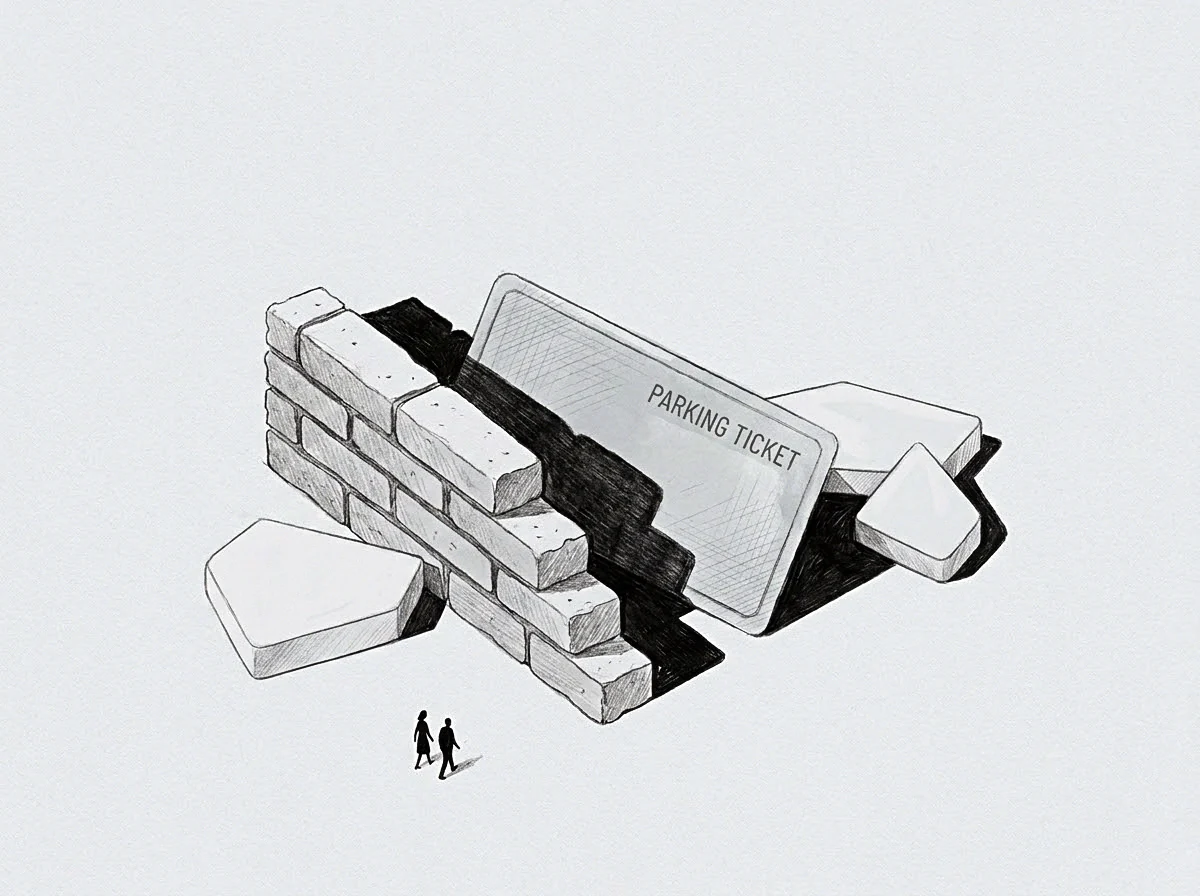
Remit
Reclaiming resource allocation mechanics requires substituting unstated relational expectations with explicit written terms. Informal authority thrives inside structural ambiguity, where past contributions generate unspoken obligations that bill against future enterprise capital. When an organization clears that ambiguity by defining explicit resource release conditions, shadow veto power loses structural support.
The sequence for resetting captured allocation mechanics follows a strict progression from internal want to external action:
First, leadership identifies the explicit operational want: total alignment between written financial commitments and daily engineering output. Second, governance bodies construct explicit terms governing resource release, establishing that no capacity shifts occur without written sign-off from designated budget owners. Stated terms establish operational limits.
Third, the enterprise accepts the immediate relational cost of stating these terms, absorbing the temporary tension produced when informal authorities find their unwritten veto rights revoked.
Governance recovery occurs only when explicit allocation terms replace historical deference as the sole mechanism for resource commitment.
Fourth, executive leadership establishes an unyielding stance, declining to approve off-roadmap requests regardless of who originates them. Formal governance restores capital velocity. Fifth, the enterprise takes definitive operational action, reassigning direct reporting lines and budget codes to enforce the written governance structure.
When an early contributor asserts unwritten veto power over a new product deployment, the formal budget owner states the explicit allocation boundary once, enforces the written rule, and evaluates the counterparty’s response purely as structural operational data. The project cannot proceed until the early architect gives verbal approval regardless of steering committee consent.

Scale
The structural recovery of enterprise capital allocation depends on maintaining absolute alignment between formal authority and operational execution rights. Stated terms act as filters, isolating professional alignment from historical nostalgia. Organizations that attempt to resolve informal authority capture through interpersonal negotiation or soft cultural interventions routinely fail, because soft interventions leave the shadow veto path structurally intact.
An enterprise establishes durable resource control by executing clear structural terms that define operational boundaries once and enforcing them without exception. The founder, executive, or board member must convert implicit understandings into explicit legal, equity, or operational contracts. When an unstated expectation is transformed into a written term, the hidden bill stops accumulating.
The enterprise trades the ongoing drag of covert capital diversion for the short-term cost of explicit boundary enforcement. Explicit written governance terms override historical informal permissions upon enforcement.