
Remediating Software Codebases After Missing Contributor Assignments
Software codebases containing unassigned contributor commits incur covert legal ownership claims that mandate systematic clean-room refactoring or negotiated confirmatory settlement.

Trace
A technical founder opening a repository audit prior to an investment round frequently discovers unassigned intellectual property embedded within the main production branch. Early software development often proceeds through informal help, uncontracted advice, and rapid assistance from colleagues who contribute functional modules without executing standard written agreements. Default statutory rules under Anglo-American copyright legal systems assign underlying copyright ownership directly to the natural person who authored the code, unless the author completes the work as a formal employee within the scope of employment or signs an explicit written conveyance.
Hourly invoices paid to independent contractors do not transfer copyright ownership. Payment receipts create a non-exclusive implied license that allows the firm to run the software, yet this implied license remains non-transferable, non-exclusive, and vulnerable to revocation challenges during corporate transactions.
Ownership claims accumulate silently while software systems scale. Diligence teams representing prospective acquirers inspect commit histories, author email addresses, and pull request sign-offs to build provenance logs for every critical asset. The discovery of commits authored by individuals who never signed work-made-for-hire or intellectual property assignment documentation converts technical architecture into commercial vulnerability.
Silence creates zero conveyance. Authorship remains with creator. Diligence exposes missing signatures.
When equity transactions or asset sales depend on unencumbered software ownership, the absence of written assignments gives historical contributors disproportionate leverage over the firm.

Audit Protocols for Repository Provenance
Reconstructing the legal history of a version-controlled codebase requires mapping every historical author against executed contractual agreements. Automated metadata extractors scan commit headers, patch sign-offs, and pull request approvals to compile an inventory of non-employee contributions. Matching author identities to legal contracts uncovers gaps where technical labor occurred without formal term documentation.
An unexecuted assignment agreement leaves underlying copyright ownership with the individual author despite full payment of hourly invoices.
Unassigned commits typically group into recurring failure modes that reflect informal early-stage operations:
- Unlinked Commits Git commits authored using personal email addresses without associated corporate identity documents leave copyright ownership attached directly to the individual developer.
- Verbal Agreements Promises of future equity distributions offered during early development fail to meet statutory requirements for written copyright transfer.
- Advisory Modules Helper scripts and architectural primitives supplied by external advisors introduce dual-licensing challenges into proprietary production systems.
- Subcontracted Work Code authored by third-party freelancers hired by primary vendors without chain-of-title assignments breaks the ownership sequence.
Leaving unassigned software contributions unaddressed inside a commercial codebase guarantees that transaction costs escalate exponentially once external auditors review the repository.

Vault
Isolating tainted software requires establishing clean-room development environments that separate functional specification from implementation. When a historical contributor refuses to sign retroactive assignment documents or demands excessive settlement fees, removing their expressive contributions becomes mandatory. Copyright protection extends strictly to expressive code structure and logic, leaving pure underlying functional ideas, algorithms, and interoperability interfaces unencumbered.
Clean-room engineering exploits this legal boundary to replace tainted modules without infringing original copyrights.
A compliant clean-room isolation protocol relies on strict operational partitioning between two distinct engineering teams. The specification team analyzes the unassigned code, documents its functional inputs, outputs, and side effects, and drafts a comprehensive technical interface requirement. This team destroys its access to implementation logic after publishing the functional document.
The re-implementation team receives only the specification document and writes brand-new source code from scratch inside an isolated environment. Tainted code spreads fast. Proof demands total segregation.
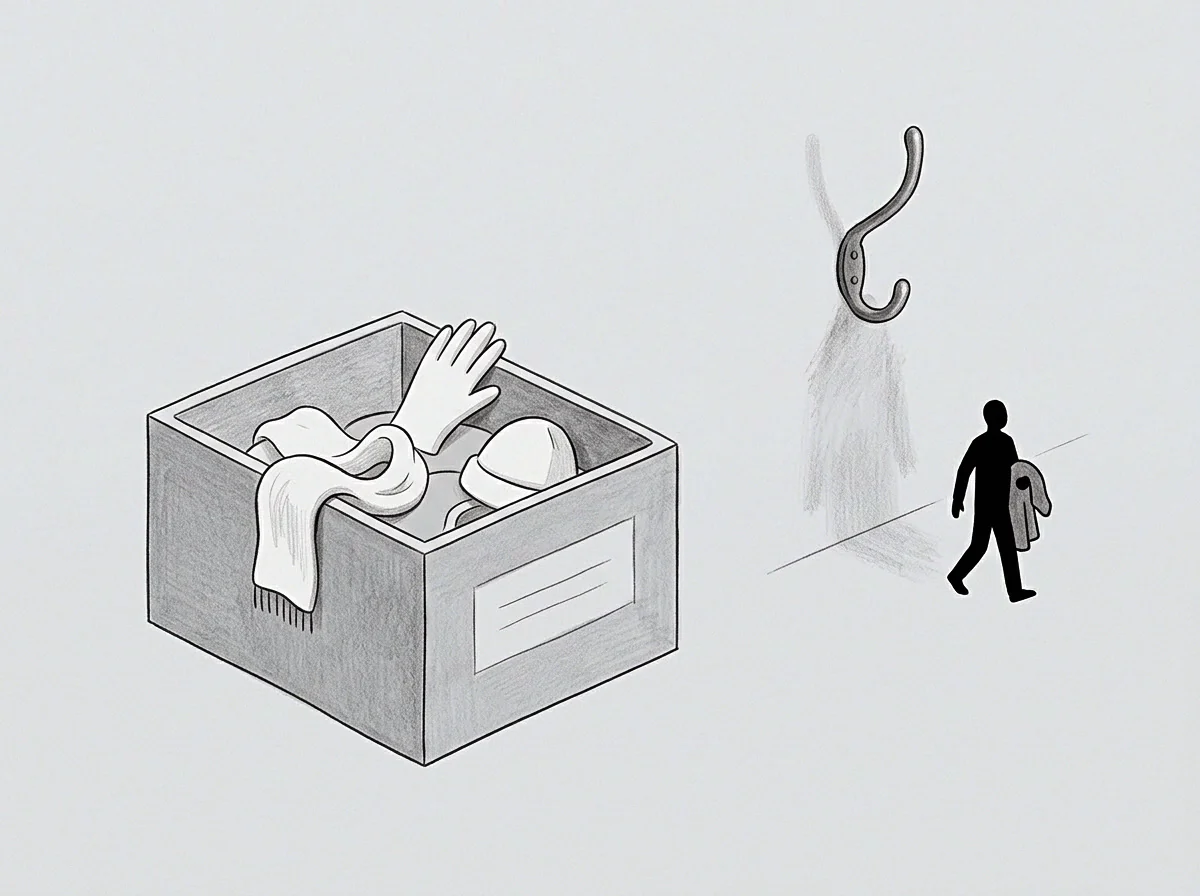
Clean Room Engineering Boundaries
Maintaining clean-room integrity requires detailed audit logging of every document transferred between specification authors and clean-room developers. Communications between the two groups require supervision by legal counsel or neutral technical operators to prevent expressive architectural concepts from crossing the boundary. The re-implementation repository must record fresh commit histories that show zero lineage to the unassigned origin branches.

Is Architectural Replacement Superior to Historical Assignment?
Negotiating retroactive assignments secures clear legal title instantly, yet leaves the firm vulnerable to extortion if the historical contributor realizes the enterprise relies entirely on their signature. Re-implementing tainted components demands engineering hours and delays feature development, but completely eliminates counterparty hold-up leverage. Choosing technical replacement restores complete sovereign control over the source code inventory.
Complete separation between specification authors and implementation programmers invalidates structural copyright infringement claims.
The code sits inside the product, and every release builds on work delivered without a term.

Price
Resolving missing contributor assignments through financial negotiation requires evaluating counterparty leverage against clean-room replacement costs. Early contributors who provided assistance without explicit terms often view corporate valuation milestones as opportunities to collect compensation for past contributions. The price demanded for a retroactive signature reflects the historical contributor’s assessment of how inconvenient codebase refactoring would prove to the firm.
Unstated expectations generate leverage.
Confirmatory assignment agreements serve as the primary legal mechanism for curing defective chain-of-title records when historical contributors act in good faith. These documents explicitly state that any copyright or patent rights generated during past development cycles were transferred to the firm, while granting fresh monetary consideration to satisfy legal requirements for contract validity. Nominal consideration often proves legally insufficient to bind retroactive assignments in jurisdictions that scrutinize historical releases closely.
| Remediation Strategy | Legal Defensibility | Developer Leverage | Diligence Impact | Direct Execution Cost |
|---|---|---|---|---|
| Confirmatory Assignment | Complete legal title transfer upon execution | Extremely High; counterparty can block corporate transactions | Full resolution upon signature presentation | Varies; depends on negotiated cash or equity terms |
| Clean-Room Re-implementation | High; backed by specification isolation records | Zero; eliminates dependence on historical author | Requires engineering audit proving non-infringement | High internal engineering labor expenditure |
| Git History Scrubbing | Uncertain; fails to extinguish underlying copyright ownership | Moderate; physical commits removed, legal risk remains | Disapproved by institutional diligence teams | Low initial effort; extreme legal risk |
| Module Deprecation | High; removes infringing functional paths completely | Low; functional capabilities lost until replaced | Acceptable if core system functionality survives | Moderate product development capacity diversion |
Attempting to settle IP ownership disputes without formal releases leaves covert debt compounding inside the corporate structure. Terms replace silent debt.
Unstated equity expectations convert early generosity into late exit leverage.
An executed confirmatory assignment clause backed by explicit consideration replaces past licensing ambiguity with clear title.

Fork
Purging unassigned commits directly from version control systems requires historical repository sanitization combined with architectural refactoring. Mechanical manipulation of commit trees using command-line scrubbing utilities alters repository hash structures while leaving functional source code intact. Deleting historical commits from git logs fails to cure legal infringement if the resulting source code still contains expression copied directly from the unassigned author.
History deletion alters hashes.
Executing an effective technical fork requires stripping the unassigned contributions out of the active codebase while establishing alternative architectural paths. Technical teams follow a structured sequence to execute codebase remediation cleanly:
- Isolation of functional specs from original implementation source files.
- Appointment of fresh engineering staff without past access to unassigned commits.
- Independent construction of new modules using isolated test frameworks.
- Verification of clean-room separation records by external intellectual property counsel.
Replacing tainted commits through systematic refactoring protects downstream software distributions against third-party injunctions and royalty demands.
Scrubbing commit logs changes historical records without eliminating copying from memory.
Scrubbing repository records without altering underlying expression leaves legal exposure intact.

Grid
Preventing future intellectual property defects requires deploying automated continuous integration gates that enforce contribution compliance prior to code merging. Modern engineering organizations mandate that every commit carry verifiable cryptographically signed metadata linked directly to an executed Contributor License Agreement or Developer Certificate of Origin. Source control platforms automatically reject pull requests originating from accounts without verified terms on file.
Automated term verification transforms legal compliance from an episodic diligence panic into a continuous technical constraint. Pre-commit hooks check author identity against centralized corporate directory permissions, preventing uncontracted external accounts from introducing unassigned logic into production branches. Ownership demands clear title.
What structural mechanisms ensure that automated commit verification systems remain tamper-proof across international subsidiary operations?