
Rebalancing Co-Founder Equity When Operational Work Stops
Rebalancing equity after operational departure aligns shareholdings with forward execution risk by converting active equity into time-bounded or capped returns.

Table
A co-founder steps out of the office on a Tuesday after six months of dwindling hours and announces that daily participation has ended. The initial allocation of equity, agreed upon when work was theoretical, remains untouched at fifty percent. The operational work stops.
Equity remains unchanged. What arrived as an unprompted gift of early labor now stands locked behind a static share register. The person remaining in the building faces years of full-time execution, while the person leaving carries half the equity pool into an external career.

Shift in Contribution Hours
When a builder leaves the daily workflow, the equity cap chart continues to reflect past commitments rather than present labor. Early enterprise creation relies heavily on generalized reciprocity. Partners contribute discretionary time, personal capital, and deep effort without tracking individual hours.
This unquantified barter functions efficiently while both individuals sit in adjacent chairs. The reciprocity holds because both partners invest their full capacity into the shared entity without calculating immediate returns.
The system breaks when one person’s capacity drops to zero. The capacity drops to zero. The operational seat sits empty.
The remaining partner carries the load. At this junction, the unquantified nature of the early arrangement turns against the continuing operator. Because the original agreement contained no explicit milestones or time-based vesting, the departing participant retains full equity rights.
Past contributions, regardless of their duration, become frozen as permanent ownership claims against all future enterprise value created by the remaining team.
The accumulation of equity without continuous operational work converts past reciprocal contributions into an unearned annuity against future labor.
Static share divisions created at inception ignore the asymmetric distribution of forward risk. The active partner assumes ongoing market execution risk, financing liabilities, and personal opportunity costs. The inactive share owner holds zero operational responsibility while retaining proportional claims on capital events.
Leaving initial equity splits unadjusted after daily participation stops creates structural resentment that stifles subsequent fundraising and leads active operators to abandon the venture entirely.

Vesting
Initial ownership schedules frequently lack safeguards for early departure, leaving early-stage ventures vulnerable to equity freeze. Dynamic equity models and reverse vesting covenants establish formal terms for recalibrating share distribution when an executive exits active operations. These instruments protect the enterprise by distinguishing between historical effort already rendered and future execution required to build a viable company.

Mechanisms for Share Recalibration
Contractual provisions can recalibrate share distribution when an executive exits active operations. A standard four-year vesting schedule with a one-year cliff ensures that initial equity grants earn out incrementally over time. If a builder departs before the one-year mark, unvested shares return to the company treasury.
If departure occurs after the cliff, only the accrued portion remains with the departing individual, while unvested shares revert to the enterprise to incentivize incoming operational talent.
| Departure Scenario | Equity Mechanism | Financial Consequence | Governance Impact |
|---|---|---|---|
| Unvested Departure Before Cliff | Repurchase Option at Par Value | Unvested equity returns to the company pool without monetary payout. | Voting power reverts completely to remaining active equity holders. |
| Transition to Non-Executive Advisory Role | Acceleration Cap and Re-vesting Matrix | Vesting halts for operational shares while a smaller advisory grant vests over two years. | Board seat converts to observer status or is surrendered entirely. |
| Involuntary Exit for Non-Performance | Clawback Clause and Bad Leaver Buyback | Shares are repurchased at book value or fair market value discount. | Complete removal from cap table and loss of information rights. |
| Voluntary Departure Post Cliff | Pro-Rata Retention with Option Freeze | Vested shares are retained, but future unvested options are forfeited immediately. | Passive equity ownership without board representation or operational influence. |
When operational work ceases, execution of a predefined share repurchase option allows the company to reclaim unvested equity at par value or nominal book valuation. Terms filter future disputes. This legal mechanism prevents departing participants from blocking future equity financings or diluting incoming executive hires.
The early risk was real. Yet early risk alone cannot justify an unearned share of long-term value creation when active contribution has ceased entirely.
A repurchase option executed at par value prevents inactive participants from extracting value from future capital rounds.
Advisory conversions offer an alternative path when a departing builder retains specialized technical knowledge. The company cancels the operational vesting contract and issues a separate, scaled advisory grant. This secondary grant carries a much smaller equity percentage, vesting over a defined timeline based on specific, measurable advisory deliverables rather than daily management presence.
Inserting a reverse vesting clause with a twenty-four month repurchase window converts static share allocations into contingent ownership tied directly to continued operational output.

Anchor
Early commitments set strong psychological reference points that resist adjustment even when underlying work distributions collapse. The initial split loses logic. When two builders establish a company, they often view equity as a personal bond rather than a strict commercial instrument.
This emotional framing makes post-launch equity adjustments difficult, as any request to rebalance equity is misconstrued as a personal rejection or a devaluation of early sacrifices.
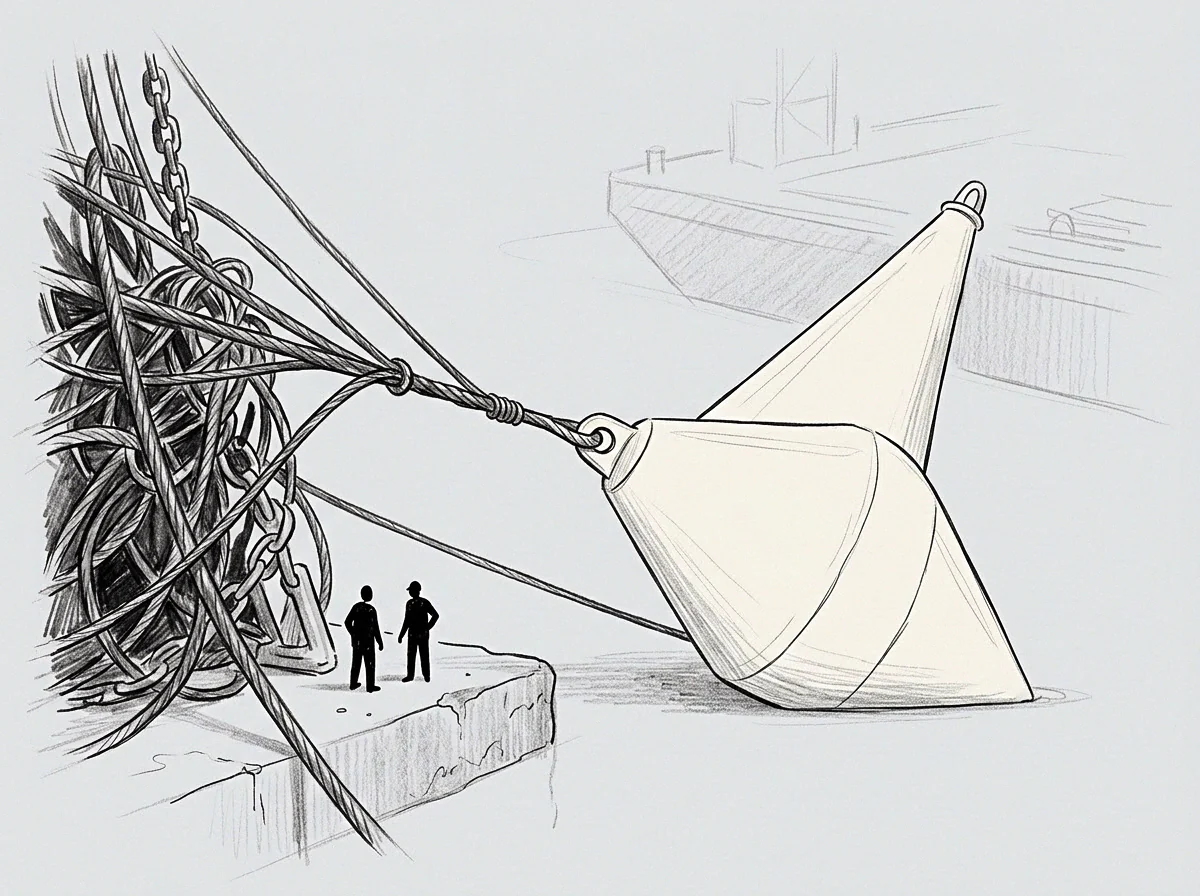
Calculation of Relational Debt
Quantifying unpaid contributions made during the initial launch phase presents distinct structural challenges for continuing teams. Take two partners who launched a software enterprise with equal share ownership and no dynamic vesting terms. For eighteen months, both individuals worked eighty hours per week without taking salaries.
At the nineteen-month mark, one partner exits to take a corporate executive position, offering to provide occasional evening advice while keeping their fifty percent equity stake intact. The remaining partner continues working full-time for three subsequent years, taking on debt, securing institutional investors, and expanding the customer base.
The continuing partner carries all forward execution weight while the departed partner benefits equally from every valuation increase. The covert bill arrives late. The departed partner views their fifty percent ownership as earned compensation for the initial eighteen months of unremunerated labor.
The active partner views the fifty percent overhang as an unsustainable tax on future work. Generalized reciprocity fails because the shared working reality has vanished.
- Cap table deadweight prevents external institutional investors from issuing binding term sheets due to unearned equity overhang.
- Covert resentment billing manifests when active team members reduce their daily effort to match the inactive partner’s contribution level.
- Governance deadlock arises when significant voting rights remain held by an individual absent from tactical decisions.
- Asymmetric risk distribution forces active operators to bear all operational liability while splitting financial upside equally.
The structural misalignment grows wider as the company scales. Capital partners routinely refuse to invest in entities where a former operator holding major voting power sits outside daily management. Investors demand that equity reside with the individuals driving forward execution.
The capital stays in place. Silence compounds the debt. The initial split no longer matches the operational reality of the business.
Generalized reciprocity holds only while both parties remain in the shared space of unquantified daily effort.
Resolving this impasse requires moving from emotional debt calculations to cold capacity arithmetic. Unquantified past effort cannot be balanced against infinite future risk. The enterprise must quantify what the departing individual contributed, settle that account through vested equity or deferred cash compensation, and recalibrate the remaining unvested equity structure to protect future operations.
The initial risk taken during the founding year yields a permanent title to half the equity regardless of who performs the subsequent labor.

Remedy
Restructuring ownership allocations after an operational departure demands clear negotiation protocols to prevent litigation. The operational role ends. When formal vesting mechanisms were omitted at inception, continuing teams must negotiate voluntary equity surrenders or buyback agreements.
These negotiations require clear principles that honor past contributions while securing enterprise viability.

Is Equity Recalibration Feasible Post Launch?
Negotiated equity adjustments remain possible when continuing partners establish precise valuation metrics for remaining execution risk. Retrospective equity rebalancing relies on establishing a shared baseline of what was actually delivered versus what was promised. If a partner promised four years of full-time engineering leadership but departed after one year, seventy-five percent of their operational contribution remains unfulfilled.
The remaining partners calculate the cash cost of replacing that operational function with market-rate executive talent.
Negotiated Departure Agreements
Structured exit agreements establish clear terms for share transfers without destroying enterprise value. The negotiation process translates unstated expectations into formal legal instruments. The cap table reflects history.
Continuing operators present the departing individual with concrete options: surrendering unearned shares back to the company pool, converting a portion of equity into preferred debt, or accepting a reduced non-voting equity position tied to specific advisory milestones.
- Formal capacity audit documents the exact historical contributions and remaining operational requirements of the venture.
- Vested share baseline determination establishes the precise fraction of equity earned prior to the cessation of daily labor.
- Unvested equity surrender returns unearned ownership shares back to the company treasury for future key hires.
- Advisory role formalization replaces operational expectations with explicit consulting hours and fixed term compensation.
A structured repurchase agreement allows the venture to buy back equity over an extended payment schedule using company cash flows. This approach provides financial compensation to the departing builder for early contributions while removing their equity overhang from the cap table. The company avoids immediate cash strain while restoring cap table hygiene for future investment rounds.
A clearly stated buyback valuation formula eliminates subjective disputes over historical equity worth during exit negotiations.
If voluntary negotiation fails, continuing partners retain corporate options, including the formation of a new operating entity or issuing dilutive equity classes to fund ongoing growth. These legal remedies carry corporate governance costs and potential legal friction. Whether inactive founders can be legally compelled to surrender equity without pre-existing contractual clawback clauses remains dependent on jurisdictional corporate law precedents.

Accord
Long-term alignment between past contributors and active operators depends on formalizing structural terms before operational changes occur. Early agreements survive only when written terms anticipate the cessation of daily work. Transitioning from unquantified partner reciprocity to formal corporate governance protects both the venture and the personal relationships of those who launched it.

Formalization of Shareholder Terms
Preventing silent conflict involves translating tacit understandings into written shareholder covenants. When builders put explicit departure clauses in place on day one, equity rebalancing occurs automatically upon operational exit. The departure triggers predefined repurchase options, vesting freezes, or advisory conversions without requiring painful, retrospective negotiations during periods of personal stress.
Clear contractual terms transform equity from an emotional score of past friendship into an operational instrument that drives execution. The venture preserves its ability to attract new leadership, reward ongoing performance, and secure external financing. The departing partner receives fair, bounded credit for early contributions without burdening the ongoing team with an unearned ownership tax.
Stating departure terms at the moment of founding costs far less than negotiating equity buybacks after operational labor has stopped.