Meaning
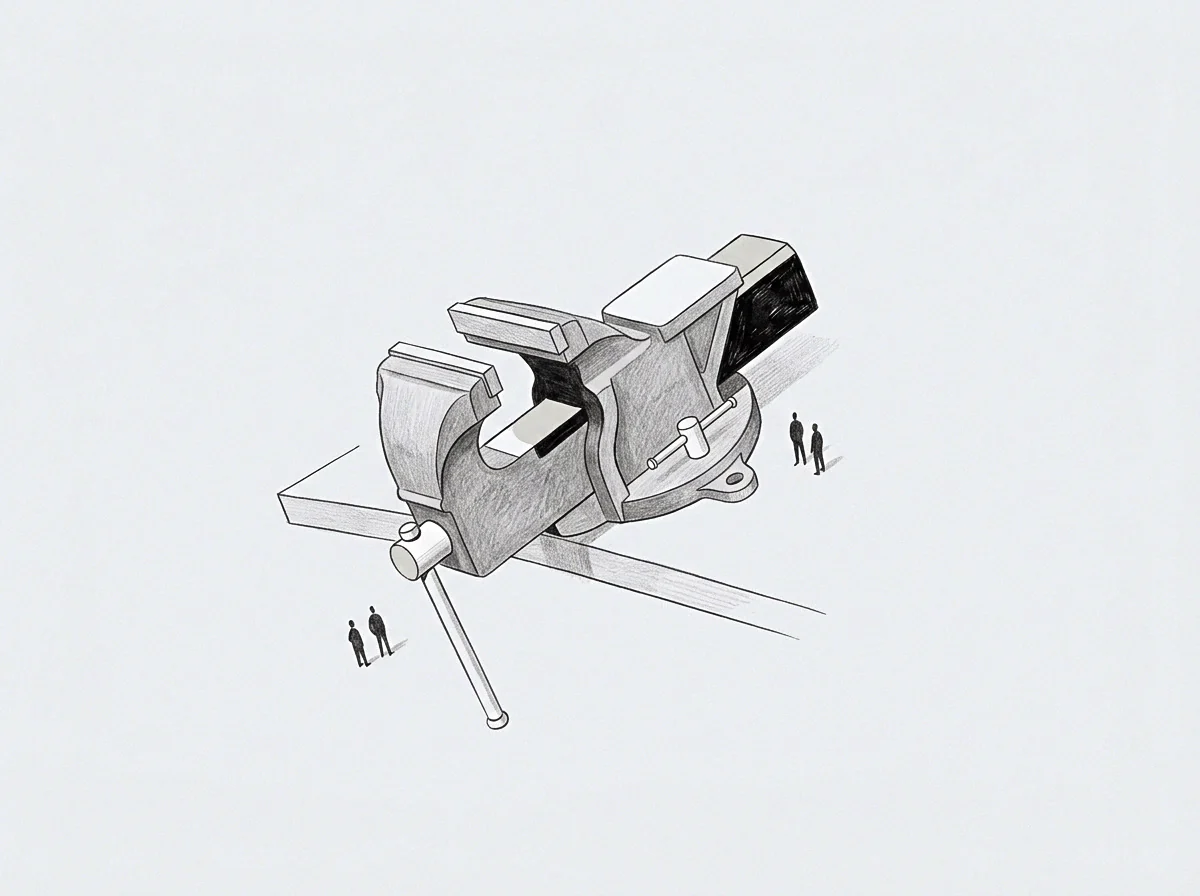
Velocity degradation constitutes the measurable reduction in throughput capacity during the scaling phase of a growing entity. Such decay occurs when organizational friction exceeds the internal efficiency gains achieved by earlier process refinements. Friction arises as communication channels multiply and coordination costs consume resources previously allocated to development.
Structural Friction
Operational complexity grows quadratically while the available human capital expands linearly. This divergence forces teams to allocate more hours toward alignment and reporting than to primary output tasks. Decisions that once required minutes now demand days of review across multiple departments.
Information density drops as participants struggle to filter necessary data from noise within the expanding communication network.
Resource Allocation
Management capacity functions as a fixed constraint against the rising demands of an enlarged personnel pool. Founders lose control over granular execution when the span of supervision exceeds the limits of direct oversight. Administrative overhead claims a larger share of the budget, leaving less capital for the acquisition of talent or technology.
Growth Limitation
Scaling operations eventually encounter diminishing returns as the cost of adding a unit of output rises beyond the revenue that unit generates. Profitability margins contract under the weight of these systemic inefficiencies until the entity stabilizes at a lower equilibrium. Stable performance demands a reduction in structural complexity to restore the momentum lost during rapid expansion.