

Remediating Founder Equity Disputes Arising From Unwritten Commitments
Remediating unwritten equity commitments requires converting unrecorded historical labor into formal restricted stock, option grants, or debt backed by IP assignments.
Remediating unwritten equity commitments requires converting unrecorded historical labor into formal restricted stock, option grants, or debt backed by IP assignments.

Equity recalibration converts uncompensated operational service into forward vesting compression, milestone grants, or debt notes with full wage releases.

Unilateral capital restructuring destroys discretionary operational capacity by breaching tacit psychological bargains, requiring explicit terms to restore agency.

Unspoken expectations act as covert liabilities that erode founder relationships, requiring explicit term construction to measure alignment and prevent breach.

Reallocating late-stage founder vetos requires replacing unilateral negative covenants with independent board committee fiduciary parameters.

Stating explicit governance boundaries before executive expansion prevents unwritten expectations from fracturing venture operational hierarchy.

Unstated decision rights generate covert contracts that inevitably breach when founders override executive autonomy during unmapped operational choices.

Unwritten sweat equity claims convert to low-priority common claims during down rounds, facing total elimination beneath senior liquidation preferences.

Institutional board authority replaces unquantified early shared governance with explicit voting rights, shifting relational identity into institutional compliance.

Series Seed dilution transfers equity repurchase trigger control to investor-led boards, requiring explicit voting and valuation terms to protect unvested founder stock.

Converting psychological contracts into legal equity terms replaces unstated expectations with restricted stock, reverse vesting, and clean asset assignments.

Initial equity splits in commercial joint ventures price unverified future contributions, creating operational friction that requires dynamic vesting mechanisms.

Latent procedural erosion degrades executive autonomy when unstated operational limits permit informal managerial inquiries to reset decision jurisdiction.

Reconciling commingled cards requires separating personal transactions from corporate obligations through formal notes, receipts, and board approvals.

Supervisory silence toward procedural non-compliance transforms explicit directives into covert contracts, replacing formal standards with unstated debts.

Early operational drift occurs when founding teams rely on unspoken relational habits instead of explicit decision boundaries as organizational scope expands.

Covert compliance occurs when operational managers negotiate informal non-enforcement pacts with auditors to preserve throughput against unresourced directives.

Un-audited executive directives extract unlogged middle management hours for translation and political buffering, generating hidden delivery deficits.

Executive directive drift measures the variance between written mandates and early operational tasks, exposing silent adaptation before resource loss occurs.

Equal equity splits fail when early contributors rely on unstated reciprocity rather than explicit vesting terms to balance past assets against future labor.

Diagnostic silence becomes retaliatory when unstated executive preferences are covertly scored as performance deficits and punished retroactively.

Unmonitored structural terms test leadership alignment by replacing active surveillance with autonomous constraints that expose genuine operational priorities.

Unstated operator equity expectations convert into immediate balance-sheet liabilities and operational attrition when secondary buyouts enforce new terms.

Formalizing governance replaces unmeasured reciprocity by isolating past informal contributions into fixed grants and placing future labor under explicit vesting.

Unrecorded retrospective cash claims resolve through contemporaneous bank record verification, converting labor into equity and direct outlays into debt.

Unstated early sacrifices create diverging covert expectations that convert into destructive equity disputes when formal corporate ownership is established.

Formalizing partnership equity through dynamic reverse vesting bridges relational trust and contractual equity, shielding enterprises from unstated debts.

Unwritten early venture commitments create equity overhang, which is resolved by converting informal pledges into explicit vested terms or cash settlements.

Retroactive equity claims resolve when unstated historical commitments convert into priced promissory debt or defined equity allocations before institutional closing.
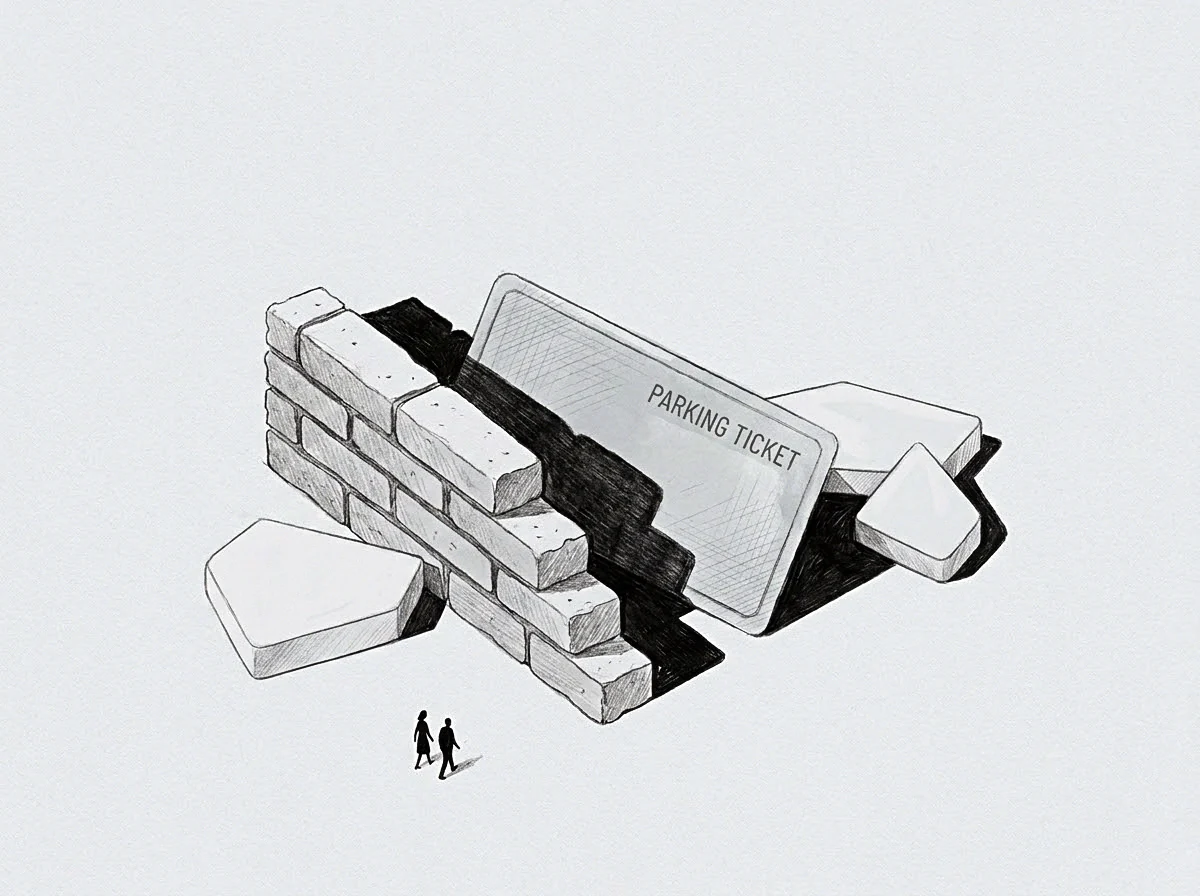
Psychological contract breach in equity allocation occurs when unstated contribution expectations collide with static legal equity splits.
The terms are written where they belong. Each field holds three desks, and every entry a desk writes raises the terms it uses, each term given a meaning, a mechanism and the places it appears. The record on these pages stays first person and hand made; the fields grow the nomenclature.